
Q:
A:
Serbia has administrative capacities for complex negotiations with EU
Belgrade,
22 December 2005
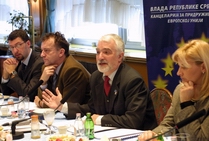
Serbian Deputy Prime Minister and head of the Serbian team for negotiations with the EU Miroljub Labus said today that he is satisfied with the first round of technical talks on the Stabilisation and Association Agreement with the EU (SAA), because the Serbian team has demonstrated that it has administrative capacities for conducting such complex talks.
Author:
Fonet
In talks with media representatives organised by the Serbian government's EU Integration Office and the Konrad Adenauer Foundation, Labus said that the talks with the EU were held using the "two-track lane" principle. On the first day, the talks were held parallel with both member states of Serbia-Montenegro on the principles of the policy of cooperation and free flow of goods that are the same for both member states. On the second day, the talks were held separately because of different foreign trade policies and protection measures of Serbia and Montenegro, as part of which the first "reading of lists" of industrial products was held.
Speaking about industrial products, he explained that those whose customs tariffs are below three percent were included in the group of insensitive products for which customs tariffs for import from the EU will be abolished as soon as the SAA is concluded. The remaining products are divided into sensitive, very sensitive and extremely sensitive, and for them there will be different periods of liberalisation.
According to Labus, the Serbian team did not inform EU representatives when the planned period for opening the free trade zone with the EU is, but Serbia's aim to be ready to enter the EU by 2012 will be taken into account.
Speaking about agricultural products, Labus said that the protection of EU agriculture should be taken into account, adding that for 20 percent of our agricultural products we will be able to keep protections even after the expiry of the general transitional period.
The Deputy Prime Minister said that the Serbian side will submit to the EU the final offer with all deadlines for industrial goods by January 23, and the first offer for agricultural goods by late January.
Serbian Assistant Minister of International Economic Relations Dusko Lopandic said that when determining the pace of reducing customs tariffs on industrial products, their present level, sensitivity of production and the country's trade deficit will be taken into account.
Lopandic said that the negotiations on the conclusion of the SAA are linked to negotiations with the World Trade Organisation (WTO) and that these two processes support each other, but we will need several more years to receive membership in the WTO.
Serbian Assistant Minister of Agriculture, Forestry and Water Management Goran Zivkov stressed that the process of negotiations on agricultural products is different to those on industrial goods because agriculture is considered to be a strategic industry in the EU.
Zivkov said that this year Serbia had a $250 million surplus in trade of agricultural goods and had exports of approximately $1 billion, but that it also has the highest protection for agricultural products in the region, which stands at 21.2 percent.
He said that in the negotiations Serbia will seek to protect the country’s cattle industry, especially as it pertains to dairy products, as well as fruit and vegetable growing.
Speaking about industrial products, he explained that those whose customs tariffs are below three percent were included in the group of insensitive products for which customs tariffs for import from the EU will be abolished as soon as the SAA is concluded. The remaining products are divided into sensitive, very sensitive and extremely sensitive, and for them there will be different periods of liberalisation.
According to Labus, the Serbian team did not inform EU representatives when the planned period for opening the free trade zone with the EU is, but Serbia's aim to be ready to enter the EU by 2012 will be taken into account.
Speaking about agricultural products, Labus said that the protection of EU agriculture should be taken into account, adding that for 20 percent of our agricultural products we will be able to keep protections even after the expiry of the general transitional period.
The Deputy Prime Minister said that the Serbian side will submit to the EU the final offer with all deadlines for industrial goods by January 23, and the first offer for agricultural goods by late January.
Serbian Assistant Minister of International Economic Relations Dusko Lopandic said that when determining the pace of reducing customs tariffs on industrial products, their present level, sensitivity of production and the country's trade deficit will be taken into account.
Lopandic said that the negotiations on the conclusion of the SAA are linked to negotiations with the World Trade Organisation (WTO) and that these two processes support each other, but we will need several more years to receive membership in the WTO.
Serbian Assistant Minister of Agriculture, Forestry and Water Management Goran Zivkov stressed that the process of negotiations on agricultural products is different to those on industrial goods because agriculture is considered to be a strategic industry in the EU.
Zivkov said that this year Serbia had a $250 million surplus in trade of agricultural goods and had exports of approximately $1 billion, but that it also has the highest protection for agricultural products in the region, which stands at 21.2 percent.
He said that in the negotiations Serbia will seek to protect the country’s cattle industry, especially as it pertains to dairy products, as well as fruit and vegetable growing.
-
 Belgrade, 10 July 2026
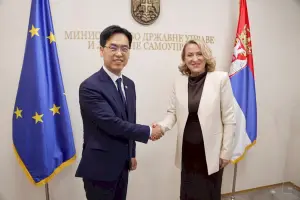
Advancing cooperation with Republic of Korea in digital governance
-
 Belgrade/Rome, 10 July 2026
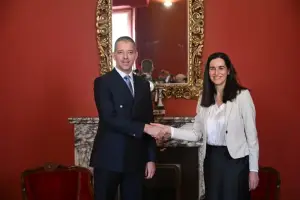
Continued strengthening of overall cooperation between Serbia, Hungary
-
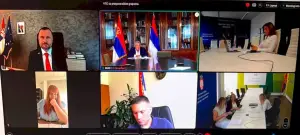 Belgrade/Brussels, 9 July 2026
Continuing activities to meet European Commission’s recommendations
-
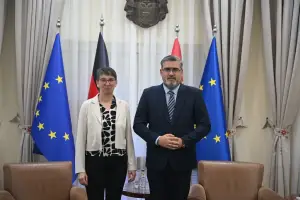 Belgrade, 9 July 2026
German development support important pillar for Serbia’s reforms, European path
-
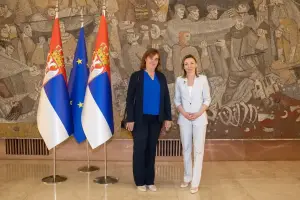 Belgrade, 8 July 2026
Continued cooperation with GIZ on improving position of women in Serbia
-
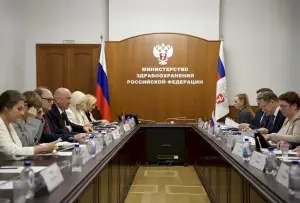 Belgrade/Moscow, 8 July 2026
Cooperation between Serbia, Russia in field of modern oncology therapies
-
 Belgrade, 8 July 2026
Ireland’s support for reform processes in Serbia on path to EU
-
 Belgrade, 8 July 2026
Continued strengthening of cooperation with Belgium in European integration process
-
 Belgrade, 7 July 2026
Possibilities for improving cooperation with Russia in several areas
-
 Belgrade, 7 July 2026
UN support for building equal opportunities society continues