Q:
A:
Register of bone marrow donors in Serbia formed
Belgrade,
21 December 2005
The register of bone marrow donors in Serbia was formed at the Serbian Institute for Blood Transfusion, which will enable the locating of an adequate donor for a larger number of patients who need bone marrow transplants.
Author:
Fonet
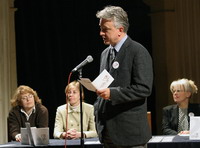
Doctor Zorana Andric from the Centre for Tissue Typing within the Institute said that most of the patients in Serbia whose bone marrow is heavily damaged or destroyed by diseases, such as leukaemia, don't have an adequate donor among the members of their family.
Andric said that some 70 percent of patients in Serbia require a transplant and explained that when there is no adequate donor within the family, the only hope is to find one outside the family. However, the possibility of finding a compatible donor outside the family is very low, so sometimes it is necessary to examine a million people to find the right donor.
The formation of the national register and the increase in the number of prospective donors increases the possibility of finding bone marrow for a greater number of people. In addition, this has opened the possibility of using the world register, which contains more than 10 million potential donors.
Andric said that currently there are more than 80 prospective donors in the national register, stressing that more than half are below 35 and are regular blood donors.
A donor can be any healthy person, aged between 18 and 50. The application is done by filling a form and providing a small blood sample for analysis, which is then tested to determine compatibility.
Registers of prospective blood donors exist in almost 50 countries and are joined in a world register, which can be searched only by countries with their own national registers.
Andric said that some 70 percent of patients in Serbia require a transplant and explained that when there is no adequate donor within the family, the only hope is to find one outside the family. However, the possibility of finding a compatible donor outside the family is very low, so sometimes it is necessary to examine a million people to find the right donor.
The formation of the national register and the increase in the number of prospective donors increases the possibility of finding bone marrow for a greater number of people. In addition, this has opened the possibility of using the world register, which contains more than 10 million potential donors.
Andric said that currently there are more than 80 prospective donors in the national register, stressing that more than half are below 35 and are regular blood donors.
A donor can be any healthy person, aged between 18 and 50. The application is done by filling a form and providing a small blood sample for analysis, which is then tested to determine compatibility.
Registers of prospective blood donors exist in almost 50 countries and are joined in a world register, which can be searched only by countries with their own national registers.
-
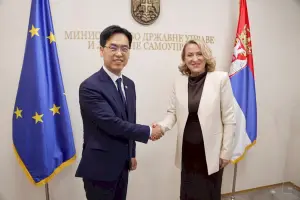 Belgrade, 10 July 2026
Advancing cooperation with Republic of Korea in digital governance
-
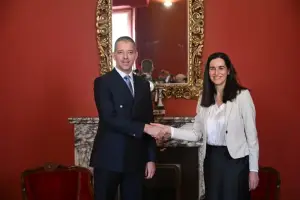 Belgrade/Rome, 10 July 2026
Continued strengthening of overall cooperation between Serbia, Hungary
-
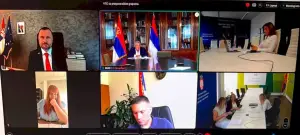 Belgrade/Brussels, 9 July 2026
Continuing activities to meet European Commission’s recommendations
-
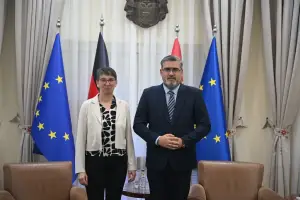 Belgrade, 9 July 2026
German development support important pillar for Serbia’s reforms, European path
-
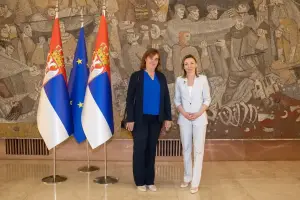 Belgrade, 8 July 2026
Continued cooperation with GIZ on improving position of women in Serbia
-
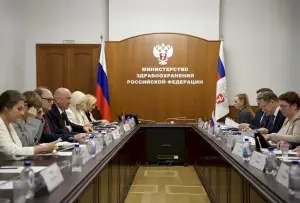 Belgrade/Moscow, 8 July 2026
Cooperation between Serbia, Russia in field of modern oncology therapies
-
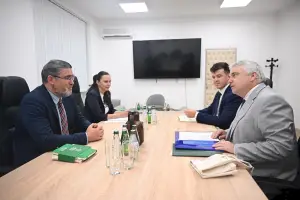 Belgrade, 8 July 2026
Ireland’s support for reform processes in Serbia on path to EU
-
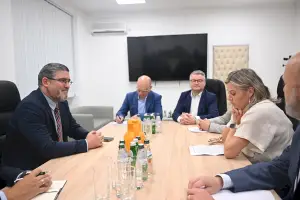 Belgrade, 8 July 2026
Continued strengthening of cooperation with Belgium in European integration process
-
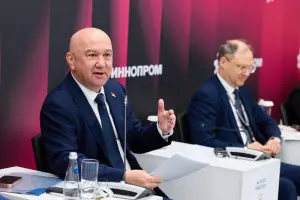 Belgrade, 7 July 2026
Possibilities for improving cooperation with Russia in several areas
-
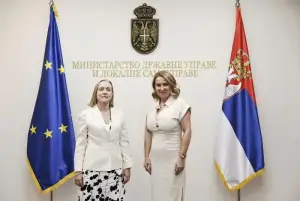 Belgrade, 7 July 2026
UN support for building equal opportunities society continues