The Serbian government stated today that the export of information and communication technology (ICT) services from Serbia is seeing a steady growth with a tendency of further increase.

Q:
A:
ICT sector most promising industry in Serbia
Belgrade,
21 October 2019
In the first eight months of 2019, it reached €913 million, which is twice as much as in the same period of 2016 and as much as 26.4% compared to the previous year.
What is particularly encouraging is the surplus in the exchange of services, which is much higher than in traditional industries. At the moment, it amounts to almost half a billion euros and is larger than the surplus in trade in goods in any area, as shown by the National Bank of Serbia (NBS) balance of payments report.
The ICT sector has been a focus of Prime Minister Ana Brnabic's government from the very beginning, and this will continue in the future, as the most promising industry in Serbia and one of the largest drivers of economic growth in the country.
In late 2016, the Serbian government formed the Ministerial Council for IT and Innovation Entrepreneurship, headed by Prime Minister Brnabic, which drew up a plan to improve the IT sector in Serbia in order to support it.
A number of projects have been launched to improve education, infrastructure and the legal framework for the development of the ICT industry.
Among the most significant results of the government in 2017, 2018 and 2019 for the advancement of the ICT sector are: introduction of computer science as a compulsory subject from the fifth grade of elementary school, increase of enrolment quotas in the IT departments of faculties by more than 20 percent, initiation of construction of innovation infrastructure in which more than € 100 million has been invested.
Also, a tax law reform has been introduced that provides tax incentives for investing in R&D, start-ups, and intellectual property.

-
 Belgrade, 15 October 2026
Next year declared Year of Saint Despot Stefan Lazarević
-
 Belgrade, 12 October 2026
5th “Wine Vision by Open Balkan” international fair ends
-
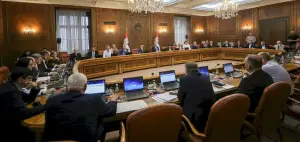 Belgrade, 8 October 2026
Government adopts multiple documents across various sectors
-
 Belgrade, 5 October 2026
“Wine Vision by Open Balkan” to be held from 10 to 12 October
-
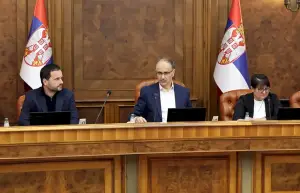 Belgrade, 1 October 2026
Conclusion adopted on remediation plan for Deliblato Sands area
-
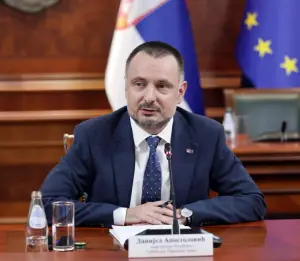 Belgrade, 28 September 2026
Continuity of reforms in EU accession process
-
 Belgrade, 24 September 2026
Government adopts decrees, decisions of importance for migration, sport
-
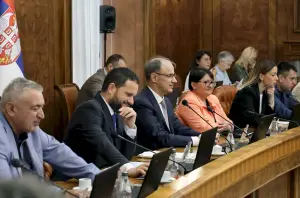 Belgrade, 17 September 2026
Linking state support measures for housing for families with children
-
 Belgrade, 14 September 2026
Official request for overflight clearance for Serbian government aircraft submitted on 11 September
-
 Belgrade, 11 September 2026
Eligibility expanded for rural house purchase grant scheme