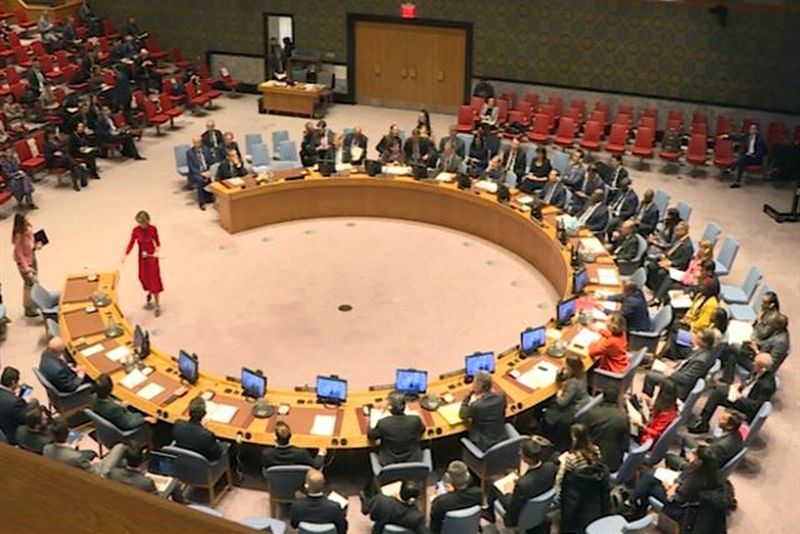
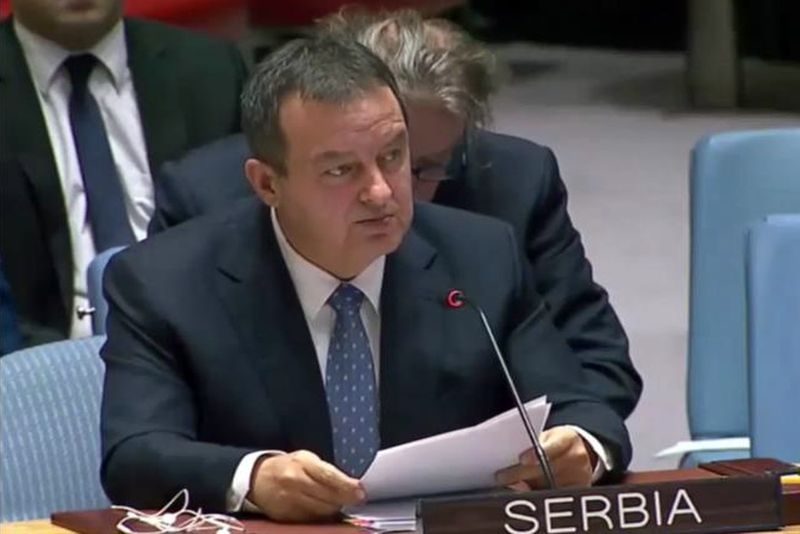
First Deputy Prime Minister and Minister of Foreign Affairs Ivica Dacic said tonight that an unreasonable measure of Pristina to introduce tariffs on Serbian products is targeted at complicating the position of the Serbian community in Kosovo-Metohija.

Q:
A:
Serbia reliable, constructive partner in solving problems in Kosovo-Metohija
Belgrade/New York,
7 February 2019
The official website of the Serbian government brings the whole speech of Dacic at the session of the UN Security Council dedicated to the work of UNMIK:
“Mr. President,
Distinguished Members of the Security Council,
At the beginning, I would like to thank Secretary-General Antonio Guterres and his Special Representative Zahir Tanin for their Report. The presence and activities of the United Nations Interim Administration Mission in Kosovo (UNMIK) is of crucial importance; I therefore extend to you my special gratitude for your hard work and dedication to the realization of the mandate of the Mission under UNSCR 1244 (1999).
I also want to thank Equatorial Guinea for the inclusion of this meeting in the agenda of the Security Council.
Serbia believes that it is necessary that the Security Council be open and ready to consider all questions relevant to international peace and security, according all along special attention to its prevention role and responding to situations which, in addition to being clear violations of the resolutions of this body, lead to the increase of tensions and threaten stability and security.
We do not ask for meetings for the purpose of upmanship, but to make a contribution to the stabilization of the situation in Kosovo and Metohija and to the peace in the region. Serbia is a constructive, credible and predictable partner. That’s why we initiated the agreement on the dynamic of the Security Council meetings on UNMIK which we still need and I am pleased and express my gratitude to the members of the Security Council that we have agreed on this important question in order to avoid needless debates in this body on these meetings. The most important thing is that the Security Council will go on and consider the Secretary-General Reports on UNMIK on a continual basis. Let me remind you that the Security Council continues to discuss Bosnia and Herzegovina two time a year, as well as the International Residual Mechanism for Criminal Tribunals, former ICTY, and no one is requesting that these topics be removed from the Council agenda.
I continue to believe that we should and can find a common denominator of our interests and strive to achieve it. We all want to solve the question of Kosovo and Metohija, we all want it not to be a topic on the Security Council agenda any more, we all want UNMIK to complete its mission, successfully though.
This moment is not yet near however. I pointed out many times that we are at a very delicate juncture and called on all to proceed and create conditions for us to sit and talk constructively, without preconditions and imposition of solutions. Let me recall that talks between Belgrade and Priština have entered their seventh year and that progress was made during that time, sometimes more, sometimes less. Yet, we did talk. As Prime Minister at that time, I signed the Brussels Agreement. Regrettably, that Agreement has not been fully implemented to-date, while at this moment in time the talks in Brussels there are not, and you all know why.
I know that many of you will call on both sides to refrain from unilateral acts and commit themselves to dialogue and a quest for a lasting solution. I can only tell you that Serbia has refrained from unilateral acts; we have not made them either because of the Community of Serbian Municipalities as the most important part of the Brussels Agreement, not established for five years now, or to prevent unilateral decisions like the confiscation of the property of the Trepča mine that Priština took several days ago.
The dialogue has been forestalled, distinguished Members of the Council, for one reason: the unilateral decision of the so-called Kosovo to impose taxes on goods from Serbia and BiH by one hundred percent. This act, let me recall, has been condemned by the entire international community, Priština’s staunchest allies included, that called on Priština to suspend the decision.
Distinguished Members of the Security Council,
We have entered 2019 facing major challenges and problems the solutions of which are hardly perceivable nowadays. I recall that, in addition to the decision to establish the so-called Armed Forces of Kosovo on the heels of the Security Council meeting last November, Priština rushed, instead of de-escalating tensions and investing maximum effort in promoting dialogue, to adopt misguided and senseless decisions on the imposition of taxes on Serbian goods. They were followed by numerous Greater Albania pronouncements, surely not a call to compromise, but a design to gin up instability in the region.
The one-sided decision of Priština to increase taxes on Serbian goods by as much as hundred per cent and contrary to the Central European Free Trade Agreement is, primarily, a politically motivated decision which wreaked irreversible damage and forestalled the continuation of the dialogue on normalization of relations between Belgrade and Priština. For its part, Serbia continues to firmly believe that talks are the only way for the solution of outstanding issues and refrained, even after the imposition of the taxes, from reciprocal measures and any other act that would have aggravated the situation. Once again, we demonstrated responsibility, sense and credibility.
The taxes, Mr. President, are aimed at making the situation of the Serbian community in Kosovo and Metohija even more difficult.
Despite condemnation and intense pressure by numerous international institutions, Priština soldiers on and applies the taxes it imposed more than two months ago. As it was proved that it can take and implement unilateral and destabilizing decisions and measures without consequences, that it can breach agreements and raid a territory with a majority Serbian population, Priština continues this practice unabated. Hence we are faced today not only with the absence of the Community of Serbian Municipalities, but also with continued attempts to take over northern Kosovo and Metohija, evinced by the ROSU raid of this part of the Province last November, imposition of draconian taxes on Serbian goods and the arrest of four Serbs in Kosovska Mitrovica in a brutal ROSU action and a call for ’unification’ of the northern and southern part of the town. Tantamount to a drive to intimidate the Serbs living in the northern part of the town, this is also a screen for the intended takeover of northern Kosovska Mitrovica and the expulsion of Serbs from this part of the town in the way they have been expelled from its south.
Priština continues to upturn the cart of everything in which, through dialogue and regional interlinkage, the European Union and other international actors invested considerable efforts. Are we then to expect that any agreement will be respected if basic principles of modern-day Europe are ignored?
The decision to ban a free flow of goods, capital and people due to a displeasure with a political decision is, let me point out once again, inconceivable in the twenty-first century. Priština’s contention that the act has been taken as a counter-measure to Serbia’s policy that it characterizes as ‘aggressive’ is false through and through. Rather, it has been taken as a consequence of the withdrawal by 13 countries of the recognition of the UDI of Kosovo and the failure of its attempt to become a member of INTERPOL. The explanation being provided is that it is detrimental to the dialogue. Ever since its UDI in 2008, the so-called Kosovo has lobbied for recognition, aided and abetted by some States. After all, some members of this body called on other States on our previous meetings to recognize the UDI of Kosovo. Serbia has taken no unilateral measures because of these practices. On the contrary, we entered the dialogue and talked regardless of recognitions that took place in the meantime. For those who do not know, we commenced the dialogue in 2012 and 19 countries recognized the UDI of Kosovo since. Nobody said that the recognitions were disruptive of the dialogue. Here is the example of Madagascar. In November 2017, no word was said that its recognition was harmful to the dialogue, but in December 2018 when Madagascar decided to withdraw the recognition, some Members of this Council assessed the withdrawal as very harmful indeed. I really need help to understand this sort of reasoning.
Priština bears grudges over the failure of its bid to join INTERPOL and UNESCO as well. But, here’s the thing: in 2015, prior to Priština’s request for admission to UNESCO, Serbia proposed that protection of cultural heritage be included in the agenda of the dialogue and that agreement be reached on this issue. The proposal fell on deaf ears. Just as did the one concerning INTERPOL. We tried to explain that a candidature for, and lobbying for and against admission by the sides, inevitable if an admission application was to be submitted, would not create an atmosphere conducive to dialogue. Then, irate after the failure, Priština imposed the taxes. One hundred percent. Let me remind that the so-called Kosovo keeps presenting a false data that it has been recognized by 116 countries. 74 United Nations Member States voted in favour of Priština’s admission to INTERPOL; it needed another 36 votes. And now, they blame little Serbia for this result. We call also on this occasion that all questions be solved through dialogue and we are ready to invest our best efforts to find a lasting solution.
Author:
Tanjug
Distinguished members of the Security Council,
Some of you maintain that the situation in Kosovo is significantly different from 1999 or 2009 and call for revision of UNMIK’s mandate. Let me remind you that the Mission is already significantly different from 1999: at the time, it numbered 4 718 civil police and 1 269 international and 3 566 local personnel. Its budget amounted to $427 million. Today, it is reduced almost by 90 per cent and its personnel numbers about 500 men and women. Its budget is $40 million. The Mission has been reduced too much and too soon. Many wrong things have been done in the past 20 years and for this reason I call on you not to make the same mistake by rushing decisions. The assertions that the Mission is unnecessary and that it has completed its mandate are unreflective of reality.
Ramush Haradinaj’s statement accusing UNMIK and the Secretary-General of the United Nations that they write ‘fake reports’ deserves condemnation of all of us. So does the decision to discontinue cooperation with the Mission of the world Organization. Let me remind you that Haradinaj accused the European Union that it ‘killed the dialogue’ in a meeting with the most prominent officials of the Union.
Mr. President,
We welcome the activities that the Specialist Chambers and Specialist Prosecutor’s Office of Kosovo began by hearing certain persons from Kosovo and Metohija. At the same time, we hope that first indictments will be issued soon, bearing in mind, in particular, the importance of this step for unveiling the perpetrators of the crimes committed against Serbs and other non-Albanians. Among those served hearing summons are also some high-ranking officials, former members of the command structure of the so-called Kosovo Liberation Army. This is of paramount importance as ample evidence has been collected linking these individuals to crimes committed in Kosovo and Metohija. In view of the evidence, it is now important to issue criminal warrants and hear presumed offenders in a judicial institution, which has never been done so far.
A large number of Serbs and non-Albanians, imprisoned by the so-called Kosovo Liberation Army, were killed, some of them escaped and some were released. The Commission of the Republic of Serbia on Missing Persons continues to store evidence in its archives on more than 580 Serbs and non-Albanians incarcerated in about 140 illegal prisons. The investigation must continue since information and evidence abound. The ’Yellow House’ and the crimes committed in it must be investigated, too. We hope that Priština will cooperate with the competent institutions, so that these crimes be punished. Yet, war criminal Sulejman Selimi has been appointed Advisor to the Prime Minister of the so-called Kosovo and this fact has been condemned also by the U.S. Ambassador in Priština. Some leeway for optimism, isn’t there?
This is of crucial importance for the stabilization of the situation in Kosovo and Metohija and the efforts to achieve historical reconciliation. It is also important, however, in order to push back the unscrupulous lies and montage information brought forth incessantly by highest-ranking Kosovo Albanian officials to cover up their own crimes and continue to posture as the victim of the conflict. They misuse and viciously manipulate the data, with the aim of incriminating Serbs alone for all atrocities in Kosovo and Metohija as if only their victims, their expellees, killed, missing and tortured mattered. What happened, however, was an armed conflict between two belligerents: between a regular armed forces and police and the insurgent and terrorist Kosovo Liberation Army.
Albanians do not mention that the victims included 2 197 Serbs, 159 Roma, 95 Bosniaks, 78 Ashkalis, 75 Montenegrins, 38 Egyptians and 46 members of other communities who had lived in peace and harmony in the Province. Speaking of the numbers, let it be known that 2 725 Serbs and other non-Albanians are evidenced as killed or missing. Special fervour, Mr. President, is displayed in hiding the truth that most crimes were committed after the withdrawal of the regular armed forces of Serbia from the Province in June 1999. One of the reasons is the attempt at concealing the settling of accounts by the KLA with their disloyal fellow-Albanians, 377 of them, killed by the hand of their co-nationals. Mention should be also made that 1 250 Kosovo and Metohija Albanians were killed by the members of the KLA during 1998 and at the beginning of 1999 prior to the NATO aggression to which testimonies of members of many families have been made and are in our possession. Priština is less than eager to unveil the number of killed or missing KLA members who, according to international sources, number 2 132.
Priština continues to contend that the missing persons number 1647, but it fails to point out that the number includes 570 Serbs and non-Albanians; it does not say that a large number of missing Albanians was kidnapped and certainly killed by the KLA. So far, none of Pristina’s representatives said that a joint consolidated list of missing persons was established and that the tracking of missing persons is continued in agreement and cooperation of the competent bodies of the Commissions under the auspices of the International Committee of the Red Cross.
At the same time, Priština refuses to make public that human remains of 900 Kosovo and Metohija Albanians have been exhumed at locations in central Serbia in the period from 2001 to 2017 and released to their families and that each and every request it submitted to check potential mass or individual graves has been responded to. On the other hand, no location in Kosovo and Metohija suspected of containing mass graves of killed Serbs, Roma or disloyal Albanians has not been checked to-date despite many requests by our side.
Mr. President,
In the recent OMIK Report, it is said that the number of incidents directed at the Serbs of Kosovo and Metohija last year increased by as much as 30 per cent compared to 2017. How are we to expect then that any progress will be made in the return of the internally displaced persons, let alone in the building of a multi-ethnic democratic society, if no basic human rights, including the right to a safe and secure life of all in Kosovo and Metohija, are not respected?
It is self-defeating to speak of these numbers today twenty years after the establishment of the international civil presence, i.e. the adoption of UNSCR 1244 (1999) which entrusted the international civil presence with a clear responsibility to ensure a safe environment and unimpeded return to all people displaced from Kosovo and Metohija. Do the constant attacks on returnees and their property, pressure and low-intensity violence, discrimination and intolerance tell you anything as to whether the goal proclaimed twenty years ago has been really achieved and are we ready, for political goals and strategic considerations, to close our eyes to what is happening and say that the situation is ‘peaceful and stable’?
We must not and we do not want to allow that to happen. We must speak, today and tomorrow, about 200 000 displaced persons from Kosovo and Metohija, for each and every one of them, just as any other such person in Europe or elsewhere in the world, has the right to return home.
Distinguished Members of the Security Council,
Serbia is fully committed to dialogue and is ready to continue it, but it can be expected to take place only once Priština revokes its decision on taxes. I thank the members of the international community who have condemned the decision of Priština and called on it to revoke it. I plead with them, at the same time, to persevere and continue to bring pressure to bear on the representatives of Priština, so that the decision be finally revoked and that we be able to continue the talks despite some serious and significant consequences that have already taken place. It is my hope that Priština will revoke the taxes; it would be reasonable and would open the door to the talks. If it does not do so, however, it will be clear that it is not after agreements and compromise, but after blackmail instead.
It is my earnest hope that this year will not be beset by the challenges we faced in the past period, the like of which we have not managed to overcome yet. Let me reiterate once again: Serbia continues to maintain that problems should be solved through dialogue and with respect for the principles of international law; it trusts and believes that appropriate conditions will be created in that regard. For our part, we shall continue to conduct policy of peace, but we expect that the other side will fulfil its obligations and refrain from unilateral acts and provocations. Twenty long years after the conflict, it is high time we turned a page in the history of Serbian-Albanian relations and proceeded to lasting peace.
Thank you.”
-
 Author: Tanjug
-
 Belgrade/Jinan, 25 April 2026
Chinese companies plan new investments in Serbia
-
 Belgrade/Jinan, 25 April 2026
Jinan Economic Forum confirms companies' interest in investing in Serbia
-
 Belgrade/Jinan, 25 April 2026
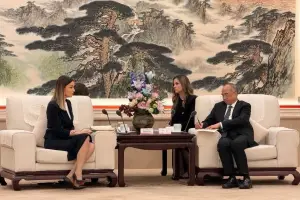
Support for marketing of Serbian wines, other products on Chinese market agreed
-
 Belgrade/Athens, 24 April 2026
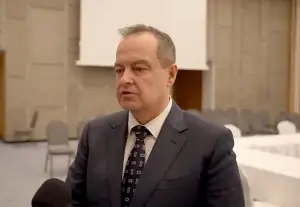
Serbia cooperative partner in fight against organised crime
-
 Belgrade/Athens, 24 April 2026
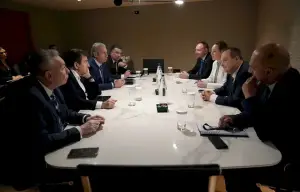
Joint action of Serbia, Greece in fight against irregular migration
-
 Belgrade/Athens, 24 April 2026
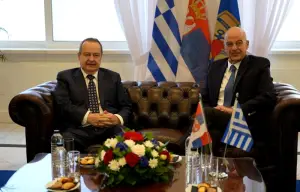
Potential for improving cooperation with Greece in field of security
-
 Belgrade/Shenzhen, 24 April 2026
Cooperation with Chinese retail giant opens doors to Serbian products
-
 Belgrade, 23 April 2026
Intensifying cooperation with Russia in field of internal affairs
-
 Belgrade/Guangzhou, 23 April 2026
Opening up new investment opportunities between Serbia, Guangzhou
-
 Belgrade/Shenzhen, 23 April 2026
Serbia strengthens its position in automotive industry through cooperation with BYD Company