
Q:
A:
Belgrade dedicated to dialogue with Pristina despite numerous challenges
Belgrade/New York,
16 August 2017
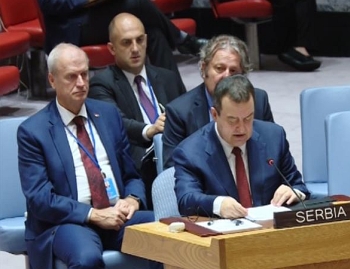
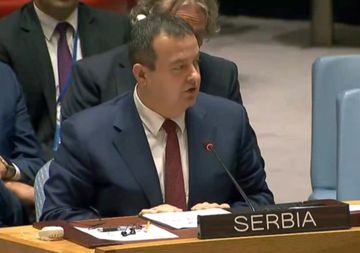
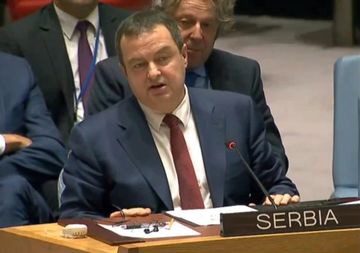
First Deputy Prime Minister and Foreign Minister Ivica Dacic invited the international community and judicial institutions in Kosovo-Metohija not to remain silent in front of hate speech and threatening the new ethnic cleansing of the remaining Serbs.
Author:
tanjug.rs
The official website of the government of Serbia brings in full the address by Dacic at the session of the United Nations Security Council, dedicated to the report of the UN Secretary-General on the work of UNMIK in the period from 16 April to 15 July 2017:
“Mr. President, Distinguished Members of the Security Council, Ladies and Gentlemen,
I would like to express my gratitude to Mr. Zahir Tanin, Special Representative of the Secretary-General, for his engagement in the realization of the mandate of the United Nations Interim Administration Mission in Kosovo (UNMIK) under UNSCR 1244 (1999) and to the members of the Security Council for the attention they accord this issue on a continual basis. In view of the exceptional importance that Serbia attaches to the work of UNMIK, I would like to point out the significance of the recent adoption of the Mission’s budget as recommended by the Advisory Committee on Administrative and Budgetary Questions (ACABQ), as well as the initial proposal of the Secretary-General to increase the budget. This adoption reflects the realistically assessed need for ensuring adequate staff and financial capacities to the Mission, so that it can meet the needs of the implementation of its mandate. At the same time, the strengthening of UNMIK sends a powerful message on the importance of the mandate and the role of the United Nations as the roof international presence in Kosovo-Metohija. Bearing in mind UNMIK’s substantial and long-term role in building and maintaining stability in the Province, as well as the need for its adaptation and strengthening following the reconfiguration of other segments of the international presence, I expect this trend to continue also in the future. It will have, I trust and believe, a positive effect to a comprehensive and more deliberate approach of the Mission to the assessment and resolution of a whole range of problems facing the Serbian and other non-Albanian communities in the realization of their fundamental rights and on the promotion of still very fragile security and the rule of law in the Province. It is evident that, in view of the sensitive environment in which it operates, the Mission often refrained from criticizing the Provisional Institutions of Self-Government (PISG) in Kosovo-Metohija in stronger terms. Regrettably, the even-handed approach in its reporting did not contribute to the PISG taking more constructive positions.
In the context of the contribution to be made to the creation of conditions for unimpeded implementation of UNMIK’s mandate and the support of the dialogue between Belgrade and Pristina, facilitated by the European Union, I would like to underline that the continued convening of Security Council meetings to discuss this issue every three months is of key importance. Regular, quarterly reporting and UNMIK’s ever more visible presence in the field can only have a positive impact on the strengthening of trust and the readiness of the Serbian and other non-Albanian communities to involve in the processes initiated by the Brussels dialogue.
The reporting period behind us was marked, by and large, by electoral activities, so that the substantial part of the Secretary-General’s Report was devoted exactly to the electoral process in Kosovo-Metohija. Pressure that had been brought to bear on the Serbian community and the practice of its intimidation were noticed in this period; they went hand in glove with threats to the security of the members of this community and were aimed at breaking the unity of the Serbian voting block. This practice, though, received inadequate coverage in the report before us. Nonetheless, it is with satisfaction that I note that the success achieved by the Serbian List at the elections has confirmed the political unity of the Serbs in Kosovo-Metohija, which is a guarantee that the constructive policy with respect to the protection of the their interests will be continued. The current stalemate in the formation of the Pristina institutions, however, gives us cause for concern, especially with regard to the continuation of the dialogue between Belgrade and Pristina. In that connection, the statement of Ramush Haradinaj, one of the candidates for “Kosovo” Prime Minister, made upon his return to Kosovo-Metohija from France, in which he threatens, speaking to ‘enemy Serbia’, that “we will do to them far worse than we did back then”, is particularly worrisome. I call on the international community and the judicial institutions in Kosovo-Metohija again not to remain silent in the face of hate speech and the threats to ethnically cleanse the remaining Serbs. We are reminded in this Report, just as we were in the previous one, of the inflammatory statements made by Albanian political leaders regarding the creation of the so-called Greater Albania; they pose an added threat to the process of reconciliation and the normalization of relations. Alongside the unacceptable unilateral acts of, and the attachment of conditions and caveats by, Pristina, such as the resolution on the suspension of the dialogue and making its continuation contingent on the fate of those charged with the commission of the most heinous crimes against the Serbian population, the threats are aimed at increasing tension and postponing compliance with obligations assumed under the agreements already achieved. Serbia welcomes each and every appeal by the international community in favour of renewing the dialogue, including the call by the Secretary-General addressed to both sides to resume the dialogue and provide new impetus to the process. Yet, l cannot but note, that they cast a pall of relativity over the responsibility of the Pristina side that was the one that broke the dialogue unilaterally in the first place.
“Mr. President, Distinguished Members of the Security Council, Ladies and Gentlemen,
I would like to express my gratitude to Mr. Zahir Tanin, Special Representative of the Secretary-General, for his engagement in the realization of the mandate of the United Nations Interim Administration Mission in Kosovo (UNMIK) under UNSCR 1244 (1999) and to the members of the Security Council for the attention they accord this issue on a continual basis. In view of the exceptional importance that Serbia attaches to the work of UNMIK, I would like to point out the significance of the recent adoption of the Mission’s budget as recommended by the Advisory Committee on Administrative and Budgetary Questions (ACABQ), as well as the initial proposal of the Secretary-General to increase the budget. This adoption reflects the realistically assessed need for ensuring adequate staff and financial capacities to the Mission, so that it can meet the needs of the implementation of its mandate. At the same time, the strengthening of UNMIK sends a powerful message on the importance of the mandate and the role of the United Nations as the roof international presence in Kosovo-Metohija. Bearing in mind UNMIK’s substantial and long-term role in building and maintaining stability in the Province, as well as the need for its adaptation and strengthening following the reconfiguration of other segments of the international presence, I expect this trend to continue also in the future. It will have, I trust and believe, a positive effect to a comprehensive and more deliberate approach of the Mission to the assessment and resolution of a whole range of problems facing the Serbian and other non-Albanian communities in the realization of their fundamental rights and on the promotion of still very fragile security and the rule of law in the Province. It is evident that, in view of the sensitive environment in which it operates, the Mission often refrained from criticizing the Provisional Institutions of Self-Government (PISG) in Kosovo-Metohija in stronger terms. Regrettably, the even-handed approach in its reporting did not contribute to the PISG taking more constructive positions.
In the context of the contribution to be made to the creation of conditions for unimpeded implementation of UNMIK’s mandate and the support of the dialogue between Belgrade and Pristina, facilitated by the European Union, I would like to underline that the continued convening of Security Council meetings to discuss this issue every three months is of key importance. Regular, quarterly reporting and UNMIK’s ever more visible presence in the field can only have a positive impact on the strengthening of trust and the readiness of the Serbian and other non-Albanian communities to involve in the processes initiated by the Brussels dialogue.
The reporting period behind us was marked, by and large, by electoral activities, so that the substantial part of the Secretary-General’s Report was devoted exactly to the electoral process in Kosovo-Metohija. Pressure that had been brought to bear on the Serbian community and the practice of its intimidation were noticed in this period; they went hand in glove with threats to the security of the members of this community and were aimed at breaking the unity of the Serbian voting block. This practice, though, received inadequate coverage in the report before us. Nonetheless, it is with satisfaction that I note that the success achieved by the Serbian List at the elections has confirmed the political unity of the Serbs in Kosovo-Metohija, which is a guarantee that the constructive policy with respect to the protection of the their interests will be continued. The current stalemate in the formation of the Pristina institutions, however, gives us cause for concern, especially with regard to the continuation of the dialogue between Belgrade and Pristina. In that connection, the statement of Ramush Haradinaj, one of the candidates for “Kosovo” Prime Minister, made upon his return to Kosovo-Metohija from France, in which he threatens, speaking to ‘enemy Serbia’, that “we will do to them far worse than we did back then”, is particularly worrisome. I call on the international community and the judicial institutions in Kosovo-Metohija again not to remain silent in the face of hate speech and the threats to ethnically cleanse the remaining Serbs. We are reminded in this Report, just as we were in the previous one, of the inflammatory statements made by Albanian political leaders regarding the creation of the so-called Greater Albania; they pose an added threat to the process of reconciliation and the normalization of relations. Alongside the unacceptable unilateral acts of, and the attachment of conditions and caveats by, Pristina, such as the resolution on the suspension of the dialogue and making its continuation contingent on the fate of those charged with the commission of the most heinous crimes against the Serbian population, the threats are aimed at increasing tension and postponing compliance with obligations assumed under the agreements already achieved. Serbia welcomes each and every appeal by the international community in favour of renewing the dialogue, including the call by the Secretary-General addressed to both sides to resume the dialogue and provide new impetus to the process. Yet, l cannot but note, that they cast a pall of relativity over the responsibility of the Pristina side that was the one that broke the dialogue unilaterally in the first place.
Author:
tanjug.rs
Notwithstanding numerous obstacles and challenges, Belgrade continues to take part in the dialogue constructively, responsibly and devotedly, with the aim of solving the outstanding issues in a status-neutral framework and contributing to the stabilization of the situation and the creation of conditions for unimpeded progress of the region of the Western Balkans towards the EU membership. It is noted in the Report that limited progress has been achieved within the technical aspect of the dialogue, in the implementation of the telecommunications agreement specifically, in which the Serbian side demonstrated its readiness to fulfil the obligations it has assumed again. The other side, however, continues to lag behind and refuses to implement the agreement on the Community of Serbian Municipalities and the judiciary, even though the agreement on the establishment of the Community forms the central part of the First agreement of principles governing the normalization of relations and is the key to the survival of the Serbian people in Kosovo-Metohija. The unilateral acts that Pristina adopts repeatedly, like the recent directive banning the use of Serbian passports issued by the Coordination Directorate of the Ministry of the Interior of the Republic of Serbia to enter and exit Kosovo-Metohija, is noted in the Report, too. This is yet another piece of evidence, provided time and time again, that the constructive and responsible approach by Belgrade within the dialogue and the implementation of the agreements reached thus far is continually met by Pristina’s obstructionism and lack of political will to work towards achieving genuine progress in the normalization of relations. This position of the Pristina institutions is a clear signal to the Security Council, European Union and the international community to bring strong pressure to bear on Pristina in order to make it fulfil the obligations it has assumed and to finally establish the most important element of the normalization of relations - the Community of Serbian Municipalities. The prevention of the creation of the ‘Army of Kosovo’ was a clear indication, Mr. President, that Pristina does mind suggestions of the international community.
The unilateral suspension of the dialogue by Pristina, Kosovo-Metohija electoral process and the intensification of the nationalistic rhetoric by Albanian political leaders accounted for the lack of progress also within the dialogue at the high level in the preceding period. The hopes that continuation of the dialogue will be possible soon have been raised by the statement made in the wake of the informal meeting of President Aleksandar Vučić and Hashim Thachi with EU High Representative Federica Mogherini on 3 July this year to the effect that it has been agreed “to work on starting a new phase of the dialogue” and that it is important to implement the agreements reached thus far.
Distinguished Members of the Security Council,
There can be no genuine reconciliation, let me point out once again, unless all crimes, without exception, are tried and responsibility taken for war crimes committed by perpetrators in one’s own ranks. The fact that no legally valid sentence has been passed yet for the killing of 1,000 Serbs in the period since the end of the conflict is eloquent proof that the judiciary in Kosovo-Metohija is unable to carry out this task. That justice is hard to come by for the Serbian victims in Kosovo-Metohija is evinced by the recent shocking acquittal of all those indicted for war crimes in the case of Klecka and the decision of the ‘Constitutional Court of Kosovo’ to uphold the appeal and acquit Sami Lustaku, former member of the Drenica group of the ‘Kosovo Liberation Army’ (KLA), a prominent member of the Democratic Party of Kosovo and the Mayor of the Srbica Municipality, initially sentenced to 12 years in prison for war crimes in the Drenica I case. Also, by acquitting Lirim Jakupi, a.k.a. ‘Commander Nazi’, the judiciary in Kosovo-Metohija showed once again that it is a tool in the hands of politicians. These instances are just another indication that there is no intention to stop the practice of cover-up and relativisation of the crimes committed by the members of the terrorist KLA in the Serbian southern Province during the conflict in the name of the aggressive expansionist idea of ‘Greater Albania’. Let me remind you also on this occasion that 18 years elapsed on 23 July this year since the monstrous massacre of Serbian harvesters at Staro Gracko when 14 people were brutally killed, the youngest of them barely 17 years old. The perpetrators of this heinous crime have not been found, and the decision to cease investigation ends the possibility of them ever be found at all. Let me also remind you that 14 years elapsed on 13 August since Serbian children were gunned down on the Bistrica river. Ivan Jovovic and 13-year-old Pantelija Dakic were killed, while other four children were gravely wounded. The frightening massacre in which innocent children were killed only because they were Serbs was committed in order to send a message to all remaining Serbs in Kosovo-Metohija that they are not wanted; a message to all those expelled from Kosovo-Metohija to forget about return; a message that ethnic cleansing will be completed no matter what. The spilling of the blood of the Serbian young on the Bistrica, Mr. President, was meant to white-wash every trace of existence and survival of the Serbs on the land of their fathers. And nobody was charged and tried for this horrendous crime, either.
The unilateral suspension of the dialogue by Pristina, Kosovo-Metohija electoral process and the intensification of the nationalistic rhetoric by Albanian political leaders accounted for the lack of progress also within the dialogue at the high level in the preceding period. The hopes that continuation of the dialogue will be possible soon have been raised by the statement made in the wake of the informal meeting of President Aleksandar Vučić and Hashim Thachi with EU High Representative Federica Mogherini on 3 July this year to the effect that it has been agreed “to work on starting a new phase of the dialogue” and that it is important to implement the agreements reached thus far.
Distinguished Members of the Security Council,
There can be no genuine reconciliation, let me point out once again, unless all crimes, without exception, are tried and responsibility taken for war crimes committed by perpetrators in one’s own ranks. The fact that no legally valid sentence has been passed yet for the killing of 1,000 Serbs in the period since the end of the conflict is eloquent proof that the judiciary in Kosovo-Metohija is unable to carry out this task. That justice is hard to come by for the Serbian victims in Kosovo-Metohija is evinced by the recent shocking acquittal of all those indicted for war crimes in the case of Klecka and the decision of the ‘Constitutional Court of Kosovo’ to uphold the appeal and acquit Sami Lustaku, former member of the Drenica group of the ‘Kosovo Liberation Army’ (KLA), a prominent member of the Democratic Party of Kosovo and the Mayor of the Srbica Municipality, initially sentenced to 12 years in prison for war crimes in the Drenica I case. Also, by acquitting Lirim Jakupi, a.k.a. ‘Commander Nazi’, the judiciary in Kosovo-Metohija showed once again that it is a tool in the hands of politicians. These instances are just another indication that there is no intention to stop the practice of cover-up and relativisation of the crimes committed by the members of the terrorist KLA in the Serbian southern Province during the conflict in the name of the aggressive expansionist idea of ‘Greater Albania’. Let me remind you also on this occasion that 18 years elapsed on 23 July this year since the monstrous massacre of Serbian harvesters at Staro Gracko when 14 people were brutally killed, the youngest of them barely 17 years old. The perpetrators of this heinous crime have not been found, and the decision to cease investigation ends the possibility of them ever be found at all. Let me also remind you that 14 years elapsed on 13 August since Serbian children were gunned down on the Bistrica river. Ivan Jovovic and 13-year-old Pantelija Dakic were killed, while other four children were gravely wounded. The frightening massacre in which innocent children were killed only because they were Serbs was committed in order to send a message to all remaining Serbs in Kosovo-Metohija that they are not wanted; a message to all those expelled from Kosovo-Metohija to forget about return; a message that ethnic cleansing will be completed no matter what. The spilling of the blood of the Serbian young on the Bistrica, Mr. President, was meant to white-wash every trace of existence and survival of the Serbs on the land of their fathers. And nobody was charged and tried for this horrendous crime, either.
Genuine democracy is postulated on a society’s renunciation of crimes and organized crime, in which independent judiciary must play the pivotal role. However, the judiciary in Kosovo-Metohija has shown time and again that it is an instrument in the hands of those who should be the first to bear the brunt of the long sword of justice. Yet, as long as paramilitary clan leaders and the patrons of criminal cartels walk freely the streets of Kosovo-Metohija towns and villages, democratization and multi-ethnicity of its society will remain just a dead letter. A common European future can be built only on the foundations of a genuine renunciation of the criminal legacy irrespective of who the perpetrators and who the victims are. It will be possible only when a killer is called a killer in Kosovo-Metohija regardless of whether the victim is called Adem or Ivan, Ramush or Pantelija. The message sent by decisions to acquit terrorists and perpetrators of gruesome crimes is that justice is unattainable for the Serbian and Albanian victims of the terror of the so-called KLA alike and that Kosovo-Metohija Serbs are dispensable. This is, at the same time, telling evidence that the international community has failed to create in Kosovo-Metohija a society based on the rule of law. In addition to the acquittals referred to above, the Report of the Secretary-General accords considerable attention to numerous systemic shortcomings of the judiciary in Kosovo-Metohija, as well as to its inability to take on and win over the political muscle of the former leadership of the KLA. Let me recall that, in his Memorandum on the last visit to Kosovo-Metohija, the Commissioner for Human Rights of the Council of Europe also accentuated that, 18 years since the end of the conflict in Kosovo-Metohija, thousands of people are waiting for justice and that it is high time conditions were created for effectively trying war criminals, the return of internally displaced persons and for clarifying the fate of the missing persons. Such assertions testify that Kosovo-Metohija institutions are far from the standards of independent judiciary and unable to try war crimes committed against the non-Albanian population in a credible and impartial way.
In view of the fact that the Specialist Chambers established to try war crimes are now fully operational and that there are no legal obstacles to raising indictments, I expect that all those suspected of committing war crimes against the Serbs and other non-Albanians in Kosovo-Metohija will be credibly indicted and that witnesses will be accorded proper court protection. Serbia stands ready to provide all necessary documentation and evidence on brutal and multiple rapes, torture and savage killings by the members of the KLA.
Mr. President,
Serbia is fully committed to safeguarding peace and its primary interest is to save lives and property of all residents of Kosovo-Metohija and to create conditions for sustainable returns of internally displaced persons. Regrettably, the ethnically motivated attacks on Serbs that continue unabated, like the recent setting on fire of the automobiles of Dr. Dragisa Milovic and Oliver Ivanovic, still obstruct the return of internally displaced persons in any significant number. These incidents are a consequence of a perpetual heating up of tensions through hate speech and the lack of a systemic response by the Kosovo institutions to numerous security and administrative problems facing non-Albanian communities. They reflect a non-existence of a genuine will to create conditions for security and sustainable life together in Kosovo-Metohija. The UNHCR data for the first half of 2017 recording only 218 voluntary individual returns of the members of minority communities are self-defeating, to say the least. Certainly, the failure by the police to classify the ethnically motivated crimes as such, as well as the lack of a systematic monitoring of the situation in this area are far from being contributive to increasing the number of returnees, just as is the institutional discrimination of the Serbs, manifested by arbitrary arrests and ethnically motivated restrictive measures in the context of the realization of basic human rights. We, therefore, appreciate the activities of the Head of UNMIK aimed at establishing contacts with municipal authorities and community representatives for the purpose of protecting the community rights, promoting reconciliation and building inter-community confidence, as well as ensuring the return of the internally displaced persons. Going forward, I submit to propose that greater attention be accorded in the next Reports to the question of widespread, pervasive threats to the human rights of the non-Albanian communities, in particular of the most vulnerable ones, the returnees in the ethnically mixed communities in southern Kosovo-Metohija who are exposed to a continuous intimidation campaign.
My statement is also a call to intensify the programmatic activities and maximize projects aimed at building confidence and improving the current situation in the areas of key importance for the realization of UNMIK’s mandate, such as the rule of law, human rights, reconciliation among communities and the return of internally displaced persons. That challenges are manifold in these areas is evinced not only by the quarterly Reports of the Secretary-General on the work of UNMIK, but also by the afore-mentioned Memorandum of the Commissioner for Human Rights of the Council of Europe on his visit to Kosovo-Metohija last February. In it, the Commissioner expresses, inter alia, serious concern that, 18 years after the end of the conflict, the ethnic lines of division, as well as numerous obstacles to voluntary returns of internally displaced persons, are still very much in evidence. In that context, it is necessary that all actors involved in the solution of the position of internally displaced persons re-commit themselves to working fully on the creation of conditions for their return, unimpeded and sustainable in the long run, which is one of the main elements of UNMIK’s mandate.
In view of the fact that the Specialist Chambers established to try war crimes are now fully operational and that there are no legal obstacles to raising indictments, I expect that all those suspected of committing war crimes against the Serbs and other non-Albanians in Kosovo-Metohija will be credibly indicted and that witnesses will be accorded proper court protection. Serbia stands ready to provide all necessary documentation and evidence on brutal and multiple rapes, torture and savage killings by the members of the KLA.
Mr. President,
Serbia is fully committed to safeguarding peace and its primary interest is to save lives and property of all residents of Kosovo-Metohija and to create conditions for sustainable returns of internally displaced persons. Regrettably, the ethnically motivated attacks on Serbs that continue unabated, like the recent setting on fire of the automobiles of Dr. Dragisa Milovic and Oliver Ivanovic, still obstruct the return of internally displaced persons in any significant number. These incidents are a consequence of a perpetual heating up of tensions through hate speech and the lack of a systemic response by the Kosovo institutions to numerous security and administrative problems facing non-Albanian communities. They reflect a non-existence of a genuine will to create conditions for security and sustainable life together in Kosovo-Metohija. The UNHCR data for the first half of 2017 recording only 218 voluntary individual returns of the members of minority communities are self-defeating, to say the least. Certainly, the failure by the police to classify the ethnically motivated crimes as such, as well as the lack of a systematic monitoring of the situation in this area are far from being contributive to increasing the number of returnees, just as is the institutional discrimination of the Serbs, manifested by arbitrary arrests and ethnically motivated restrictive measures in the context of the realization of basic human rights. We, therefore, appreciate the activities of the Head of UNMIK aimed at establishing contacts with municipal authorities and community representatives for the purpose of protecting the community rights, promoting reconciliation and building inter-community confidence, as well as ensuring the return of the internally displaced persons. Going forward, I submit to propose that greater attention be accorded in the next Reports to the question of widespread, pervasive threats to the human rights of the non-Albanian communities, in particular of the most vulnerable ones, the returnees in the ethnically mixed communities in southern Kosovo-Metohija who are exposed to a continuous intimidation campaign.
My statement is also a call to intensify the programmatic activities and maximize projects aimed at building confidence and improving the current situation in the areas of key importance for the realization of UNMIK’s mandate, such as the rule of law, human rights, reconciliation among communities and the return of internally displaced persons. That challenges are manifold in these areas is evinced not only by the quarterly Reports of the Secretary-General on the work of UNMIK, but also by the afore-mentioned Memorandum of the Commissioner for Human Rights of the Council of Europe on his visit to Kosovo-Metohija last February. In it, the Commissioner expresses, inter alia, serious concern that, 18 years after the end of the conflict, the ethnic lines of division, as well as numerous obstacles to voluntary returns of internally displaced persons, are still very much in evidence. In that context, it is necessary that all actors involved in the solution of the position of internally displaced persons re-commit themselves to working fully on the creation of conditions for their return, unimpeded and sustainable in the long run, which is one of the main elements of UNMIK’s mandate.
Author:
tanjug.rs
Institutional violations of the rights are manifested also in the area of the protection of the Serbian cultural and religious heritage in Kosovo-Metohija. In that connection, I recall the public condemnation by the Special Representative of the European Union, calling on the ‘Kosovo’ authorities to show respect for the rule of law regarding the enforcement of the judgment of the ‘Constitutional Court of Kosovo’ upholding the ownership of the Visoki Dečani monastery of 24 hectares of land in its surrounds. The Report of the Secretary-General recounts multiple breaches of the law, turning of a blind eye to judicial institutions and their decisions, refusal to cooperate with the representatives of the international community and the violations of the rights of the Serbian Orthodox Church and its believers. Civil society organizations also express concern at the failure to apply the Law on the specially protected zone of the historical centre of Prizren. I would like to use this occasion to call on the international community to step up its efforts to provide physical and legal protection to the monuments of the Serbian cultural and religious heritage that continue to be plundered, damaged, set on fire or destroyed. This is shown by the destruction and desecration of numerous Christian Orthodox cemeteries, reported extensively by the OSCE Mission in Kosovo-Metohija. The indications by Pristina of its intention to re-submit its request for admission to UNESCO are, therefore, hard to understand, in the least.
These unilateral acts, let me point out, violate the Charter of the United Nations and UNSCR 1244 (1999), while the efforts by Pristina to become a member of various international organizations have a negative effect on the continuation of the dialogue between Belgrade and Pristina which is currently at a delicate stage. The most recent example is the request by ‘Kosovo’ for admission to INTERPOL; it cannot be interpreted as an effort to promote its capacity to combat crime and terrorism and create institutional preconditions for inclusion in the exchange of information within the INTERPOL purview, the more so as this capacity is already available through the UNMIK Liaison Office. The request is just another push by Pristina to promote its unilaterally declared independence through the abuse and politicization of the work of international organizations.
The positive results achieved in the dialogue demonstrate that it has no alternative. They also demonstrate that a stronger mediation leadership is needed to ensure that agreements reached so far are implemented. The indicated commitment to start a new phase of the dialogue at the highest level and to render new impetus to the dialogue will require a genuine resolve by both sides to work towards achieving a compromise that has so far been missing on the part of Pristina. It will also require a different thinking, so as to prevent that each and every agreement is understood as defeat by any side. Serbia is firmly committed to the dialogue intended to promote regional stability; it is of paramount importance, however, that the dialogue be based on mutually acceptable solutions to all outstanding issues, without prejudice to the future status of Kosovo-Metohija and with full respect for UNSCR 1244 (1999). We believe that a serious and credible approach is needed, which will be courageous and realistic, as well as forward-looking, as exemplified by the initiative of President Vučić to launch a country-wide dialogue on Kosovo-Metohija.
Progress towards a peaceful solution of the question of Kosovo-Metohija, Mr. President, is predicated on consistent respect for international law and the Charter of the United Nations. I, therefore, express my gratitude to the countries which have not recognized the unilaterally declared independence of 'Kosovo' for their principled position and to call on those which have to support more actively the efforts to find a mutually acceptable solution to this question that will respect the rights and interests of both sides,“ Dacic concluded.
These unilateral acts, let me point out, violate the Charter of the United Nations and UNSCR 1244 (1999), while the efforts by Pristina to become a member of various international organizations have a negative effect on the continuation of the dialogue between Belgrade and Pristina which is currently at a delicate stage. The most recent example is the request by ‘Kosovo’ for admission to INTERPOL; it cannot be interpreted as an effort to promote its capacity to combat crime and terrorism and create institutional preconditions for inclusion in the exchange of information within the INTERPOL purview, the more so as this capacity is already available through the UNMIK Liaison Office. The request is just another push by Pristina to promote its unilaterally declared independence through the abuse and politicization of the work of international organizations.
The positive results achieved in the dialogue demonstrate that it has no alternative. They also demonstrate that a stronger mediation leadership is needed to ensure that agreements reached so far are implemented. The indicated commitment to start a new phase of the dialogue at the highest level and to render new impetus to the dialogue will require a genuine resolve by both sides to work towards achieving a compromise that has so far been missing on the part of Pristina. It will also require a different thinking, so as to prevent that each and every agreement is understood as defeat by any side. Serbia is firmly committed to the dialogue intended to promote regional stability; it is of paramount importance, however, that the dialogue be based on mutually acceptable solutions to all outstanding issues, without prejudice to the future status of Kosovo-Metohija and with full respect for UNSCR 1244 (1999). We believe that a serious and credible approach is needed, which will be courageous and realistic, as well as forward-looking, as exemplified by the initiative of President Vučić to launch a country-wide dialogue on Kosovo-Metohija.
Progress towards a peaceful solution of the question of Kosovo-Metohija, Mr. President, is predicated on consistent respect for international law and the Charter of the United Nations. I, therefore, express my gratitude to the countries which have not recognized the unilaterally declared independence of 'Kosovo' for their principled position and to call on those which have to support more actively the efforts to find a mutually acceptable solution to this question that will respect the rights and interests of both sides,“ Dacic concluded.
-
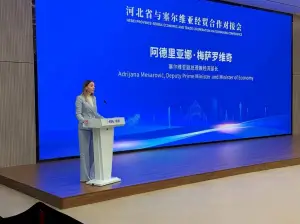 Belgrade/Shijiazhuang, 27 April 2026
New opportunities for Serbian products on Chinese market
-
 Belgrade/Shijiazhuang, 26 April 2026
Importance of strategic partnership with HBIS company confirmed
-
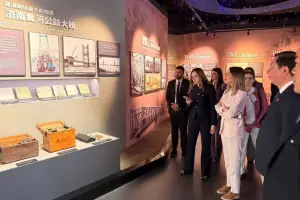 Belgrade/Jinan, 26 April 2026
Serbia builds partnerships with leading Chinese companies
-
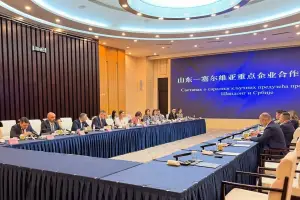 Belgrade/Jinan, 25 April 2026
Chinese companies plan new investments in Serbia
-
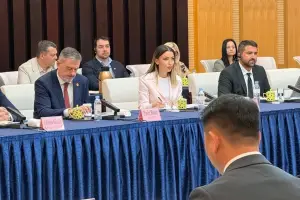 Belgrade/Jinan, 25 April 2026
Jinan Economic Forum confirms companies' interest in investing in Serbia
-
 Belgrade/Jinan, 25 April 2026
Support for sale of Serbian wines, other products on Chinese market agreed
-
 Belgrade/Athens, 24 April 2026
Serbia cooperative partner in fight against organised crime
-
 Belgrade/Athens, 24 April 2026
Joint action of Serbia, Greece in fight against irregular migration
-
 Belgrade/Athens, 24 April 2026
Potential for improving cooperation with Greece in field of security
-
 Belgrade/Shenzhen, 24 April 2026
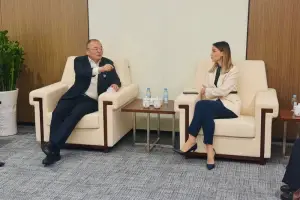
Cooperation with Chinese retail giant opens doors to Serbian products