
Q:
A:
New law on cooperative envisages formation of social cooperatives
Belgrade,
25 May 2011
Deputy Prime Minister for European Integration Bozidar Djelic said today that the Serbian government will establish the new bill on cooperatives in June this year which the Serbian parliament should adopt by the end of the year.
Author:
Tanjug
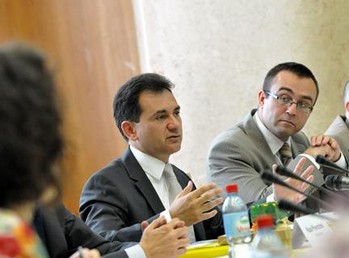
Djelic said at the conference "Social cooperatives – step closer towards social entrepreneurship in Serbia" that the new law, along the classical forms of cooperatives, such as agricultural and housing cooperatives, envisages the possibility of forming social and health cooperatives.
With this new legal framework, our country will be much more convenient for attracting European funds, he noted. The Deputy Prime Minister expressed his hope that many socially vulnerable groups, especially those who lost their jobs, and minorities, will find work in this way.
Social entrepreneurship is the main measure and the most reliable way to solve social problems in Serbia, Djelic said and added that 6% of employees in the EU work in this kind of entrepreneurship, of which one-third in cooperatives and two-thirds in the nonprofit sector.
According to him, Serbia should give a chance again to cooperatives because cooperatives are a Serbian tradition and we were among the first countries in the world to have established cooperatives.
The experience has shown that this form of organisation of work can fit well the Serbian mentality and way of thinking.
Djelic said that according to 2009 data, 2,140 cooperatives were registered in Serbia with 122,000 members and 8,500 employees.
With this new legal framework, our country will be much more convenient for attracting European funds, he noted. The Deputy Prime Minister expressed his hope that many socially vulnerable groups, especially those who lost their jobs, and minorities, will find work in this way.
Social entrepreneurship is the main measure and the most reliable way to solve social problems in Serbia, Djelic said and added that 6% of employees in the EU work in this kind of entrepreneurship, of which one-third in cooperatives and two-thirds in the nonprofit sector.
According to him, Serbia should give a chance again to cooperatives because cooperatives are a Serbian tradition and we were among the first countries in the world to have established cooperatives.
The experience has shown that this form of organisation of work can fit well the Serbian mentality and way of thinking.
Djelic said that according to 2009 data, 2,140 cooperatives were registered in Serbia with 122,000 members and 8,500 employees.
-
 Belgrade, 28 July 2026
Serbian fire-fighters sent to Spain to help extinguish fires
-
 Belgrade, 24 July 2026
Serbia, Hungary partners in addressing regional security challenges
-
 Belgrade, 24 July 2026
Dačić congratulates UK Home Secretary on reappointment
-
 Belgrade, 22 July 2026
Serbia follows modern technological achievements, attracts investments
-
 Belgrade, 22 July 2026
Continued cooperation with Russia in field of security, emergency situations
-
 Belgrade, 22 July 2026
New opportunities for expanding economic cooperation between Serbia, China
-
 Belgrade, 20 July 2026
Cooperation in field of interior affairs important segment of relations with Germany
-
 Belgrade, 16 July 2026
Expo 2027 opportunity to further strengthen international partnerships
-
 Belgrade/Bratislava, 16 July 2026
Serbia, Slovakia continue to strengthen political, economic cooperation
-
 Belgrade, 14 July 2026
Serbia bilaterally resolves problems arising from EES implementation