
Q:
A:
Belgium to endorse Serbia’s proposal for preventing asylum abuse
Belgrade,
23 May 2011
First Deputy Prime Minister and Minister of the Interior Ivica Dacic said following a meeting with Belgian State Secretary for Migration and Asylum Policy Melchior Wathelet that Serbia will implement long-term measures to prevent further asylum requests in Western European countries.
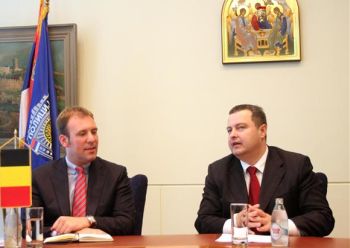
Melchior Wathelet, left, and Ivica Dacic
Author:
Tanjug
Dacic said that these measures imply border control, the control of tickets, money and insurance of passengers leaving the country, investigation into abuses by tourist agencies and companies which might benefit from organised abuse of asylum requests, and prevention of corruption regarding the issuance of personal documents.
Serbia believes that the right to asylum is a universal human right, but abuses must be censured in some way, he underlined.
Dacic said that Serbia will turn to the European Commission and ask for its recommendation as to which protection measures would be best, such as confiscating passports of persons who abused the right to asylum or preventing them from entering EU countries.
The plan to reintegrate returnees and help them with their economic development is under way in order to discourage them from seeking asylum, Dacic announced, voicing his expectation that these measures will be effective and visa liberalisation will not be jeopardised.
Wathelet said that Belgium is ready to endorse any initiative or proposal put forward by Serbia, aimed at reducing the number of asylum requests. He also noted that the number of asylees is still considerable, although the downward trend has been recorded over the last several months.
With full cooperation with EU countries, Serbia managed to implement measures to reduce asylum requests, such as border control and introduction of penalties for those who abuse visa liberalisation, Wathelet noted.
He also added that the EU Council will soon be submitted a report of the commission, which monitored the measures aimed at preventing abuse of visa liberalisation.
Serbia believes that the right to asylum is a universal human right, but abuses must be censured in some way, he underlined.
Dacic said that Serbia will turn to the European Commission and ask for its recommendation as to which protection measures would be best, such as confiscating passports of persons who abused the right to asylum or preventing them from entering EU countries.
The plan to reintegrate returnees and help them with their economic development is under way in order to discourage them from seeking asylum, Dacic announced, voicing his expectation that these measures will be effective and visa liberalisation will not be jeopardised.
Wathelet said that Belgium is ready to endorse any initiative or proposal put forward by Serbia, aimed at reducing the number of asylum requests. He also noted that the number of asylees is still considerable, although the downward trend has been recorded over the last several months.
With full cooperation with EU countries, Serbia managed to implement measures to reduce asylum requests, such as border control and introduction of penalties for those who abuse visa liberalisation, Wathelet noted.
He also added that the EU Council will soon be submitted a report of the commission, which monitored the measures aimed at preventing abuse of visa liberalisation.

-
 Belgrade, 28 July 2026
Serbian fire-fighters sent to Spain to help extinguish fires
-
 Belgrade, 24 July 2026
Serbia, Hungary partners in addressing regional security challenges
-
 Belgrade, 24 July 2026
Dačić congratulates UK Home Secretary on reappointment
-
 Belgrade, 22 July 2026
Serbia follows modern technological achievements, attracts investments
-
 Belgrade, 22 July 2026
Continued cooperation with Russia in field of security, emergency situations
-
 Belgrade, 22 July 2026
New opportunities for expanding economic cooperation between Serbia, China
-
 Belgrade, 20 July 2026
Cooperation in field of interior affairs important segment of relations with Germany
-
 Belgrade, 16 July 2026
Expo 2027 opportunity to further strengthen international partnerships
-
 Belgrade/Bratislava, 16 July 2026
Serbia, Slovakia continue to strengthen political, economic cooperation
-
 Belgrade, 14 July 2026
Serbia bilaterally resolves problems arising from EES implementation