
Q:
A:
Serbian government measures significantly reduce number of asylum applications
Belgrade,
18 May 2011
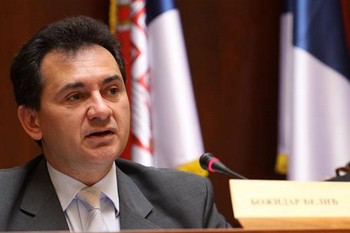
Deputy Prime Minister for European Integration Bozidar Djelic said today that the government will not allow in any way visa liberalisation to be compromised, noting that measures taken so far in solving this problem have led to a reduction in the number of requests for asylum in Western European countries by 35%.
Author:
Tanjug
Attending a round table "Challenges of forced migration in Serbia", Djelic said that the actions taken by the Serbian government last year and early this year have led to a significant reduction in the number of asylum seekers.
He pointed out that the number of asylum applications fell in all countries in which citizens with Serbian passport sought asylum, so the number of those who sought asylum in Germany in April totalled 227, in Luxembourg 27, and in Belgium 106.
The Deputy Prime Minister announced that the government will continue with actions to reduce the number of requests for asylum, and added that one of the measures is changing the legislative framework clearly specifying that organising illegal migrants is a crime.
Djelic explained that those who abused asylum will not be subject to criminal prosecution, but said that a situation in which a small number of people threaten the freedom of movement of the majority will not be tolerated.
We will reach a solution that will not threaten the freedom, but that would limit entry into the Union for those who abuse visa liberalisation, with tortuous liability, he noted.
The Deputy Prime Minister announced that tomorrow, representatives of Serbia will hand over to European Commission President Jose Manuel Barroso recommendations of Serbia, including the one saying that the EU countries should restrict access to their space for those who abuse visa liberalisation.
We ask from all EU countries to do what Norway has done, to recognise Serbia as a country for which no asylum can be sought, said Djelic and announced an even more dynamic action on the inclusion of all citizens and eliminating the economic reasons, which is mainly why the problem occurred in the first place.
Djelic said that the issue of abuse of visa liberalisation cannot be the basis for intolerance towards minorities in Serbia, despite the fact that members of minorities make up 95% of false asylum seekers.
He noted that Serbia is still a country that has most problems with refugees and internally displaced persons, recalling that there are 86,000 people from Croatia with refugee status, and the 206,000 IDPs from Kosovo-Metohija.
He pointed out that the number of asylum applications fell in all countries in which citizens with Serbian passport sought asylum, so the number of those who sought asylum in Germany in April totalled 227, in Luxembourg 27, and in Belgium 106.
The Deputy Prime Minister announced that the government will continue with actions to reduce the number of requests for asylum, and added that one of the measures is changing the legislative framework clearly specifying that organising illegal migrants is a crime.
Djelic explained that those who abused asylum will not be subject to criminal prosecution, but said that a situation in which a small number of people threaten the freedom of movement of the majority will not be tolerated.
We will reach a solution that will not threaten the freedom, but that would limit entry into the Union for those who abuse visa liberalisation, with tortuous liability, he noted.
The Deputy Prime Minister announced that tomorrow, representatives of Serbia will hand over to European Commission President Jose Manuel Barroso recommendations of Serbia, including the one saying that the EU countries should restrict access to their space for those who abuse visa liberalisation.
We ask from all EU countries to do what Norway has done, to recognise Serbia as a country for which no asylum can be sought, said Djelic and announced an even more dynamic action on the inclusion of all citizens and eliminating the economic reasons, which is mainly why the problem occurred in the first place.
Djelic said that the issue of abuse of visa liberalisation cannot be the basis for intolerance towards minorities in Serbia, despite the fact that members of minorities make up 95% of false asylum seekers.
He noted that Serbia is still a country that has most problems with refugees and internally displaced persons, recalling that there are 86,000 people from Croatia with refugee status, and the 206,000 IDPs from Kosovo-Metohija.
-
 Belgrade, 28 July 2026
Serbian fire-fighters sent to Spain to help extinguish fires
-
 Belgrade, 24 July 2026
Serbia, Hungary partners in addressing regional security challenges
-
 Belgrade, 24 July 2026
Dačić congratulates UK Home Secretary on reappointment
-
 Belgrade, 22 July 2026
Serbia follows modern technological achievements, attracts investments
-
 Belgrade, 22 July 2026
Continued cooperation with Russia in field of security, emergency situations
-
 Belgrade, 22 July 2026
New opportunities for expanding economic cooperation between Serbia, China
-
 Belgrade, 20 July 2026
Cooperation in field of interior affairs important segment of relations with Germany
-
 Belgrade, 16 July 2026
Expo 2027 opportunity to further strengthen international partnerships
-
 Belgrade/Bratislava, 16 July 2026
Serbia, Slovakia continue to strengthen political, economic cooperation
-
 Belgrade, 14 July 2026
Serbia bilaterally resolves problems arising from EES implementation