
Q:
A:
Greater representation of women in all positions in police
Belgrade,
7 October 2010
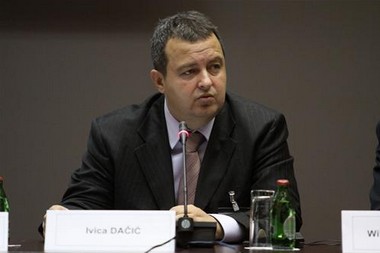
First Deputy Prime Minister and Minister of the Interior Ivica Dacic said today that all jobs in the police are available to women and that the perception of police work as being predominantly male should be changed.
Author:
Tanjug
At a presentation of the report “Establishing a network of female police officers in southeastern Europe – survey results”, Dacic pointed out that women are still underrepresented in the police, both operationally and when it comes to managerial positions.
More women started joining the police as of 2002, he illustrated.
In 2005 6.6% of police officers were female, while now this figure is 7.5%, Dacic noted.
In 2001 women made up only 2% of the police managerial staff, while five years later this figure stood at 7.8%, Dacic added.
Dacic outlined that in November last year, the percentage of women in strategic places stood at 12.6%, while women made up 21.88% of those working at an operational level.
This was achieved by making all posts available to women, Dacic stated, adding that women can now enrol in all police schools, while up until now only two schools accepted female students.
The next vital step is to establish a transparent system of human resource management, he added.
We can now say that we have women performing duties which until few years ago had only been given to men, such as the head of the Uzice Police Administration and the commanding officer of the Serbian contingent in the Haiti peace mission, he declared.
Dacic underlined that equal initial opportunities are an efficient tool for fighting prejudice, adding that in Serbia, as in the rest of the world, police are perceived as less oppressive if there are more female officers in patrols.
UNDP Resident Representative William Infante observed that Serbia has made significant changes in the economy, law implementation, the fight against organised crime and EU accession, but noted that there has to be a change in the system of values which implies more tolerance and gender equality.
Infante noted that a larger percentage of women in the police will lead to better performance, adding that practice has shown that women outperform men in certain tasks because victims often feel more inclined to trust women than men.
More women started joining the police as of 2002, he illustrated.
In 2005 6.6% of police officers were female, while now this figure is 7.5%, Dacic noted.
In 2001 women made up only 2% of the police managerial staff, while five years later this figure stood at 7.8%, Dacic added.
Dacic outlined that in November last year, the percentage of women in strategic places stood at 12.6%, while women made up 21.88% of those working at an operational level.
This was achieved by making all posts available to women, Dacic stated, adding that women can now enrol in all police schools, while up until now only two schools accepted female students.
The next vital step is to establish a transparent system of human resource management, he added.
We can now say that we have women performing duties which until few years ago had only been given to men, such as the head of the Uzice Police Administration and the commanding officer of the Serbian contingent in the Haiti peace mission, he declared.
Dacic underlined that equal initial opportunities are an efficient tool for fighting prejudice, adding that in Serbia, as in the rest of the world, police are perceived as less oppressive if there are more female officers in patrols.
UNDP Resident Representative William Infante observed that Serbia has made significant changes in the economy, law implementation, the fight against organised crime and EU accession, but noted that there has to be a change in the system of values which implies more tolerance and gender equality.
Infante noted that a larger percentage of women in the police will lead to better performance, adding that practice has shown that women outperform men in certain tasks because victims often feel more inclined to trust women than men.
-
 Belgrade, 28 July 2026
Serbian fire-fighters sent to Spain to help extinguish fires
-
 Belgrade, 24 July 2026
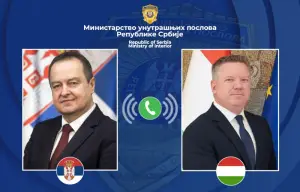
Serbia, Hungary partners in addressing regional security challenges
-
 Belgrade, 24 July 2026
Dačić congratulates UK Home Secretary on reappointment
-
 Belgrade, 22 July 2026
Serbia follows modern technological achievements, attracts investments
-
 Belgrade, 22 July 2026
Continued cooperation with Russia in field of security, emergency situations
-
 Belgrade, 22 July 2026
New opportunities for expanding economic cooperation between Serbia, China
-
 Belgrade, 20 July 2026
Cooperation in field of interior affairs important segment of relations with Germany
-
 Belgrade, 16 July 2026
Expo 2027 opportunity to further strengthen international partnerships
-
 Belgrade/Bratislava, 16 July 2026
Serbia, Slovakia continue to strengthen political, economic cooperation
-
 Belgrade, 14 July 2026
Serbia bilaterally resolves problems arising from EES implementation