
Q:
A:
Djelic presents Serbia’s investment possibilities in Davos
Belgrade/Davos,
31 January 2009
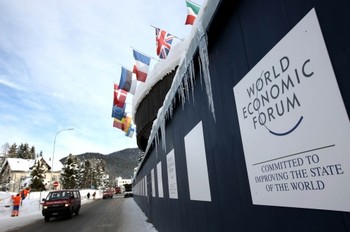
Serbian Deputy Prime Minister for EU integration Bozidar Djelic today presented Serbia’s investment possibilities at the World Economic Forum in Davos.
Author:
Tanjug
Djelic said this will help Serbia to survive the crisis by preserving its capacity and opening new investment possibilities.
He noted that Serbia is the only country in the region that held a seminar on investment possibilities at the Davos forum.
Large Syrian companies which are already doing business in Iraq, Sudan and Egypt are interested in cooperation with Serbian construction companies in that region, as well as in the sale of Serbian pharmaceutical products in that market, the Deputy Prime Minister said.
Djelic added that Polish pharmaceutical companies also want to open up plants in Serbia.
Following a meeting with World Bank Managing Director Ngozi Okonjo-Iweala, Djelic said he asked the bank for an additional $300 million as support for Corridor 10 and science and education in Serbia.
He said they agreed that before the next meeting, scheduled to be held in April in Washington, all ongoing projects are to be finalised, particularly those related to Corridor 10, so that Serbia can be in position to ask for more resources.
Djelic reiterated that he asked for an additional $300 million on behalf of Serbia, adding that it is up to the government and parliament to complete their part of the job so that Serbia can be granted the funds.
He specified that two-thirds of the funds would go to infrastructure and one-third to science and education, adding that Serbia has excellent relations with the World Bank and in the months to come it will fortify the bank’s support to our projects.
He stressed that the participation of the Serbian delegation in the Davos forum has been extremely valuable, specifying that the political and economic delegation held around 50 meetings with leading international businessmen.
The Serbian delegation also included general director of Telekom Srbija Branko Radujko, vice-president of Delta Holding Milka Forcan and president of the ComTrade Group Veselin Jevrosimovic.
The World Economic Forum is the most important economic event which will this year look at the ways to overcome the global economic crisis.
Over 40 presidents and prime ministers are taking part in this year’s forum, together with 36 finance ministers and central bank governors, including the governors from leading industrial countries of the Group of Eight, except for the USA.
He noted that Serbia is the only country in the region that held a seminar on investment possibilities at the Davos forum.
Large Syrian companies which are already doing business in Iraq, Sudan and Egypt are interested in cooperation with Serbian construction companies in that region, as well as in the sale of Serbian pharmaceutical products in that market, the Deputy Prime Minister said.
Djelic added that Polish pharmaceutical companies also want to open up plants in Serbia.
Following a meeting with World Bank Managing Director Ngozi Okonjo-Iweala, Djelic said he asked the bank for an additional $300 million as support for Corridor 10 and science and education in Serbia.
He said they agreed that before the next meeting, scheduled to be held in April in Washington, all ongoing projects are to be finalised, particularly those related to Corridor 10, so that Serbia can be in position to ask for more resources.
Djelic reiterated that he asked for an additional $300 million on behalf of Serbia, adding that it is up to the government and parliament to complete their part of the job so that Serbia can be granted the funds.
He specified that two-thirds of the funds would go to infrastructure and one-third to science and education, adding that Serbia has excellent relations with the World Bank and in the months to come it will fortify the bank’s support to our projects.
He stressed that the participation of the Serbian delegation in the Davos forum has been extremely valuable, specifying that the political and economic delegation held around 50 meetings with leading international businessmen.
The Serbian delegation also included general director of Telekom Srbija Branko Radujko, vice-president of Delta Holding Milka Forcan and president of the ComTrade Group Veselin Jevrosimovic.
The World Economic Forum is the most important economic event which will this year look at the ways to overcome the global economic crisis.
Over 40 presidents and prime ministers are taking part in this year’s forum, together with 36 finance ministers and central bank governors, including the governors from leading industrial countries of the Group of Eight, except for the USA.
-
 Belgrade, 22 July 2026
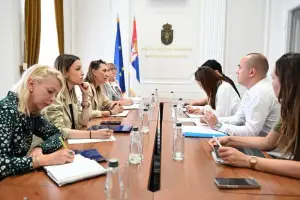
Serbia follows modern technological achievements, attracts investments
-
 Belgrade, 22 July 2026
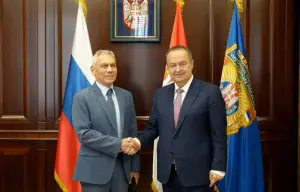
Continued cooperation with Russia in field of security, emergency situations
-
 Belgrade, 22 July 2026
New opportunities for expanding economic cooperation between Serbia, China
-
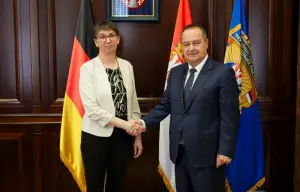 Belgrade, 20 July 2026
Cooperation in field of interior affairs important segment of relations with Germany
-
 Belgrade, 16 July 2026
Expo 2027 opportunity to further strengthen international partnerships
-
 Belgrade/Bratislava, 16 July 2026
Serbia, Slovakia continue to strengthen political, economic cooperation
-
 Belgrade, 14 July 2026
Serbia bilaterally resolves problems arising from EES implementation
-
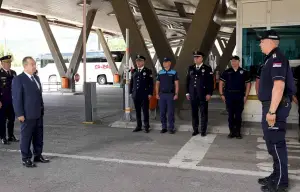 Gradina/Kalotina, 9 July 2026
Improving border cooperation between Serbia, Bulgaria
-
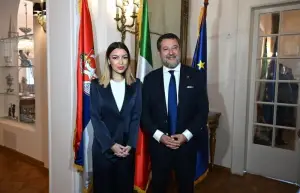 Belgrade, 7 July 2026
Further strengthening economic cooperation between Serbia, Italy
-
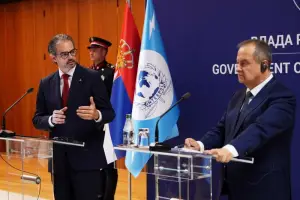 Belgrade, 6 July 2026
Serbia serious, responsible partner in fight against crime