
Q:
A:
EU’s €400m assistance to Serbia
Belgrade,
27 December 2008
Deputy Prime Minister for EU integration Bozidar Djelic today stated that talks with the EU over a €400 macro financial support to Serbia may begin soon.
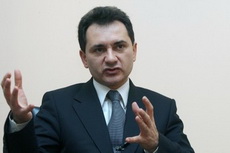
Bozidar Djelic
Author:
Tanjug
Djelic told the Tanjug news agency that he held a phone conference with EU Commissioner for Economic and Financial Affairs Joaquín Almunia, National Bank Governor Radovan Jelasic and Minister of Finance Diana Dragutinovic and clearly defined the coordinates for the EU’s possible macro financial support to Serbia.
He explained that this assistance will be realised in case Serbia’s budget revenues are lower than projected, adding that the preconditions for this are that Serbia adopts the 2009 budget on time and has a stand-by arrangement with the IMF, which he hopes will happen very soon.
As for the implementation of the Transitional Trade Agreement from January 1, Djelic said it can only speed up Serbia’s EU integration process and dismissed allegations that lower customs duties will affect the economy.
It is said that we will have €300 million less in revenues due to the lower customs duty on vehicles, but we must remember that this will increase the purchasing power of our citizens, said Djelic.
He explained that customs duties on the import of raw materials and technological equipment will be lower by around 1.86%, which will in no way affect Serbia’s economy, but will help producers to manufacture cheaper goods and place it on foreign markets.
He also recalled the deadlines mentioned by the European Commission regarding Serbia’s inclusion in the Schengen “white list” and the acquisition of EU candidate status.
According to him Serbia will apply for candidacy in 2009 and it may acquire status if it fulfils the Hague condition.
Serbia is doing all it can to successfully conclude cooperation with the Hague tribunal, said Djelic, recalling the Netherlands’ firm stance on that issue.
Their stance is not only the same but more adamant than several months ago. They probably think this is the right time to impose such a condition on us. We will try to show that we have cooperated fully with the tribunal and the best way to do that is to locate the two remaining indictees, said Djelic.
He stressed that a lot will depend on the EU’s technical capability because elections for the European Parliament will be held in June, which means the parliament will be temporarily dysfunctional until it is reconstituted.
As for Serbia’s inclusion onto the Schengen “white list”, he said the situation is much more complex, adding that this does not concern the European Commission alone, because the decision must be made by all Schengen countries.
Djelic emphasised that, regardless of the circumstances, Serbia keeps fulfilling the conditions for the white Schengen, announcing that experts from the European Commission will arrive in Belgrade next February, while the assessment of the Western Balkan’s readiness for visa liberalisation will be given in May.
The Deputy Prime Minister said that a regional initiative will be started to make sure that the Western Balkans are not forgotten when the EU distributes €200 billion it has earmarked for economic activity.
A meeting with EU Enlargement Commissioner Olli Rehn has been scheduled for the end of January to discuss this issue, said Djelic, adding that these funds may be used for infrastructure projects, developing the Danube’s potential and improving the liquidity of the economy.
He reiterated that Belgrade’s stance towards EULEX’s arrival in Kosovo is separate from Serbia’s EU integration, adding that Serbia will not allow these two issues to be connected.
Djelic stressed that Serbia will not be blackmailed over Kosovo for the sake of EU integration, adding that this is Serbia’s clear state policy.
He explained that this assistance will be realised in case Serbia’s budget revenues are lower than projected, adding that the preconditions for this are that Serbia adopts the 2009 budget on time and has a stand-by arrangement with the IMF, which he hopes will happen very soon.
As for the implementation of the Transitional Trade Agreement from January 1, Djelic said it can only speed up Serbia’s EU integration process and dismissed allegations that lower customs duties will affect the economy.
It is said that we will have €300 million less in revenues due to the lower customs duty on vehicles, but we must remember that this will increase the purchasing power of our citizens, said Djelic.
He explained that customs duties on the import of raw materials and technological equipment will be lower by around 1.86%, which will in no way affect Serbia’s economy, but will help producers to manufacture cheaper goods and place it on foreign markets.
He also recalled the deadlines mentioned by the European Commission regarding Serbia’s inclusion in the Schengen “white list” and the acquisition of EU candidate status.
According to him Serbia will apply for candidacy in 2009 and it may acquire status if it fulfils the Hague condition.
Serbia is doing all it can to successfully conclude cooperation with the Hague tribunal, said Djelic, recalling the Netherlands’ firm stance on that issue.
Their stance is not only the same but more adamant than several months ago. They probably think this is the right time to impose such a condition on us. We will try to show that we have cooperated fully with the tribunal and the best way to do that is to locate the two remaining indictees, said Djelic.
He stressed that a lot will depend on the EU’s technical capability because elections for the European Parliament will be held in June, which means the parliament will be temporarily dysfunctional until it is reconstituted.
As for Serbia’s inclusion onto the Schengen “white list”, he said the situation is much more complex, adding that this does not concern the European Commission alone, because the decision must be made by all Schengen countries.
Djelic emphasised that, regardless of the circumstances, Serbia keeps fulfilling the conditions for the white Schengen, announcing that experts from the European Commission will arrive in Belgrade next February, while the assessment of the Western Balkan’s readiness for visa liberalisation will be given in May.
The Deputy Prime Minister said that a regional initiative will be started to make sure that the Western Balkans are not forgotten when the EU distributes €200 billion it has earmarked for economic activity.
A meeting with EU Enlargement Commissioner Olli Rehn has been scheduled for the end of January to discuss this issue, said Djelic, adding that these funds may be used for infrastructure projects, developing the Danube’s potential and improving the liquidity of the economy.
He reiterated that Belgrade’s stance towards EULEX’s arrival in Kosovo is separate from Serbia’s EU integration, adding that Serbia will not allow these two issues to be connected.
Djelic stressed that Serbia will not be blackmailed over Kosovo for the sake of EU integration, adding that this is Serbia’s clear state policy.
-
 Belgrade, 22 July 2026
Serbia follows modern technological achievements, attracts investments
-
 Belgrade, 22 July 2026
Continued cooperation with Russia in field of security, emergency situations
-
 Belgrade, 22 July 2026
New opportunities for expanding economic cooperation between Serbia, China
-
 Belgrade, 20 July 2026
Cooperation in field of interior affairs important segment of relations with Germany
-
 Belgrade, 16 July 2026
Expo 2027 opportunity to further strengthen international partnerships
-
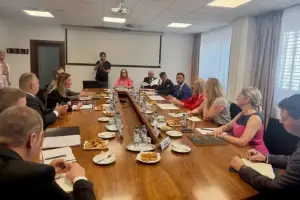 Belgrade/Bratislava, 16 July 2026
Serbia, Slovakia continue to strengthen political, economic cooperation
-
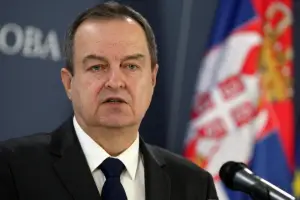 Belgrade, 14 July 2026
Serbia bilaterally resolves problems arising from EES implementation
-
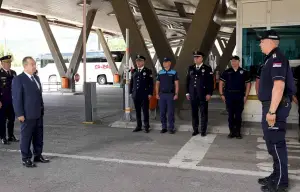 Gradina/Kalotina, 9 July 2026
Improving border cooperation between Serbia, Bulgaria
-
 Belgrade, 7 July 2026
Further strengthening economic cooperation between Serbia, Italy
-
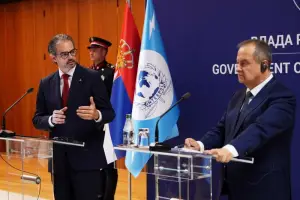 Belgrade, 6 July 2026
Serbia serious, responsible partner in fight against crime