
Q:
A:
Government takes over asylum centre
Banja Koviljaca,
22 December 2008
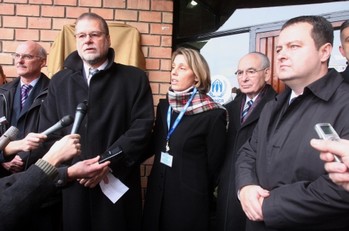
Serbian First Deputy Prime Minister and Minister of the Interior Ivica Dacic said today that by taking over the asylum centre from the UNHCR the Serbian government has fulfilled an important duty and taken a step forward in EU integration.
Author:
Tanjug
Speaking at the takeover ceremony held at the asylum centre in Banja Koviljaca Dacic said that the government will make every effort to meet its obligations.
Dacic pledged that the Interior Ministry and other authorities will ensure that asylum seekers are treated well.
He expressed gratitude to the UNHCR and the European Commission for their support, saying that he is convinced that asylum seekers, refugees and displaced persons will receive the help they need.
Serbian Deputy Prime Minister Jovan Krkobabic said at the ceremony that the Serbian people have always shown generosity towards those who are unprotected and need help.
Krkobabic said that Serbia is the only country in the Balkans that throughout its history accepted refugees no other country wanted, adding that besides the asylum seekers in the centre in Banja Koviljaca more than 97,000 refugees from neighbouring countries and nearly 200,000 internally displace persons from Kosovo are living in Serbia.
Charge d’Affaires of the European Commission Delegation to Serbia Jacques Stakenborg stressed that the EU will continue to help Serbia fulfill its obligations.
He said that since 2000 the European Commission has provided €650,000 for meeting the needs of asylum seekers, adding that €225,000 of this sum was spent on renovating and equipping the asylum centre in Banja Koviljaca.
Chief of the UNHCR mission to Serbia Lenart Kotsalainen said that the Serbian government has officially taken charge of the centre as of today, announcing that the UNHCR will continue to help Serbia.
Kotsalainen said that the asylum centre was established as a result of efforts by the UNHCR to help Serbia fulfill its international obligations.
Refugee Commissioner Vladimir Cucic also attended the ceremony.
The asylum law that came into force on April 1, 2008 obliged the Serbian government to take over all matters concerning asylum seekers that were dealt with by the UNHCR for the past 30 years.
The asylum centre was renovated with funds provided by the European Commission. The Serbian Commission for Refugees started running the centre on December 15, 2008 and the centre is now financed from the Serbian budget.
The centre was opened in November 2007 and houses those seeking asylum in Serbia or waiting to go to a “third country”.
The three storey centre building can accommodate 88 people. Separate accommodation is provided to single people, families and women with or without children. Meals are served at a local restaurant near the centre but there is a small kitchen on each floor where residents may cook their own meals.
The centre contains a day-car centre for children, a TV room and a meeting room.
Currently there are 94 people at the centre of which 19 are Iraqis waiting to travel to third countries. They are still under UNHCR jurisdiction. Others have applied for asylum in Serbia and the asylum department of the Serbian Ministry of the Interior is to decide their cases. Most of these asylum seekers are from the Ivory Coast, Nigeria, Palestine, Ethiopia, Angola and Somalia. There are seven children among them. An Albanian woman has also applied for Serbian citizenship.
Dacic pledged that the Interior Ministry and other authorities will ensure that asylum seekers are treated well.
He expressed gratitude to the UNHCR and the European Commission for their support, saying that he is convinced that asylum seekers, refugees and displaced persons will receive the help they need.
Serbian Deputy Prime Minister Jovan Krkobabic said at the ceremony that the Serbian people have always shown generosity towards those who are unprotected and need help.
Krkobabic said that Serbia is the only country in the Balkans that throughout its history accepted refugees no other country wanted, adding that besides the asylum seekers in the centre in Banja Koviljaca more than 97,000 refugees from neighbouring countries and nearly 200,000 internally displace persons from Kosovo are living in Serbia.
Charge d’Affaires of the European Commission Delegation to Serbia Jacques Stakenborg stressed that the EU will continue to help Serbia fulfill its obligations.
He said that since 2000 the European Commission has provided €650,000 for meeting the needs of asylum seekers, adding that €225,000 of this sum was spent on renovating and equipping the asylum centre in Banja Koviljaca.
Chief of the UNHCR mission to Serbia Lenart Kotsalainen said that the Serbian government has officially taken charge of the centre as of today, announcing that the UNHCR will continue to help Serbia.
Kotsalainen said that the asylum centre was established as a result of efforts by the UNHCR to help Serbia fulfill its international obligations.
Refugee Commissioner Vladimir Cucic also attended the ceremony.
The asylum law that came into force on April 1, 2008 obliged the Serbian government to take over all matters concerning asylum seekers that were dealt with by the UNHCR for the past 30 years.
The asylum centre was renovated with funds provided by the European Commission. The Serbian Commission for Refugees started running the centre on December 15, 2008 and the centre is now financed from the Serbian budget.
The centre was opened in November 2007 and houses those seeking asylum in Serbia or waiting to go to a “third country”.
The three storey centre building can accommodate 88 people. Separate accommodation is provided to single people, families and women with or without children. Meals are served at a local restaurant near the centre but there is a small kitchen on each floor where residents may cook their own meals.
The centre contains a day-car centre for children, a TV room and a meeting room.
Currently there are 94 people at the centre of which 19 are Iraqis waiting to travel to third countries. They are still under UNHCR jurisdiction. Others have applied for asylum in Serbia and the asylum department of the Serbian Ministry of the Interior is to decide their cases. Most of these asylum seekers are from the Ivory Coast, Nigeria, Palestine, Ethiopia, Angola and Somalia. There are seven children among them. An Albanian woman has also applied for Serbian citizenship.
-
 Belgrade, 22 July 2026
Serbia follows modern technological achievements, attracts investments
-
 Belgrade, 22 July 2026
Continued cooperation with Russia in field of security, emergency situations
-
 Belgrade, 22 July 2026
New opportunities for expanding economic cooperation between Serbia, China
-
 Belgrade, 20 July 2026
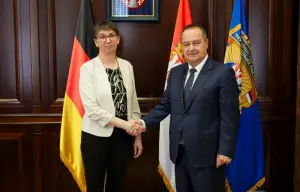
Cooperation in field of interior affairs important segment of relations with Germany
-
 Belgrade, 16 July 2026
Expo 2027 opportunity to further strengthen international partnerships
-
 Belgrade/Bratislava, 16 July 2026
Serbia, Slovakia continue to strengthen political, economic cooperation
-
 Belgrade, 14 July 2026
Serbia bilaterally resolves problems arising from EES implementation
-
 Gradina/Kalotina, 9 July 2026
Improving border cooperation between Serbia, Bulgaria
-
 Belgrade, 7 July 2026
Further strengthening economic cooperation between Serbia, Italy
-
 Belgrade, 6 July 2026
Serbia serious, responsible partner in fight against crime