
Q:
A:
Sweden endorses Serbia’s EU Integration
Belgrade,
3 December 2008
Deputy Prime Minister for EU integration Bozidar Djelic today stated that Sweden supports Serbia in its efforts to enter the Schengen ’white list’ next year and acquire EU candidate status.
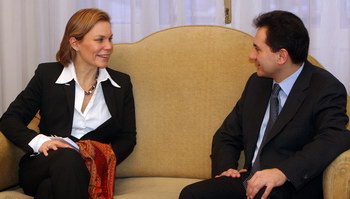
At a joint press conference with Swedish Minister for International Development Cooperation Gunilla Karlsson, Djelic said that Sweden also plans to increase its assistance to Serbia in 2009.
He said Sweden affirmed its support for Serbia’s efforts to enter the Schengen ’white list’ and acquire EU candidate status next year, on condition that it cooperates with the Hague tribunal.
According to him this support is significant, not only because Sweden was one of the first donators to Serbia, but also because it will take over the EU’s rotating presidency in the second half of 2009.
It is important for Serbia to know that in the next several years it can count on this support, primarily regarding EU integration, environmental protection, sustainable development and social cohesion, said Djelic, adding that Serbia has a high deficit and inflation rate, but insufficient resources, which is why it expects solidarity from Europe, which Sweden has already supplied.
He also announced that Director of the European Investment Bank (EIB) Philippe Maystadt will visit Belgrade on December 12 to finalise the deal according to which the EIB will grant €540 million to Serbia for infrastructure development, primarily the construction of Corridor 10.
The agreement was initially agreed upon during Maystadt’s recent visit to Serbia and it envisages that the EIB earmarks €250 million for Serbia’s financial system in order to secure banking loans to entrepreneurs.
Djelic also announced that during his visit to Serbia Maystadt will meet with President Boris Tadic and other government representatives.
He said Sweden affirmed its support for Serbia’s efforts to enter the Schengen ’white list’ and acquire EU candidate status next year, on condition that it cooperates with the Hague tribunal.
According to him this support is significant, not only because Sweden was one of the first donators to Serbia, but also because it will take over the EU’s rotating presidency in the second half of 2009.
It is important for Serbia to know that in the next several years it can count on this support, primarily regarding EU integration, environmental protection, sustainable development and social cohesion, said Djelic, adding that Serbia has a high deficit and inflation rate, but insufficient resources, which is why it expects solidarity from Europe, which Sweden has already supplied.
He also announced that Director of the European Investment Bank (EIB) Philippe Maystadt will visit Belgrade on December 12 to finalise the deal according to which the EIB will grant €540 million to Serbia for infrastructure development, primarily the construction of Corridor 10.
The agreement was initially agreed upon during Maystadt’s recent visit to Serbia and it envisages that the EIB earmarks €250 million for Serbia’s financial system in order to secure banking loans to entrepreneurs.
Djelic also announced that during his visit to Serbia Maystadt will meet with President Boris Tadic and other government representatives.
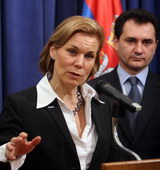
Karlsson said that Sweden is very satisfied with its relations with Serbia and supports its EU membership, adding that it will continue to provide more assistance to Serbia.
Sweden will increase its donations to Serbia since all the funding it has so far donated has been used appropriately for projects throughout the country.
She stressed that she and Djelic discussed ways to improve cooperation, specifying that they primarily focused on EU integration, the fight against corruption and building the administrative capacity of Serbia.
As for the global financial crisis, Djelic and Karlsson agreed that the real effects of it are yet to be felt.
The impact of the crisis will be hardest on the poorer parts of the population, but this challenge shows the benefit of the EU integration process for Serbia, because it will alleviate the impact on the poor as much as it can, explained Karlsson.
Sweden will increase its donations to Serbia since all the funding it has so far donated has been used appropriately for projects throughout the country.
She stressed that she and Djelic discussed ways to improve cooperation, specifying that they primarily focused on EU integration, the fight against corruption and building the administrative capacity of Serbia.
As for the global financial crisis, Djelic and Karlsson agreed that the real effects of it are yet to be felt.
The impact of the crisis will be hardest on the poorer parts of the population, but this challenge shows the benefit of the EU integration process for Serbia, because it will alleviate the impact on the poor as much as it can, explained Karlsson.
-
 Belgrade, 22 July 2026
Serbia follows modern technological achievements, attracts investments
-
 Belgrade, 22 July 2026
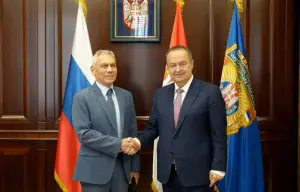
Continued cooperation with Russia in field of security, emergency situations
-
 Belgrade, 22 July 2026
New opportunities for expanding economic cooperation between Serbia, China
-
 Belgrade, 20 July 2026
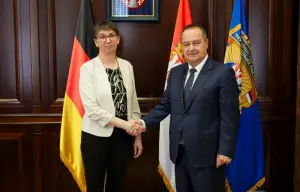
Cooperation in field of interior affairs important segment of relations with Germany
-
 Belgrade, 16 July 2026
Expo 2027 opportunity to further strengthen international partnerships
-
 Belgrade/Bratislava, 16 July 2026
Serbia, Slovakia continue to strengthen political, economic cooperation
-
 Belgrade, 14 July 2026
Serbia bilaterally resolves problems arising from EES implementation
-
 Gradina/Kalotina, 9 July 2026
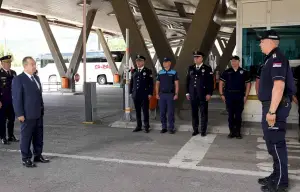
Improving border cooperation between Serbia, Bulgaria
-
 Belgrade, 7 July 2026
Further strengthening economic cooperation between Serbia, Italy
-
 Belgrade, 6 July 2026
Serbia serious, responsible partner in fight against crime