
Q:
A:
Belgrade expects Brammertz to affirm Serbia’s full cooperation with Hague tribunal
Belgrade,
13 November 2008
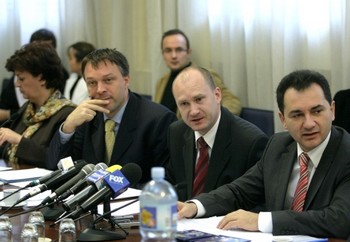
Deputy Prime Minister for EU Integration Bozidar Djelic today stated that Belgrade expects the Hague tribunal’s Chief Prosecutor Serge Brammertz to affirm Serbia’s full cooperation with the tribunal and therefore remove the remaining obstacle for the implementation of the Transitional Trade Agreement and the ratification of the Stabilisation and Association Agreement (SAA) with the EU.
Author:
Tanjug
At the EU Integration Board’s session, Djelic said that Brammertz will visit Belgrade on November 17–18, when the government will suggest his report be a base for the SAA’s ratification.
Djelic stressed that, apart from cooperation with the Hague tribunal, there are no other preconditions for Serbia’s EU integration, adding that the deployment of the EULEX mission is not a precondition in this respect. He also recommended an attempt at the inter-parliamentary level to persuade the Netherlands to alter its position regarding their definition of full cooperation.
We often hear that the Netherlands consider that Serbia’s full cooperation with the tribunal implies the arrest of Ratko Mladic. Serbia informed all EU members that full cooperation envisages Serbia’s efforts to conclude it. Otherwise the whole region could be placed in jeopardy, stressed Djelic.
As for the recent European Commission’s report on Serbia’s progress, Djelic said that the possibility for Serbia to become an EU member during 2009 has been mentioned for the first time in this report.
According to him, there are only two preconditions for Serbia’s EU accession, namely the completion of cooperation with the Hague tribunal and implementation of economic and administrative reforms.
The Deputy Prime Minister reiterated that Serbia will never change its stance that EU integration and the future status of Kosovo are two separate issues.
Speaking about visa liberalisation with the EU, Djelic said Serbia is one of the two states which the European Commission deemed most likely to be included in the Schengen "white list“, provided that they fulfil necessary administrative conditions.
The EU does not fear the illegal immigration of Serbian citizens, but worries that Serbia might become a transit country for illegal immigration from other countries, explained Djelic, noting that the inclusion in the Schengen "white list“ depends solely on Serbia and the reforms it must implement, not on any political conditions.
He said that the Serbian government cannot guarantee visa abolishment for travel to EU countries during the next year, but added that there is definitely good will to achieve that
Djelic stressed there are no guarantees that this will be accomplished, adding that EU integration without deadlines is a road with no initiatives, rhythm or dynamics. He also said Serbia must impose ambitious deadlines on itself because that drives its administration and its EU partners to work more efficiently.
I never said we will make it onto the Schengen ‘white list’ next year, but I want to emphasise that the European Commission said it will propose visa abolishment in 2009 for all countries which fulfil their administrative conditions, noted the Deputy Prime Minister.
He also informed the session of the government’s communiqué on its planned and fulfilled obligations and the realisation of all programmes and other activities necessary for speeding up Serbia’s EU accession, as well as the communiqué on Serbia’s national EU integration programme.
Djelic stressed that, apart from cooperation with the Hague tribunal, there are no other preconditions for Serbia’s EU integration, adding that the deployment of the EULEX mission is not a precondition in this respect. He also recommended an attempt at the inter-parliamentary level to persuade the Netherlands to alter its position regarding their definition of full cooperation.
We often hear that the Netherlands consider that Serbia’s full cooperation with the tribunal implies the arrest of Ratko Mladic. Serbia informed all EU members that full cooperation envisages Serbia’s efforts to conclude it. Otherwise the whole region could be placed in jeopardy, stressed Djelic.
As for the recent European Commission’s report on Serbia’s progress, Djelic said that the possibility for Serbia to become an EU member during 2009 has been mentioned for the first time in this report.
According to him, there are only two preconditions for Serbia’s EU accession, namely the completion of cooperation with the Hague tribunal and implementation of economic and administrative reforms.
The Deputy Prime Minister reiterated that Serbia will never change its stance that EU integration and the future status of Kosovo are two separate issues.
Speaking about visa liberalisation with the EU, Djelic said Serbia is one of the two states which the European Commission deemed most likely to be included in the Schengen "white list“, provided that they fulfil necessary administrative conditions.
The EU does not fear the illegal immigration of Serbian citizens, but worries that Serbia might become a transit country for illegal immigration from other countries, explained Djelic, noting that the inclusion in the Schengen "white list“ depends solely on Serbia and the reforms it must implement, not on any political conditions.
He said that the Serbian government cannot guarantee visa abolishment for travel to EU countries during the next year, but added that there is definitely good will to achieve that
Djelic stressed there are no guarantees that this will be accomplished, adding that EU integration without deadlines is a road with no initiatives, rhythm or dynamics. He also said Serbia must impose ambitious deadlines on itself because that drives its administration and its EU partners to work more efficiently.
I never said we will make it onto the Schengen ‘white list’ next year, but I want to emphasise that the European Commission said it will propose visa abolishment in 2009 for all countries which fulfil their administrative conditions, noted the Deputy Prime Minister.
He also informed the session of the government’s communiqué on its planned and fulfilled obligations and the realisation of all programmes and other activities necessary for speeding up Serbia’s EU accession, as well as the communiqué on Serbia’s national EU integration programme.
Speaking to the press after the session, Djelic reiterated that for the first time ever it has been mentioned in an official European Commission document that if Serbia fulfills its obligations to the Hague tribunal and the technical conditions set forth in the road map on visa liberalization, it could acquire candidate status and be placed on the Schengen “white list” next year.
This dialogue began in January and has lasted only 10 months, yet the European Commission report says that countries that meet the technical criteria could be recommended for visa liberalisation as early as next year, stressed the Deputy Prime Minister.
When I say this, I don’t mean that candidate status or inclusion in the “white list” next year is guaranteed, said Djelic, adding that the report gives enough incentive to work with dedication to achieve these goals under the difficult conditions imposed by the global financial crisis, European Parliament elections to be held next year and Ireland’s refusal to accept the Treaty of Lisbon.
If we are brave, firm, set ourselves deadlines and implement reforms then I am certain that we will succeed, said Djelic.
If we had not spoken of deadlines for 2008, the European Commission would not have set dates for 2009. I am ready to take all the responsibility for what we are doing. It would be more comfortable for me if we did not have a single deadline to meet, but in that case we would not be able to achieve our goal, stressed Djelic.
He said that he is aware that under the present difficult conditions it is important to remain firm and committed to reform, because that is the only guarantee for success.
The Deputy Prime Minister said that inter-coalition talks are underway this week, and meetings between government and IMF representatives are also being held, in order to reach an agreement on a new arrangement for Serbia.
Djelic said that the arrangement with the IMF will send a clear signal to global businesses that Serbia is a stable country and also open up opportunities for receiving additional financing from the European Commission in the form of macro-financial assistance.
It is important that an agreement is reached between coalition partners and that there is a wider social consensus as well regarding the measures necessary to cope with the global financial crisis in 2009, because all spheres of society must stand behind the measures to be taken in the difficult times ahead, said Djelic.
This dialogue began in January and has lasted only 10 months, yet the European Commission report says that countries that meet the technical criteria could be recommended for visa liberalisation as early as next year, stressed the Deputy Prime Minister.
When I say this, I don’t mean that candidate status or inclusion in the “white list” next year is guaranteed, said Djelic, adding that the report gives enough incentive to work with dedication to achieve these goals under the difficult conditions imposed by the global financial crisis, European Parliament elections to be held next year and Ireland’s refusal to accept the Treaty of Lisbon.
If we are brave, firm, set ourselves deadlines and implement reforms then I am certain that we will succeed, said Djelic.
If we had not spoken of deadlines for 2008, the European Commission would not have set dates for 2009. I am ready to take all the responsibility for what we are doing. It would be more comfortable for me if we did not have a single deadline to meet, but in that case we would not be able to achieve our goal, stressed Djelic.
He said that he is aware that under the present difficult conditions it is important to remain firm and committed to reform, because that is the only guarantee for success.
The Deputy Prime Minister said that inter-coalition talks are underway this week, and meetings between government and IMF representatives are also being held, in order to reach an agreement on a new arrangement for Serbia.
Djelic said that the arrangement with the IMF will send a clear signal to global businesses that Serbia is a stable country and also open up opportunities for receiving additional financing from the European Commission in the form of macro-financial assistance.
It is important that an agreement is reached between coalition partners and that there is a wider social consensus as well regarding the measures necessary to cope with the global financial crisis in 2009, because all spheres of society must stand behind the measures to be taken in the difficult times ahead, said Djelic.
-
 Belgrade, 22 July 2026
Serbia follows modern technological achievements, attracts investments
-
 Belgrade, 22 July 2026
Continued cooperation with Russia in field of security, emergency situations
-
 Belgrade, 22 July 2026
New opportunities for expanding economic cooperation between Serbia, China
-
 Belgrade, 20 July 2026
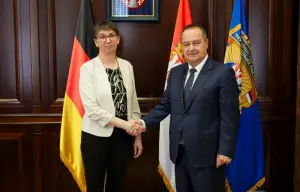
Cooperation in field of interior affairs important segment of relations with Germany
-
 Belgrade, 16 July 2026
Expo 2027 opportunity to further strengthen international partnerships
-
 Belgrade/Bratislava, 16 July 2026
Serbia, Slovakia continue to strengthen political, economic cooperation
-
 Belgrade, 14 July 2026
Serbia bilaterally resolves problems arising from EES implementation
-
 Gradina/Kalotina, 9 July 2026
Improving border cooperation between Serbia, Bulgaria
-
 Belgrade, 7 July 2026
Further strengthening economic cooperation between Serbia, Italy
-
 Belgrade, 6 July 2026
Serbia serious, responsible partner in fight against crime