
Q:
A:
RSD 1.2 billion for Roma improvement
Kragujevac,
29 October 2008
Deputy Prime Minister in charge of EU Integration Bozidar Djelic said today in Kragujevac that the 2009 budget envisages RSD 1.2 billion towards improving the quality of life for the Roma.
At a public debate on a draft strategy for the improvement of Roma conditions, Djelic stressed that setting aside more funds and the adoption of a strategy for Roma inclusion will contribute to Serbia’s appearance as a serious and efficient leader of the Decade of Roma Inclusion.
The Deputy Prime Minister, presiding over the European Council for the improvement of Roma and the Decade of Roma, stressed that housing problems and programmes for preventing Roma discrimination in education will be the Ministry’s main concern.
Two thirds of Roma live in insanitary conditions, Serbia has to solve this problem as soon as possible, he said.
In a statement to the press Djelic said that the global financial crisis will not discourage Serbia on its path towards EU accession.
Djelic pointed out that some countries such as Italy, Germany and the UK have had their smallest growth rates in the previous 25 years, which affects their public finances as well as the overall atmosphere.
He said that EU Commissioner for Enlargement Olli Rehn expects that all potential EU members, including Serbia, will make progress regarding EU integration during 2009.
Serbia is devoted to the EU integration process, therefore the Serbian government has decided to start implementing the Stabilisation and Association Agreement with the EU from January 1, 2009, said Djelic.
The Minister announced that only biometric passports will be issued from November 3 onwards.
According to him, Serbia will not be discouraged by the financial crisis in Europe. Instead it will enhance efforts to surmount the crisis and benefit from the current situation.
He stressed that the government will make efforts to secure the transfer of some multinational companies’ plants to Serbia.
Djelic also visited the biggest Roma settlement, Licka, and talked with the Roma about their everyday problems.
The Deputy Prime Minister, presiding over the European Council for the improvement of Roma and the Decade of Roma, stressed that housing problems and programmes for preventing Roma discrimination in education will be the Ministry’s main concern.
Two thirds of Roma live in insanitary conditions, Serbia has to solve this problem as soon as possible, he said.
In a statement to the press Djelic said that the global financial crisis will not discourage Serbia on its path towards EU accession.
Djelic pointed out that some countries such as Italy, Germany and the UK have had their smallest growth rates in the previous 25 years, which affects their public finances as well as the overall atmosphere.
He said that EU Commissioner for Enlargement Olli Rehn expects that all potential EU members, including Serbia, will make progress regarding EU integration during 2009.
Serbia is devoted to the EU integration process, therefore the Serbian government has decided to start implementing the Stabilisation and Association Agreement with the EU from January 1, 2009, said Djelic.
The Minister announced that only biometric passports will be issued from November 3 onwards.
According to him, Serbia will not be discouraged by the financial crisis in Europe. Instead it will enhance efforts to surmount the crisis and benefit from the current situation.
He stressed that the government will make efforts to secure the transfer of some multinational companies’ plants to Serbia.
Djelic also visited the biggest Roma settlement, Licka, and talked with the Roma about their everyday problems.
-
 Belgrade, 22 July 2026
Serbia follows modern technological achievements, attracts investments
-
 Belgrade, 22 July 2026
Continued cooperation with Russia in field of security, emergency situations
-
 Belgrade, 22 July 2026
New opportunities for expanding economic cooperation between Serbia, China
-
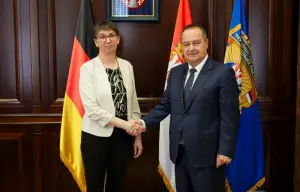 Belgrade, 20 July 2026
Cooperation in field of interior affairs important segment of relations with Germany
-
 Belgrade, 16 July 2026
Expo 2027 opportunity to further strengthen international partnerships
-
 Belgrade/Bratislava, 16 July 2026
Serbia, Slovakia continue to strengthen political, economic cooperation
-
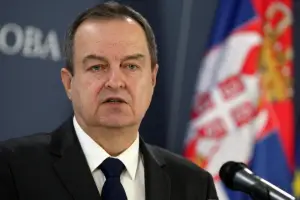 Belgrade, 14 July 2026
Serbia bilaterally resolves problems arising from EES implementation
-
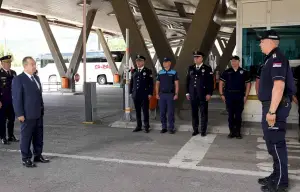 Gradina/Kalotina, 9 July 2026
Improving border cooperation between Serbia, Bulgaria
-
 Belgrade, 7 July 2026
Further strengthening economic cooperation between Serbia, Italy
-
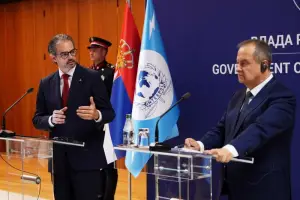 Belgrade, 6 July 2026
Serbia serious, responsible partner in fight against crime