
Q:
A:
Serbia advances on competitiveness list
Belgrade,
9 October 2008
Serbian Deputy Prime Minister and President of the National Competitiveness Council Bozidar Djelic said today that Serbia advanced from the 91st to 85th place on the World Economic Forum’s competitiveness list.
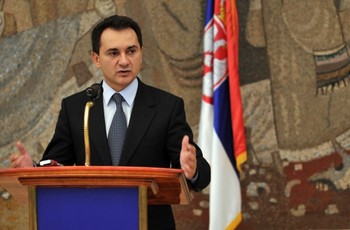
Bozidar Djelic
Author:
Tanjug
In a statement to the press before the National Competitiveness Council’s session, Djelic said that, for the first time in the last two years of downfall, Serbia has advanced on the list, and announced that the Council will analyse today the World Economic Forum’s recommendations in order for Serbia to be among 70 most competitive countries before 2011.
He recalled that the World Economic Forum pointed out that Serbia has to improve anti-monopoly legislation and added that the government will make efforts, together with the Ministry of Trade and Services, to have the new law adopted before end-November.
According to him, Serbia also has to improve state administration, above all regarding the issuing of building licences, as well as infrastructure, while the National Infrastructure Council has already made a concrete proposal.
The Deputy Prime Minister specified that the recommendations imply the necessity of education improvement, mentioning that Serbia improved competitiveness due to getting into the programme of scientific cooperation with the EU FP7.
He said that the government will introduce short-term measures before end-year, and the Ministry will introduce the budget plans for 2009.
Djelic also explained that the results of yesterday’s voting at the UN on Serbia’s resolution regarding the International Court of Justice (ICJ) and Kosovo are increasing Serbia’s ratings, because they show that Serbia uses only legal and diplomatic instruments.
He added that those are not only instruments acceptable for the world but also efficient for a country such as Serbia and estimated that in this way we show that the investment risk in Serbia is decreasing because any conflicts are not to be expected.
Djelic stressed that all this secure additional conditions for good investors such as Fiat, and announced that the signing of the strategic partnership agreement before end-November with the most competitive region in Europe Baden-Württemberg, where the centre of car industry Porsche is, will also contribute to that.
Serbia suffered a great injustice, but Serbia is still gradually coming back to the international scene and fights for its rights in the right way. Serbia has to fight hard because on the one hand we have to progress towards Europe and on the other hand we have to struggle for our integrity, explained Djelic.
He also said that, at the meeting with Serbian President Boris Tadic, French President Nicolas Sarkozy announced that he will visit our country in the first part of 2009.
When we presented our policy and all current projects in the areas of energy, infrastructure and car-parts industry to Sarkozy, he announced the visit to our country.
According to him, at the meeting with Tadic, Sarkozy admitted Serbia’s right to ask for justice at the ICJ regarding the independence of Kosovo-Metohija, because it is the only acceptable way.
Sarkozy said that not a single EU member state voted against Serbia’s proposal, although not a small number of them recognised Kosovo’s independence and they obviously accept Serbia struggling for its rights in civilised and diplomatic way, added Djelic.
He recalled that the World Economic Forum pointed out that Serbia has to improve anti-monopoly legislation and added that the government will make efforts, together with the Ministry of Trade and Services, to have the new law adopted before end-November.
According to him, Serbia also has to improve state administration, above all regarding the issuing of building licences, as well as infrastructure, while the National Infrastructure Council has already made a concrete proposal.
The Deputy Prime Minister specified that the recommendations imply the necessity of education improvement, mentioning that Serbia improved competitiveness due to getting into the programme of scientific cooperation with the EU FP7.
He said that the government will introduce short-term measures before end-year, and the Ministry will introduce the budget plans for 2009.
Djelic also explained that the results of yesterday’s voting at the UN on Serbia’s resolution regarding the International Court of Justice (ICJ) and Kosovo are increasing Serbia’s ratings, because they show that Serbia uses only legal and diplomatic instruments.
He added that those are not only instruments acceptable for the world but also efficient for a country such as Serbia and estimated that in this way we show that the investment risk in Serbia is decreasing because any conflicts are not to be expected.
Djelic stressed that all this secure additional conditions for good investors such as Fiat, and announced that the signing of the strategic partnership agreement before end-November with the most competitive region in Europe Baden-Württemberg, where the centre of car industry Porsche is, will also contribute to that.
Serbia suffered a great injustice, but Serbia is still gradually coming back to the international scene and fights for its rights in the right way. Serbia has to fight hard because on the one hand we have to progress towards Europe and on the other hand we have to struggle for our integrity, explained Djelic.
He also said that, at the meeting with Serbian President Boris Tadic, French President Nicolas Sarkozy announced that he will visit our country in the first part of 2009.
When we presented our policy and all current projects in the areas of energy, infrastructure and car-parts industry to Sarkozy, he announced the visit to our country.
According to him, at the meeting with Tadic, Sarkozy admitted Serbia’s right to ask for justice at the ICJ regarding the independence of Kosovo-Metohija, because it is the only acceptable way.
Sarkozy said that not a single EU member state voted against Serbia’s proposal, although not a small number of them recognised Kosovo’s independence and they obviously accept Serbia struggling for its rights in civilised and diplomatic way, added Djelic.
-
 Belgrade, 22 July 2026
Serbia follows modern technological achievements, attracts investments
-
 Belgrade, 22 July 2026
Continued cooperation with Russia in field of security, emergency situations
-
 Belgrade, 22 July 2026
New opportunities for expanding economic cooperation between Serbia, China
-
 Belgrade, 20 July 2026
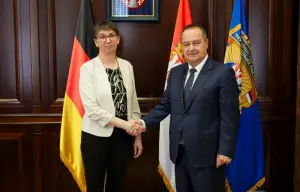
Cooperation in field of interior affairs important segment of relations with Germany
-
 Belgrade, 16 July 2026
Expo 2027 opportunity to further strengthen international partnerships
-
 Belgrade/Bratislava, 16 July 2026
Serbia, Slovakia continue to strengthen political, economic cooperation
-
 Belgrade, 14 July 2026
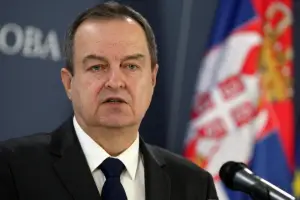
Serbia bilaterally resolves problems arising from EES implementation
-
 Gradina/Kalotina, 9 July 2026
Improving border cooperation between Serbia, Bulgaria
-
 Belgrade, 7 July 2026
Further strengthening economic cooperation between Serbia, Italy
-
 Belgrade, 6 July 2026
Serbia serious, responsible partner in fight against crime