
Q:
A:
Budget must provide macroeconomic stability
Nis,
2 October 2008
Serbian Deputy Prime Minister and Minister of Science and Technological Development Bozidar Djelic said today that the budget for 2009 must provide macroeconomic stability in Serbia and added that inflation is repressed and will be a one-digit figure by end-year.
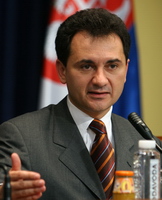
Addressing the Nis Investment Forum participants, Djelic said that the Serbian government’s goal is to secure steady regional development considering that in Belgrade 3.5% of the population are poor, while in southern Serbia the figure stands at 16%, resulting in huge regional differences.
Announcing the adoption of the Law on decentralisation, Djelic said that the Serbian government seriously contemplates adopting laws on deconcentration of state institutions and transferring some of them from Belgrade to Nis.
It is also considered that Nis becomes the centre of tobacco administration, as well as the administrative centre of certain state funds, said Djelic.
At the meeting of businessmen and potential investors, Djelic announced that Nis will be in the limelight in the following years because of large infrastructure projects in Serbia, starting from Corridor 10 to railway investments.
The gas agreement with Russia will result in one of the biggest energy projects going through Nis, said Djelic and added that this city is a junction of Serbia and South-eastern Europe concerning infrastructure.
I expect Nis to develop projects in the fields of electronics, mechanics, agriculture and energy and that today’s meeting will result in a plan for the following years, said Djelic.
Speaking about the global economic crisis, he expressed hope that it will be alleviated before it affects Serbia.
Serbia’s future lies in Serbia being a destination for investors not only from Europe and the US, but also from Asia, stressed Djelic, mentioning economic indicators in this year.
According to him, Serbia succeeded in repressing the inflation rate, which will be a one-digit figure by end-year, and at today’s government session budget revision will also be discussed, which will show the government’s responsibility.
He also confirmed that the French company Sagem plans to make significant investments in Nis, and announced that in early November in Paris he will meet with leading members of the company.
Sagem has already cooperated with a company from Nis and plans to make major investments in the city, said Djelic and added that this will provide employment to a large number of people.
According to him, the Serbian government will consider the conditions necessary for that investment and do everything to draw many technological companies to invest in Nis.
Speaking about the global financial crisis, the Minister stressed that it will not directly affect Serbia for the time being, and explained that international finances are globalised and completely interrelated, and that if Europe and the US are badly affected, Serbia will be as well.
Today in Nis Djelic signed an agreement with representatives of the Faculty of Mechanical Engineering on the implementation of a project for mobility of Serbian scientists, which will be financed from the EU budget.
A sum of €200,000 has been allocated for the project started at an initiative by the Faculty, said Djelic and added that until now Serbia has received €10 million for such projects, and by 2010 the sum might reach €40 million.
He also recalled that a sum of nearly RSD 180 million was allocated from the Serbian budget this year for scientific equipment for the University of Nis.
After Nis, Djelic also visited Pozarevac where he took part in a conference on occasion of the signed contract on a donation between the European Agency for Reconstruction and the candidate whose project was chosen as part of the third public call for the Romania–Serbia Cross-Border Cooperation Programme.
Djelic said the plan is to set aside €30 million for cross-border cooperation programmes before 2013, and the largest budget, totalling €7.2 million, has been allocated for cooperation between Serbia and Romania.
He also announced that next week the government will take a stance on the unilateral implementation of the trade agreement with the EU, adding that its implementation is important as the next step is the acquisition of EU candidate status.
Once Serbia is granted candidate status and synchronises its financial system with EU standards, it will have access to portions of the EU budget for even-balanced regional development, agriculture and human resources, said the Deputy Prime Minister.
Announcing the adoption of the Law on decentralisation, Djelic said that the Serbian government seriously contemplates adopting laws on deconcentration of state institutions and transferring some of them from Belgrade to Nis.
It is also considered that Nis becomes the centre of tobacco administration, as well as the administrative centre of certain state funds, said Djelic.
At the meeting of businessmen and potential investors, Djelic announced that Nis will be in the limelight in the following years because of large infrastructure projects in Serbia, starting from Corridor 10 to railway investments.
The gas agreement with Russia will result in one of the biggest energy projects going through Nis, said Djelic and added that this city is a junction of Serbia and South-eastern Europe concerning infrastructure.
I expect Nis to develop projects in the fields of electronics, mechanics, agriculture and energy and that today’s meeting will result in a plan for the following years, said Djelic.
Speaking about the global economic crisis, he expressed hope that it will be alleviated before it affects Serbia.
Serbia’s future lies in Serbia being a destination for investors not only from Europe and the US, but also from Asia, stressed Djelic, mentioning economic indicators in this year.
According to him, Serbia succeeded in repressing the inflation rate, which will be a one-digit figure by end-year, and at today’s government session budget revision will also be discussed, which will show the government’s responsibility.
He also confirmed that the French company Sagem plans to make significant investments in Nis, and announced that in early November in Paris he will meet with leading members of the company.
Sagem has already cooperated with a company from Nis and plans to make major investments in the city, said Djelic and added that this will provide employment to a large number of people.
According to him, the Serbian government will consider the conditions necessary for that investment and do everything to draw many technological companies to invest in Nis.
Speaking about the global financial crisis, the Minister stressed that it will not directly affect Serbia for the time being, and explained that international finances are globalised and completely interrelated, and that if Europe and the US are badly affected, Serbia will be as well.
Today in Nis Djelic signed an agreement with representatives of the Faculty of Mechanical Engineering on the implementation of a project for mobility of Serbian scientists, which will be financed from the EU budget.
A sum of €200,000 has been allocated for the project started at an initiative by the Faculty, said Djelic and added that until now Serbia has received €10 million for such projects, and by 2010 the sum might reach €40 million.
He also recalled that a sum of nearly RSD 180 million was allocated from the Serbian budget this year for scientific equipment for the University of Nis.
After Nis, Djelic also visited Pozarevac where he took part in a conference on occasion of the signed contract on a donation between the European Agency for Reconstruction and the candidate whose project was chosen as part of the third public call for the Romania–Serbia Cross-Border Cooperation Programme.
Djelic said the plan is to set aside €30 million for cross-border cooperation programmes before 2013, and the largest budget, totalling €7.2 million, has been allocated for cooperation between Serbia and Romania.
He also announced that next week the government will take a stance on the unilateral implementation of the trade agreement with the EU, adding that its implementation is important as the next step is the acquisition of EU candidate status.
Once Serbia is granted candidate status and synchronises its financial system with EU standards, it will have access to portions of the EU budget for even-balanced regional development, agriculture and human resources, said the Deputy Prime Minister.
-
 Belgrade, 22 July 2026
Serbia follows modern technological achievements, attracts investments
-
 Belgrade, 22 July 2026
Continued cooperation with Russia in field of security, emergency situations
-
 Belgrade, 22 July 2026
New opportunities for expanding economic cooperation between Serbia, China
-
 Belgrade, 20 July 2026
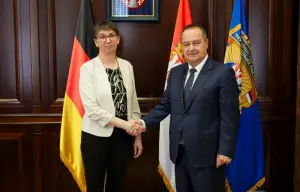
Cooperation in field of interior affairs important segment of relations with Germany
-
 Belgrade, 16 July 2026
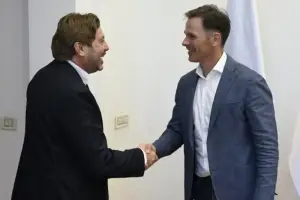
Expo 2027 opportunity to further strengthen international partnerships
-
 Belgrade/Bratislava, 16 July 2026
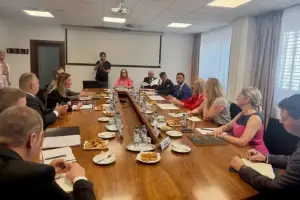
Serbia, Slovakia continue to strengthen political, economic cooperation
-
 Belgrade, 14 July 2026
Serbia bilaterally resolves problems arising from EES implementation
-
 Gradina/Kalotina, 9 July 2026
Improving border cooperation between Serbia, Bulgaria
-
 Belgrade, 7 July 2026
Further strengthening economic cooperation between Serbia, Italy
-
 Belgrade, 6 July 2026
Serbia serious, responsible partner in fight against crime