
Q:
A:
Serbian companies must be competitive on EU market
Belgrade,
20 September 2008
Deputy Prime Minister and Minister of Economy and Regional Development Mladjan Dinkic stated today that Serbia should start with the unilateral implementation of the transitional trade agreement with the EU because its companies must be competitive on the EU market.
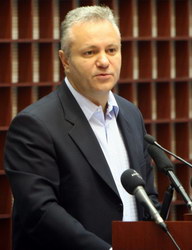
Speaking at the conference themed "Reforms in Serbia: Achievements and Challenges" taking place at the Sava Centre, Dinkic said that the first generation of reforms in Serbia has been successfully concluded with a high economic growth and macroeconomic and political stability, which enables predictability of the business sector in Serbia.
He recalled that since 2001, Serbia has drawn in $17 billion in foreign direct investment and said he expects this year’s figure to be around $4.2 billion.
The problem Serbia is faced with is the deficit in its current balance of payment because restrictive monetary and fiscal policy was not sufficient to regulate it, and what needs to be done is develop production in three sectors – car industry, IT and electric industry in order to increase export, said Dinkic.
He noted that Serbia’s revenue from car industry this year stands at €1 billion, and that until 2011 it will amount to between €2 and €3 billion.
Dinkic said that production development in the IT sector is still at the onset and added that Serbia should increase production in this sector in order to begin exporting.
He noted that business climate in Serbia must advance more rapidly, adding that in the next several years the largest investments will be in traffic infrastructure and the energy sector.
Dinkic particularly emphasised the problem of insufficient know-how related with managing investment projects in Serbia and stressed that education reform is another important challenge.
He stressed that a radical turning point in education should be carried out in order to create appropriate workforce sought on the market.
Having stressed that unemployment in Serbia is falling, Dinkic added that before the end of this government’s mandate, the unemployment rate should be reduced down to 11%.
He recalled that since 2001, Serbia has drawn in $17 billion in foreign direct investment and said he expects this year’s figure to be around $4.2 billion.
The problem Serbia is faced with is the deficit in its current balance of payment because restrictive monetary and fiscal policy was not sufficient to regulate it, and what needs to be done is develop production in three sectors – car industry, IT and electric industry in order to increase export, said Dinkic.
He noted that Serbia’s revenue from car industry this year stands at €1 billion, and that until 2011 it will amount to between €2 and €3 billion.
Dinkic said that production development in the IT sector is still at the onset and added that Serbia should increase production in this sector in order to begin exporting.
He noted that business climate in Serbia must advance more rapidly, adding that in the next several years the largest investments will be in traffic infrastructure and the energy sector.
Dinkic particularly emphasised the problem of insufficient know-how related with managing investment projects in Serbia and stressed that education reform is another important challenge.
He stressed that a radical turning point in education should be carried out in order to create appropriate workforce sought on the market.
Having stressed that unemployment in Serbia is falling, Dinkic added that before the end of this government’s mandate, the unemployment rate should be reduced down to 11%.
-
 Belgrade, 22 July 2026
Serbia follows modern technological achievements, attracts investments
-
 Belgrade, 22 July 2026
Continued cooperation with Russia in field of security, emergency situations
-
 Belgrade, 22 July 2026
New opportunities for expanding economic cooperation between Serbia, China
-
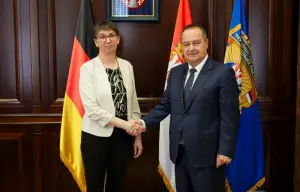 Belgrade, 20 July 2026
Cooperation in field of interior affairs important segment of relations with Germany
-
 Belgrade, 16 July 2026
Expo 2027 opportunity to further strengthen international partnerships
-
 Belgrade/Bratislava, 16 July 2026
Serbia, Slovakia continue to strengthen political, economic cooperation
-
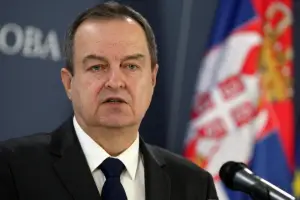 Belgrade, 14 July 2026
Serbia bilaterally resolves problems arising from EES implementation
-
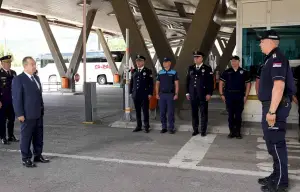 Gradina/Kalotina, 9 July 2026
Improving border cooperation between Serbia, Bulgaria
-
 Belgrade, 7 July 2026
Further strengthening economic cooperation between Serbia, Italy
-
 Belgrade, 6 July 2026
Serbia serious, responsible partner in fight against crime