
Q:
A:
Deadline for reaching dual citizenship agreement with Montenegro October 19
Belgrade,
19 September 2008
First Serbian Deputy Prime Minister and Minister of Interior Ivica Dacic said today that there is still no information on when negotiations with Montenegro on dual citizenship will begin, but the deadline for reaching an agreement is October 19.
In a statement to the news agency Tanjug, Dacic said that Serbia expects to hold constructive talks and added that even if an agreement is not reached, the Serbian citizenship law gives foreign nationals the right to acquire Serbian citizenship if they wish to do so.
He said that acquisition of Serbian citizenship does not require giving up original nationality, but Montenegro’s stance on this issue is the country’s internal matter.
Dacic said that he met with Montenegrin Interior Minister Jusuf Kalamperovic only once at an international conference in Vienna, and dual citizenship was not discussed at that occasion, neither did the Serbian Interior Ministry representatives, in the previous government, hold meetings on the issue at an international level.
According to Dacic, the working group for negotiations on dual citizenship includes representatives of the Interior Ministry, Foreign Ministry and the Serbian President’s Secretariat-General.
Our starting point is that until now we have signed agreements on dual citizenship with Bosnia and Herzegovina and Croatia. It is not our intention to interfere with Montenegro’s internal matters, and we have no wish to be involved in any controversy with Montenegro, said Dacic.
He explained that the Serbian citizenship law allows Serbian citizens dual citizenship, and they can acquire Montenegrin citizenship without giving up Serbian nationality.
Dacic said that this makes it clear that Serbia wishes to reach an agreement on dual citizenship so that Montenegrin citizens also receive the same right.
Speaking about the Montenegrin law, he said that in his opinion Montenegrin citizens who acquired foreign citizenship after Montenegro’s declaration of independence on June 3, 2006 will not be able to retain Montenegrin nationality, except in cases where an agreement on dual citizenship exists with the country in question.
We want the agreement with Montenegro to define the method of regulating voting rights as well, which are related to the place of residence, status concerning obligatory military service and tax, financial and other obligations.
According to Dacic, it is estimated that there is a large number of people in Serbia who are interested in having Serbian as well as Montenegrin citizenship, and this should not create problems in the functioning of the state and administrative organs.
This is also in accordance with recommendations made by the Parliamentary Assembly of the Council of Europe, which encourages dual and even speaks of multiple citizenship as one of the basic human rights, said Dacic.
He said that acquisition of Serbian citizenship does not require giving up original nationality, but Montenegro’s stance on this issue is the country’s internal matter.
Dacic said that he met with Montenegrin Interior Minister Jusuf Kalamperovic only once at an international conference in Vienna, and dual citizenship was not discussed at that occasion, neither did the Serbian Interior Ministry representatives, in the previous government, hold meetings on the issue at an international level.
According to Dacic, the working group for negotiations on dual citizenship includes representatives of the Interior Ministry, Foreign Ministry and the Serbian President’s Secretariat-General.
Our starting point is that until now we have signed agreements on dual citizenship with Bosnia and Herzegovina and Croatia. It is not our intention to interfere with Montenegro’s internal matters, and we have no wish to be involved in any controversy with Montenegro, said Dacic.
He explained that the Serbian citizenship law allows Serbian citizens dual citizenship, and they can acquire Montenegrin citizenship without giving up Serbian nationality.
Dacic said that this makes it clear that Serbia wishes to reach an agreement on dual citizenship so that Montenegrin citizens also receive the same right.
Speaking about the Montenegrin law, he said that in his opinion Montenegrin citizens who acquired foreign citizenship after Montenegro’s declaration of independence on June 3, 2006 will not be able to retain Montenegrin nationality, except in cases where an agreement on dual citizenship exists with the country in question.
We want the agreement with Montenegro to define the method of regulating voting rights as well, which are related to the place of residence, status concerning obligatory military service and tax, financial and other obligations.
According to Dacic, it is estimated that there is a large number of people in Serbia who are interested in having Serbian as well as Montenegrin citizenship, and this should not create problems in the functioning of the state and administrative organs.
This is also in accordance with recommendations made by the Parliamentary Assembly of the Council of Europe, which encourages dual and even speaks of multiple citizenship as one of the basic human rights, said Dacic.
-
 Belgrade, 22 July 2026
Serbia follows modern technological achievements, attracts investments
-
 Belgrade, 22 July 2026
Continued cooperation with Russia in field of security, emergency situations
-
 Belgrade, 22 July 2026
New opportunities for expanding economic cooperation between Serbia, China
-
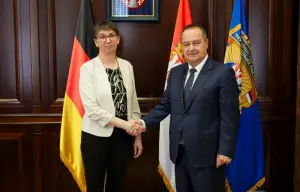 Belgrade, 20 July 2026
Cooperation in field of interior affairs important segment of relations with Germany
-
 Belgrade, 16 July 2026
Expo 2027 opportunity to further strengthen international partnerships
-
 Belgrade/Bratislava, 16 July 2026
Serbia, Slovakia continue to strengthen political, economic cooperation
-
 Belgrade, 14 July 2026
Serbia bilaterally resolves problems arising from EES implementation
-
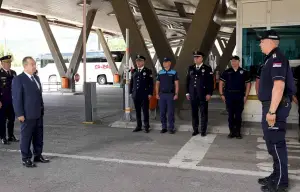 Gradina/Kalotina, 9 July 2026
Improving border cooperation between Serbia, Bulgaria
-
 Belgrade, 7 July 2026
Further strengthening economic cooperation between Serbia, Italy
-
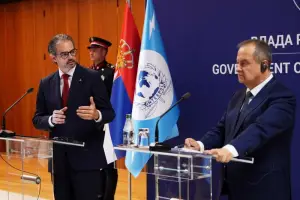 Belgrade, 6 July 2026
Serbia serious, responsible partner in fight against crime