
Q:
A:
National EU integration plan by October 2
Belgrade,
17 September 2008
Serbian Deputy Prime Minister Bozidar Djelic stated today that the final version of Serbia’s national EU integration plan will be completed by October 2 and announced that at tomorrow’s government session the issue of lower customs tax will be brought up.
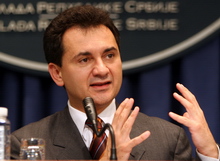
Djelic told the B92 television that the national plan was presented in May and contains all laws which Serbia must harmonise with the EU, as well as a clear road map for its EU entry.
Asked whether he is in favour of Serbia’s unilateral implementation of agreement with the EU, which EU Enlargement Commissioner Olli Rehn proposed, Djelic said that he discussed the matter with Rehn in detail behind closed doors and announced an important aspect, and that is the harmonisation of domestic legislature with the EU’s, as envisaged by the Stabilisation and Association Agreement (SAA).
Djelic announced a "unilateral implementation” which has already been underway for five years, and noted that there is a possibility that certain customs tax will be abolished. He added that quite low taxes are in question, as envisaged by the SAA, and he will propose this to the government.
On the other hand, at a separate meeting with interested ministers he will discuss whether the second step – additional customs tax cut down projected for January 2009 – is in Serbia’s interest and under which conditions, he said.
According to him, it may be advisable that the government becomes more selective and that for the sake of citizens it carries out certain affairs regarding automobiles, whereas other issues, related with the industry, should wait for a while, which will be discussed with the Chamber of Commerce and domestic businessmen.
Djelic said he told Rehn that the European Commission should send Serbia "an additional formal signal” that such an act will also be formally seen as the beginning of the implementation of the agreement.
Next year, when the European Commission begins debating whether Serbia is ready for EU candidate status, it will look at how far Serbia has gone with implementing the SAA, explained the Deputy Prime Minister and reiterated that Serbia’s goal is to become EU candidate status in 2009.
Djelic said that on Monday in Brussels it was evident that Serbia has the support of almost all countries, with the exception of Holland, that it was supported by the entire European Commission and that all EU countries, and even the Hague Tribunal’s Chief Prosecutor Serge Brammertz, are aware that Serbia is doing all it can to conclude cooperation with the tribunal.
Djelic announced that Serbia will continue presenting facts with the same intensity, so that next time the Holland will also say "yes", and stressed that this country is undoubtedly in favour of EU enlargement.
Djelic, who stated yesterday that the next opportunity to unfreeze the temporary agreement with the EU will be offered in December, once Serge Brammertz submits his report to the UN Security Council, also stressed that if one of the remaining Hague indictees is extradited to the Hague, especially Ratko Mladic, the decisions might be made sooner.
Just as the Serbian government sometimes holds session via conference call, so can the Council of Ministers, he said and added that Serbia has no reason to be discouraged and that the EU integration process has not been halted.
He also noted that Serbia has all trade preferences and that it has already received €2.5 billion in non-repayable aid from the EU.
Recalling that last November he signed a €1 billion package on behalf of the government, Djelic said that while talking with Rehn he brought up another issue, which concerns the €200 million Serbia gets from the EU. Namely, he proposed that after the EU’s 2009 budget rebalance, this sum is increased and added that Serbia proposed concrete infrastructure projects, such as electrification of Corridor 10, estimated at between €600 and €700 million.
The visa agreement is neither related to The Hague condition, nor to the SAA, repeated Djelic and added that he submitted an appropriate report to the European Commission which will be considered and to which they will ask additional questions in the following two months.
Announcing the meeting of EU interior ministers in mid-November, Djelic said that after additional questions of interior and justice ministers, there will be additional missions, and next spring the Commission will finish the job it started in January.
At that moment, that will be extended to the political level of the Commission and EU members, he explained and said it is important for Serbia to continue the activities related to the biometric passport, judiciary framework and migration control.
Djelic reiterated that the Serbia’s initiative to ask the International Court of Justice for opinion on the legality of the unilateral declaration of Kosovo’s independence and its way toward Europe are not related and that Serbia will continue to fight for its territorial integrity.
He said that the issue of Kosovo’s status is to be solved exactly where it should be – in the UN, and added that it is not true that the same countries make decisions on both issues, since European countries at the Monday meeting have barely discussed that issue for few minutes and did not define a common position, thus each country will make the decision according to its own interests.
Djelic recalled that the UN consists of 27 countries, six of which do not want to recognise Kosovo, while the UN consists of around 200 members and not all EU leading states are members of the UN Security Council.
Djelic said that Serbia’s fight for territorial integrity and Kosovo has encountered so many obstacles and is much more difficult, adding that more than 40 countries wanted to go that way, to unilaterally recognise Kosovo, thus an even harder battle awaits Serbia there.
Just as this moment of the Dutch denial will not waver us on our strategic direction toward EU entry, neither will the opposition to our initiative on behalf of some important UN members, or the fact that a number of important countries are going in the wrong direction, stressed Djelic.
Asked whether he is in favour of Serbia’s unilateral implementation of agreement with the EU, which EU Enlargement Commissioner Olli Rehn proposed, Djelic said that he discussed the matter with Rehn in detail behind closed doors and announced an important aspect, and that is the harmonisation of domestic legislature with the EU’s, as envisaged by the Stabilisation and Association Agreement (SAA).
Djelic announced a "unilateral implementation” which has already been underway for five years, and noted that there is a possibility that certain customs tax will be abolished. He added that quite low taxes are in question, as envisaged by the SAA, and he will propose this to the government.
On the other hand, at a separate meeting with interested ministers he will discuss whether the second step – additional customs tax cut down projected for January 2009 – is in Serbia’s interest and under which conditions, he said.
According to him, it may be advisable that the government becomes more selective and that for the sake of citizens it carries out certain affairs regarding automobiles, whereas other issues, related with the industry, should wait for a while, which will be discussed with the Chamber of Commerce and domestic businessmen.
Djelic said he told Rehn that the European Commission should send Serbia "an additional formal signal” that such an act will also be formally seen as the beginning of the implementation of the agreement.
Next year, when the European Commission begins debating whether Serbia is ready for EU candidate status, it will look at how far Serbia has gone with implementing the SAA, explained the Deputy Prime Minister and reiterated that Serbia’s goal is to become EU candidate status in 2009.
Djelic said that on Monday in Brussels it was evident that Serbia has the support of almost all countries, with the exception of Holland, that it was supported by the entire European Commission and that all EU countries, and even the Hague Tribunal’s Chief Prosecutor Serge Brammertz, are aware that Serbia is doing all it can to conclude cooperation with the tribunal.
Djelic announced that Serbia will continue presenting facts with the same intensity, so that next time the Holland will also say "yes", and stressed that this country is undoubtedly in favour of EU enlargement.
Djelic, who stated yesterday that the next opportunity to unfreeze the temporary agreement with the EU will be offered in December, once Serge Brammertz submits his report to the UN Security Council, also stressed that if one of the remaining Hague indictees is extradited to the Hague, especially Ratko Mladic, the decisions might be made sooner.
Just as the Serbian government sometimes holds session via conference call, so can the Council of Ministers, he said and added that Serbia has no reason to be discouraged and that the EU integration process has not been halted.
He also noted that Serbia has all trade preferences and that it has already received €2.5 billion in non-repayable aid from the EU.
Recalling that last November he signed a €1 billion package on behalf of the government, Djelic said that while talking with Rehn he brought up another issue, which concerns the €200 million Serbia gets from the EU. Namely, he proposed that after the EU’s 2009 budget rebalance, this sum is increased and added that Serbia proposed concrete infrastructure projects, such as electrification of Corridor 10, estimated at between €600 and €700 million.
The visa agreement is neither related to The Hague condition, nor to the SAA, repeated Djelic and added that he submitted an appropriate report to the European Commission which will be considered and to which they will ask additional questions in the following two months.
Announcing the meeting of EU interior ministers in mid-November, Djelic said that after additional questions of interior and justice ministers, there will be additional missions, and next spring the Commission will finish the job it started in January.
At that moment, that will be extended to the political level of the Commission and EU members, he explained and said it is important for Serbia to continue the activities related to the biometric passport, judiciary framework and migration control.
Djelic reiterated that the Serbia’s initiative to ask the International Court of Justice for opinion on the legality of the unilateral declaration of Kosovo’s independence and its way toward Europe are not related and that Serbia will continue to fight for its territorial integrity.
He said that the issue of Kosovo’s status is to be solved exactly where it should be – in the UN, and added that it is not true that the same countries make decisions on both issues, since European countries at the Monday meeting have barely discussed that issue for few minutes and did not define a common position, thus each country will make the decision according to its own interests.
Djelic recalled that the UN consists of 27 countries, six of which do not want to recognise Kosovo, while the UN consists of around 200 members and not all EU leading states are members of the UN Security Council.
Djelic said that Serbia’s fight for territorial integrity and Kosovo has encountered so many obstacles and is much more difficult, adding that more than 40 countries wanted to go that way, to unilaterally recognise Kosovo, thus an even harder battle awaits Serbia there.
Just as this moment of the Dutch denial will not waver us on our strategic direction toward EU entry, neither will the opposition to our initiative on behalf of some important UN members, or the fact that a number of important countries are going in the wrong direction, stressed Djelic.

-
 Belgrade, 22 July 2026
Serbia follows modern technological achievements, attracts investments
-
 Belgrade, 22 July 2026
Continued cooperation with Russia in field of security, emergency situations
-
 Belgrade, 22 July 2026
New opportunities for expanding economic cooperation between Serbia, China
-
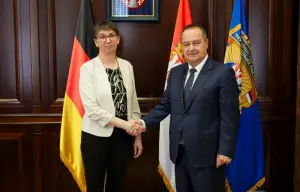 Belgrade, 20 July 2026
Cooperation in field of interior affairs important segment of relations with Germany
-
 Belgrade, 16 July 2026
Expo 2027 opportunity to further strengthen international partnerships
-
 Belgrade/Bratislava, 16 July 2026
Serbia, Slovakia continue to strengthen political, economic cooperation
-
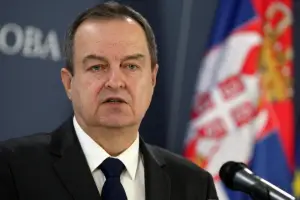 Belgrade, 14 July 2026
Serbia bilaterally resolves problems arising from EES implementation
-
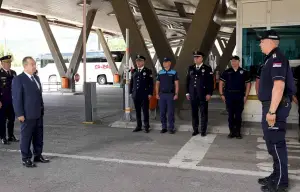 Gradina/Kalotina, 9 July 2026
Improving border cooperation between Serbia, Bulgaria
-
 Belgrade, 7 July 2026
Further strengthening economic cooperation between Serbia, Italy
-
 Belgrade, 6 July 2026
Serbia serious, responsible partner in fight against crime