
Q:
A:
Serbia is not giving up Kosovo by ratifying SAA
Belgrade,
3 September 2008
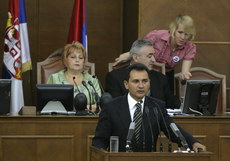
Deputy Prime Minister in charge of EU integration Bozidar Djelic stated that by ratifying the Stabilisation and Association agreement (SAA) Serbia is not giving up Kosovo-Metohija, adding that no one in the EU has imposed such a condition for the sake of Serbia’s speedy accession.
Author:
Tanjug
Elaborating on proposals for the ratification of the SAA and the transitional agreement with the EU to Serbian MPs, Djelic said that if anyone from the EU tries to impose that condition on Serbia, Serbia will choose Kosovo-Metohija.
He stressed that through these agreements, Serbia is entering into an equal relationship with the EU, as well as that proceeding from UN Security Council Resolution 1244, Article 135 of the SAA specifies that the agreement will be implemented in Serbia’s territory, but not in Kosovo-Metohija, which is currently under international administration.
The SAA does not question the province’s current status or determine its final position, because it is status neutral, he said.
He stressed that the text of the resolution on the continuity of state policy toward Kosovo-Metohija, which parliament is to discuss at the end of the week, clearly states that Serbia will never recognise the province’s independence or trade with it.
Djelic stressed that the only condition for implementation of the SAA is fulfilment of obligations towards the Hague Tribunal.
"Black days" for international justice were those when Ramus Haradinaj and Naser Oric were acquitted, but the respect of international law is our greatest ally in the defence of our territorial integrity and Kosovo-Metohija, he noted.
Djelic said he expects Serbia’s European partners to recognise Serbia’s respect of international law and that the implementation of the SAA will follow soon after the ratification.
He explained that the SAA is primarily a trade agreement which will provide many benefits to the Serbian economy, agriculture and its citizens, as well as a chance for speedier development.
The SAA implies six years of the contractual relation, starting from the moment of its ratification and ending with Serbia’s EU entry, said Djelic adding that 55% of Serbia’s trade is with the EU, and together with the CEFTA countries it amounts to three quarters.
Three quarters of investments also come from that zone, he emphasised and added that by ratifying the SAA, Serbia will have stable relations with its key partners, as well as a higher degree of legal and economic safety for both foreign and domestic investors.
He stressed that the agreement will ensure stable and higher tariff quotas for export of the most important agricultural products, and the domestic economy will be additionally protected.
A market with 500 million consumers will be open to Serbia, said Djelic adding that there will be three degrees of export liberalisation.
Djelic said that the SAA will ensure a better future for Serbian industry as a whole, particularly the textile and automotive industries.
Once we ratify the SAA in mid-September, the contract with Fiat will be signed, he announced.
Djelic stressed that adoption of the SAA, together with several other laws, will enable Serbian citizens to travel without visas to EU countries as soon as next year.
Serbian parliament resumed its special session today at which the first item on the agenda is the proposal on the ratification of the SAA.
Other items are the debate on the energy agreement with Russia, ratification of several financial arrangements for projects in Serbia, as well as a proposed resolution on the continuity of state policy towards Kosovo-Metohija. The session began on July 16.
He stressed that through these agreements, Serbia is entering into an equal relationship with the EU, as well as that proceeding from UN Security Council Resolution 1244, Article 135 of the SAA specifies that the agreement will be implemented in Serbia’s territory, but not in Kosovo-Metohija, which is currently under international administration.
The SAA does not question the province’s current status or determine its final position, because it is status neutral, he said.
He stressed that the text of the resolution on the continuity of state policy toward Kosovo-Metohija, which parliament is to discuss at the end of the week, clearly states that Serbia will never recognise the province’s independence or trade with it.
Djelic stressed that the only condition for implementation of the SAA is fulfilment of obligations towards the Hague Tribunal.
"Black days" for international justice were those when Ramus Haradinaj and Naser Oric were acquitted, but the respect of international law is our greatest ally in the defence of our territorial integrity and Kosovo-Metohija, he noted.
Djelic said he expects Serbia’s European partners to recognise Serbia’s respect of international law and that the implementation of the SAA will follow soon after the ratification.
He explained that the SAA is primarily a trade agreement which will provide many benefits to the Serbian economy, agriculture and its citizens, as well as a chance for speedier development.
The SAA implies six years of the contractual relation, starting from the moment of its ratification and ending with Serbia’s EU entry, said Djelic adding that 55% of Serbia’s trade is with the EU, and together with the CEFTA countries it amounts to three quarters.
Three quarters of investments also come from that zone, he emphasised and added that by ratifying the SAA, Serbia will have stable relations with its key partners, as well as a higher degree of legal and economic safety for both foreign and domestic investors.
He stressed that the agreement will ensure stable and higher tariff quotas for export of the most important agricultural products, and the domestic economy will be additionally protected.
A market with 500 million consumers will be open to Serbia, said Djelic adding that there will be three degrees of export liberalisation.
Djelic said that the SAA will ensure a better future for Serbian industry as a whole, particularly the textile and automotive industries.
Once we ratify the SAA in mid-September, the contract with Fiat will be signed, he announced.
Djelic stressed that adoption of the SAA, together with several other laws, will enable Serbian citizens to travel without visas to EU countries as soon as next year.
Serbian parliament resumed its special session today at which the first item on the agenda is the proposal on the ratification of the SAA.
Other items are the debate on the energy agreement with Russia, ratification of several financial arrangements for projects in Serbia, as well as a proposed resolution on the continuity of state policy towards Kosovo-Metohija. The session began on July 16.
-
 Belgrade, 22 July 2026
Serbia follows modern technological achievements, attracts investments
-
 Belgrade, 22 July 2026
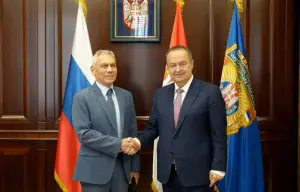
Continued cooperation with Russia in field of security, emergency situations
-
 Belgrade, 22 July 2026
New opportunities for expanding economic cooperation between Serbia, China
-
 Belgrade, 20 July 2026
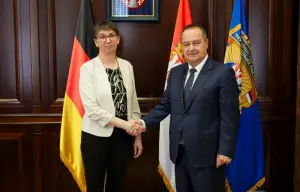
Cooperation in field of interior affairs important segment of relations with Germany
-
 Belgrade, 16 July 2026
Expo 2027 opportunity to further strengthen international partnerships
-
 Belgrade/Bratislava, 16 July 2026
Serbia, Slovakia continue to strengthen political, economic cooperation
-
 Belgrade, 14 July 2026
Serbia bilaterally resolves problems arising from EES implementation
-
 Gradina/Kalotina, 9 July 2026
Improving border cooperation between Serbia, Bulgaria
-
 Belgrade, 7 July 2026
Further strengthening economic cooperation between Serbia, Italy
-
 Belgrade, 6 July 2026
Serbia serious, responsible partner in fight against crime