
Q:
A:
Harmonisation of national programme for EU integration next week
Belgrade,
29 May 2008
Serbian Deputy Prime Minister Bozidar Djelic said today that the Serbian government should harmonise the text of the National programme for EU integration next week.
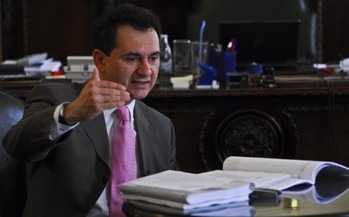
Bozidar Djelic
Author:
Tanjug
In an interview to the Tanjug news agency, Djelic explained that the text of the national programme will be submitted for public debate to the domestic professional public and for opinion to relevant addresses in the EU.
This document which has almost 1,000 pages is an action plan which specifies the pace of harmonisation of Serbia’s legislation with EU standards by 2012, defines financial costs, and the widest spectrum of tasks necessary for achievement of that goal, Djelic explained.
In mid-June Djelic will visit Brussels, where he will meet with European commissioners who will give their opinions on this programme. In that way, the future Serbian government will be able to have a complete document at one of its first sessions.
According to him, that will be further evidence of Serbia’s administrative capacities.
The Serbian Deputy Prime Minister said that it is possible that Serbia, as an EU candidate country, to begin negotiations with the EU in the second half of 2009, when Sweden will hold the rotating EU presidency.
Negotiations last from three to five years, therefore it is not unrealistic to say that Serbia could acquire EU membership by 2012. This is an opportunity and an obligation for us, stressed Djelic.
He said that if Serbia does not manage to acquire EU membership or be very near to doing so in 2012, large funds will be lost, since by then the EU will have completed its budget planning for the six year period until 2014.
When we speak about the European budget, everything will already be evident in 2012. Serbia must be part of the EU by that time, and if we lose this chance it will mean six years lost and the loss of a minimum of €1.5billion annually, to be allocated to Serbia from the European budget, specified the Deputy Prime Minister.
He stressed that Serbia, on its path to Europe, will not agree to any bargaining concerning Kosovo-Metohija, and if forced to choose between the EU and Kosovo, it will choose Kosovo.
Considering the fact that Brussels is aware of the fact that we will never agree to any such thing, they will not force us to make a choice like that, concluded Djelic.
This document which has almost 1,000 pages is an action plan which specifies the pace of harmonisation of Serbia’s legislation with EU standards by 2012, defines financial costs, and the widest spectrum of tasks necessary for achievement of that goal, Djelic explained.
In mid-June Djelic will visit Brussels, where he will meet with European commissioners who will give their opinions on this programme. In that way, the future Serbian government will be able to have a complete document at one of its first sessions.
According to him, that will be further evidence of Serbia’s administrative capacities.
The Serbian Deputy Prime Minister said that it is possible that Serbia, as an EU candidate country, to begin negotiations with the EU in the second half of 2009, when Sweden will hold the rotating EU presidency.
Negotiations last from three to five years, therefore it is not unrealistic to say that Serbia could acquire EU membership by 2012. This is an opportunity and an obligation for us, stressed Djelic.
He said that if Serbia does not manage to acquire EU membership or be very near to doing so in 2012, large funds will be lost, since by then the EU will have completed its budget planning for the six year period until 2014.
When we speak about the European budget, everything will already be evident in 2012. Serbia must be part of the EU by that time, and if we lose this chance it will mean six years lost and the loss of a minimum of €1.5billion annually, to be allocated to Serbia from the European budget, specified the Deputy Prime Minister.
He stressed that Serbia, on its path to Europe, will not agree to any bargaining concerning Kosovo-Metohija, and if forced to choose between the EU and Kosovo, it will choose Kosovo.
Considering the fact that Brussels is aware of the fact that we will never agree to any such thing, they will not force us to make a choice like that, concluded Djelic.
-
 Belgrade, 22 July 2026
Serbia follows modern technological achievements, attracts investments
-
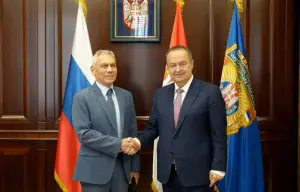 Belgrade, 22 July 2026
Continued cooperation with Russia in field of security, emergency situations
-
 Belgrade, 22 July 2026
New opportunities for expanding economic cooperation between Serbia, China
-
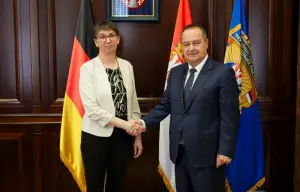 Belgrade, 20 July 2026
Cooperation in field of interior affairs important segment of relations with Germany
-
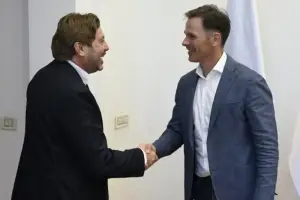 Belgrade, 16 July 2026
Expo 2027 opportunity to further strengthen international partnerships
-
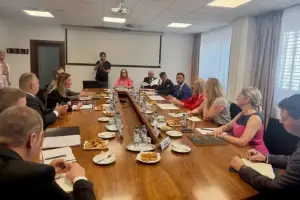 Belgrade/Bratislava, 16 July 2026
Serbia, Slovakia continue to strengthen political, economic cooperation
-
 Belgrade, 14 July 2026
Serbia bilaterally resolves problems arising from EES implementation
-
 Gradina/Kalotina, 9 July 2026
Improving border cooperation between Serbia, Bulgaria
-
 Belgrade, 7 July 2026
Further strengthening economic cooperation between Serbia, Italy
-
 Belgrade, 6 July 2026
Serbia serious, responsible partner in fight against crime