
Q:
A:
Initialling of SAA possible in October
Belgrade,
13 July 2007
Serbian Deputy Prime Minister Bozidar Djelic said today that the Stabilisation and Association Agreement (SAA) with the European Union might be initialled in October.
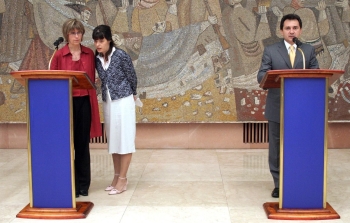
Therese Sobieski, 1st left, and Bozidar Djelic, 3rd left
Author:
Fonet
After the end of the fourth round of negotiations with the European Commission in Belgrade, Djelic said that the SAA might become effective at the beginning of 2008.
That is very important because it is a precondition for the next step, and that is obtaining the status of EU candidate. After SAA comes into force, it will be effective some six years, but that does not mean that Serbia will become an EU member after that. Serbia's goal is to become an EU member by 2012 or 2014.
Speaking about today's round of negotiations, Djelic said that the entire text of the agreement has been harmonised except for one article that deals with export of sugar.
He explained that sugar is still a sensitive issue and that a mechanism that will enable complete security in trade relations between Serbia and the EU concerning sugar and sugar products is still being sought.
Djelic said that Serbia received the annual quota for export of 180,000 tons worth €120 million, which is a very good quota and voiced hope that Serbia will be given even more.
According to him, EU recognised the strategic importance of agriculture for Serbia and that is why they gave us greater benefits than our neighbours and we have been given the opportunity to protect the most sensitive agricultural products.
Serbia is allowed to export beef tax free, at the annual quota of 8,700 tons, whose value is above €30 million, trout and carp, and 55,000 hectolitres of wine.
The Deputy Prime Minister said that there are no political conditions for the signing of SAA and added that before the initialling, one more technical round will be held in Brussels on September 10.
Head of the department for Serbia at the European Commission's Enlargement Directorate Therese Sobieski said that after the enforcement of SAA, a relationship will be established between Serbia and the EU that does not entail only liberalisation of trade, but also political dialogue and regional cooperation.
She said that the negotiating teams should also revise once more the issue of trade concessions in agriculture, after which the agreement could be initialled.
As part of the fourth round, the negotiating teams also discussed deadlines for taking preventive measures in trade between Serbia and the EU, state monopolies and public companies, and electronic communications.
That is very important because it is a precondition for the next step, and that is obtaining the status of EU candidate. After SAA comes into force, it will be effective some six years, but that does not mean that Serbia will become an EU member after that. Serbia's goal is to become an EU member by 2012 or 2014.
Speaking about today's round of negotiations, Djelic said that the entire text of the agreement has been harmonised except for one article that deals with export of sugar.
He explained that sugar is still a sensitive issue and that a mechanism that will enable complete security in trade relations between Serbia and the EU concerning sugar and sugar products is still being sought.
Djelic said that Serbia received the annual quota for export of 180,000 tons worth €120 million, which is a very good quota and voiced hope that Serbia will be given even more.
According to him, EU recognised the strategic importance of agriculture for Serbia and that is why they gave us greater benefits than our neighbours and we have been given the opportunity to protect the most sensitive agricultural products.
Serbia is allowed to export beef tax free, at the annual quota of 8,700 tons, whose value is above €30 million, trout and carp, and 55,000 hectolitres of wine.
The Deputy Prime Minister said that there are no political conditions for the signing of SAA and added that before the initialling, one more technical round will be held in Brussels on September 10.
Head of the department for Serbia at the European Commission's Enlargement Directorate Therese Sobieski said that after the enforcement of SAA, a relationship will be established between Serbia and the EU that does not entail only liberalisation of trade, but also political dialogue and regional cooperation.
She said that the negotiating teams should also revise once more the issue of trade concessions in agriculture, after which the agreement could be initialled.
As part of the fourth round, the negotiating teams also discussed deadlines for taking preventive measures in trade between Serbia and the EU, state monopolies and public companies, and electronic communications.
-
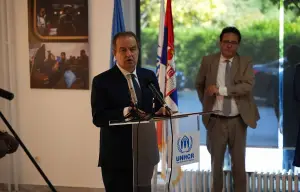 Belgrade, 19 June 2026
Serbia committed to protecting refugees, improving asylum system
-
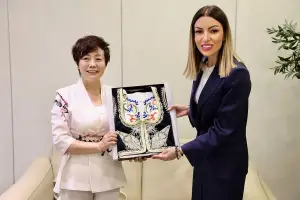 Belgrade, 19 June 2026
Visit of BYD representatives confirms strengthening of economic cooperation with China
-
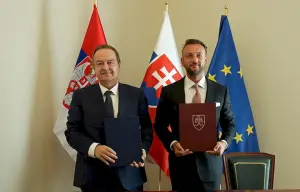 Belgrade/Bratislava, 9 June 2026
Agreement signed with Slovakia on joint surveillance of Serbia’s state border
-
 Belgrade, 3 June 2026
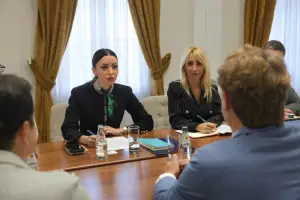
Bizerba continues to develop production in Serbia
-
 Belgrade, 2 June 2026
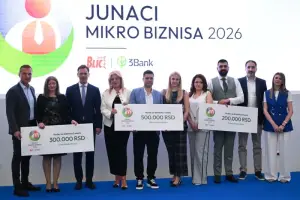
Small entrepreneurs driving force of domestic economy
-
 Belgrade, 1 June 2026
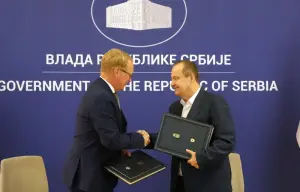
Serbia joins Frontex Partnership Academies Network
-
 Belgrade/Shanghai, 28 May 2026
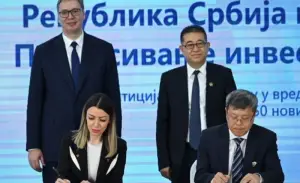
Commercial contracts signed with leading Chinese companies
-
 Belgrade/Jiaxing, 27 May 2026
Serbia entering new phase of technological, industrial development
-
 Belgrade, 27 May 2026
Dačić extends Kurban Bayram greetings
-
 Belgrade/Jinan, 26 May 2026
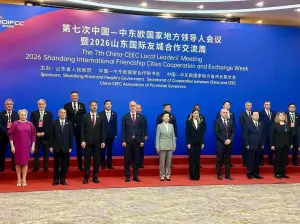
Strengthening international standing, economy through cooperation with China