
Q:
A:
Resumption of negotiations with EU puts Serbia back on Europe’s political map
Brussels,
14 June 2007
Serbian Deputy Prime Minister Bozidar Djelic said last night that resumption of negotiations with the EU on stabilisation and association is extraordinarily important because Serbia has once again started the process of European integration which came to a halt a year ago and is back on the political map of Europe.
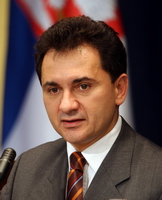
Bozidar Djelic
Addressing the press in Brussels, Djelic stressed that in a geopolitical sense this shows the direction in which Serbia is moving forward, while in the context of economy it sends a clear message to investors that the process of harmonisation is effective, and Serbia is present in the European market.
He said that it is a clear signal that Serbia, after the expected conclusion of the Stabilisation and Association Agreement (SAA), is now moving towards the second level of cooperation with the EU; acquisition of candidate status for EU membership, which is expected by the end of 2008.
That will open the door to Serbia for receiving all funds from the EU budget, said the Deputy Prime Minister and added that Serbia, owing to the SAA, will be able to get far larger funds from the EU budget.
According to Djelic, every further step taken in the process of European integration also means increased access to the European budget, and the aim is that the budget for Serbia, which is at the moment €180 million, should get doubled by the next year.
He said that European Commission President Jose Manuel Barroso has stated that certain rights will be used in order to realise that aim.
That is why Serbia must strengthen its capacities, to receive and use these funds, and to design projects for that propose, said Djelic and recalled that Serbia has until now spent 90% of funds received from the EU without any problems regarding improper use or cases of corruption.
When Serbia gets candidate status, it could have a three times larger budget from the EU, which means approximately €600 million annually, he said and added that the Serbian government’s aim is to raise this sum to €1 billion by the end of its term.
The Serbian Deputy Prime Minister pointed to the fact that Serbia today exports only a fifth of its approved quota of high quality beef to the EU market, and the difference between the current and potential export stands at €280 million.
He explained that the SAA will confirm that quota, and added that this will be important for Serbia, which at the present imports large quantities of fish, to renew fish production.
Djelic stressed that Serbia will have an overall period of six years to make its economy more competitive since the customs and other protection will be gradually reduced during that period.
That will give Serbia the opportunity to freely export to the EU market, and within those six years it could protect its own production and market from competition from other EU countries, he said.
He said that EU Enlargement Commissioner Olli Rehn has reiterated that the process of Serbia’s EU integration, which the European Commission is conducting on behalf of all EU countries, is separate from the process of resolving the issue of Kosovo-Metohija.
This shows that those who fear that Serbia will have to choose between Europe and Kosovo-Metohija are mistaken, since Serbia has not been asked to make this choice and the government is making all efforts that this does not happen. But if, such a demand were to be made, we will never accept it because we want Europe as well as Kosovo-Metohija, said Djelic.
He stressed that the Serbian team for negotiations was complimented upon its technical expertise.
The second round of negotiations is scheduled to take place on June 12 and 13, and we are able to conclude the technical part of negotiations by the end of July, stressed Djelic and added that in that case the agreement could be initialled in September or October, followed by the procedure for ratification.
He said that it is a clear signal that Serbia, after the expected conclusion of the Stabilisation and Association Agreement (SAA), is now moving towards the second level of cooperation with the EU; acquisition of candidate status for EU membership, which is expected by the end of 2008.
That will open the door to Serbia for receiving all funds from the EU budget, said the Deputy Prime Minister and added that Serbia, owing to the SAA, will be able to get far larger funds from the EU budget.
According to Djelic, every further step taken in the process of European integration also means increased access to the European budget, and the aim is that the budget for Serbia, which is at the moment €180 million, should get doubled by the next year.
He said that European Commission President Jose Manuel Barroso has stated that certain rights will be used in order to realise that aim.
That is why Serbia must strengthen its capacities, to receive and use these funds, and to design projects for that propose, said Djelic and recalled that Serbia has until now spent 90% of funds received from the EU without any problems regarding improper use or cases of corruption.
When Serbia gets candidate status, it could have a three times larger budget from the EU, which means approximately €600 million annually, he said and added that the Serbian government’s aim is to raise this sum to €1 billion by the end of its term.
The Serbian Deputy Prime Minister pointed to the fact that Serbia today exports only a fifth of its approved quota of high quality beef to the EU market, and the difference between the current and potential export stands at €280 million.
He explained that the SAA will confirm that quota, and added that this will be important for Serbia, which at the present imports large quantities of fish, to renew fish production.
Djelic stressed that Serbia will have an overall period of six years to make its economy more competitive since the customs and other protection will be gradually reduced during that period.
That will give Serbia the opportunity to freely export to the EU market, and within those six years it could protect its own production and market from competition from other EU countries, he said.
He said that EU Enlargement Commissioner Olli Rehn has reiterated that the process of Serbia’s EU integration, which the European Commission is conducting on behalf of all EU countries, is separate from the process of resolving the issue of Kosovo-Metohija.
This shows that those who fear that Serbia will have to choose between Europe and Kosovo-Metohija are mistaken, since Serbia has not been asked to make this choice and the government is making all efforts that this does not happen. But if, such a demand were to be made, we will never accept it because we want Europe as well as Kosovo-Metohija, said Djelic.
He stressed that the Serbian team for negotiations was complimented upon its technical expertise.
The second round of negotiations is scheduled to take place on June 12 and 13, and we are able to conclude the technical part of negotiations by the end of July, stressed Djelic and added that in that case the agreement could be initialled in September or October, followed by the procedure for ratification.

-
 Belgrade, 22 June 2026
Serbia reliable, credible investment partner
-
 Belgrade, 19 June 2026
Serbia committed to protecting refugees, improving asylum system
-
 Belgrade, 19 June 2026
Visit of BYD representatives confirms strengthening of economic cooperation with China
-
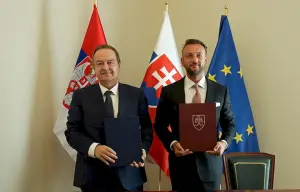 Belgrade/Bratislava, 9 June 2026
Agreement signed with Slovakia on joint surveillance of Serbia’s state border
-
 Belgrade, 3 June 2026
Bizerba continues to develop production in Serbia
-
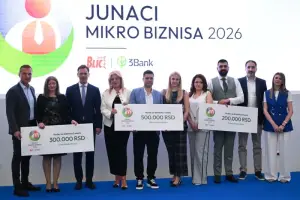 Belgrade, 2 June 2026
Small entrepreneurs driving force of domestic economy
-
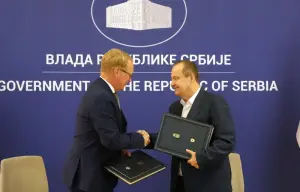 Belgrade, 1 June 2026
Serbia joins Frontex Partnership Academies Network
-
 Belgrade/Shanghai, 28 May 2026
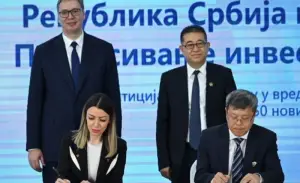
Commercial contracts signed with leading Chinese companies
-
 Belgrade/Jiaxing, 27 May 2026
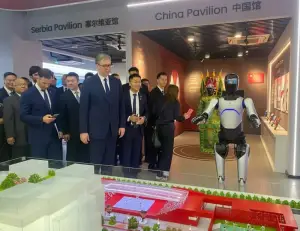
Serbia entering new phase of technological, industrial development
-
 Belgrade, 27 May 2026
Dačić extends Kurban Bayram greetings