
Q:
A:
Any imposed solution to Kosovo issue unacceptable for Serbia
Belgrade,
16 January 2007
Serbian Prime Minister Vojislav Kostunica met today with Greek Prime Minister Kostas Karamanlis and said afterwards that the solution to the future status of Kosovo-Metohija should be sought solely within the framework of international law and the fundamental provision of the UN Charter regarding the inviolability of state borders and state sovereignty and territorial integrity.
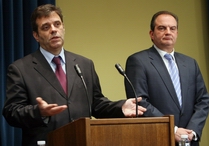
Vojislav Kostunica, left, and Kostas Karamanlis
Following the meeting with Karamanlis, Kostunica stated that they discussed all the issues that are usually the subject of talks between Serbian and Greek representatives, adding that special attention was paid to Kosovo-Metohija.
Serbian Prime Minister told the press that the Greek delegation included Greek Minister of Foreign Affairs Dora Bakoyannis, adding that at the meeting he reiterated the stance of Serbian institutions and the government regarding this issue.
He told them that the solution to Kosovo should be sought solely and only within international law and that in order for the solution to be sustainable it must be based on compromise, which can be achieved only through negotiations.
Kostunica said that in the second half of 2006 there were practically no talks on Kosovo's future status and added that at this moment, when UN Special Envoy Martti Ahtisaari is about to announce his proposal, the Serbian side seems to have forgotten what he looks like as there have been no talks in this period at all.
At the same time he recalled that talks held in the first half of 2006 regarding decentralisation and the Serbian church and cultural heritage in Kosovo-Metohija also did not yield any significant results.
The Serbian Prime Minister stressed that any solution disrespectful of international law, that is the UN Charter, is unacceptable for Serbia, as is any imposed solution or one not resulting from compromise.
He added that at the meeting they also discussed the talks on the Stabilisation and Association Agreement (SAA) with the EU. Kostunica once again thanked Greece for being one of those countries that believe the talks should resume and that the "Hague obstacle" should be left as the condition to be fulfilled prior to the very signing of the SAA.
According to Kostunica, it became obvious during the talks that several European countries held this realistic, pragmatic and positive attitude.
Kostunica said he is pleased with the degree to which Serbia and Greece have developed bilateral relations, especially with Greece's assistance regarding the works on Corridor 10.
He also told Karamanlis that elections to be held in a few days are of great importance since the new Constitution will be applied for the first time, adding that after the elections, Serbia will have a completely new and different system of rule.
Having in mind the institutions, economic development and all its indicators, as well as the fight against corruption, in relation to other countries which are formally EU members or closer to it than Serbia, our country has also made significant steps toward the EU, said the Serbian Prime Minister.
According to Kostunica, Serbia is very close to Europe on the inside, and the only obstacle to be surpassed is one that other countries did not have.
Relations toward any country wishing to join the EU should be cooperative and partner-like, however in the case of Serbia it has not always been so, said Kostunica.
He said he is convinced that Serbia is on the right path since a country does not become "European" only once it is given this "title", however important it may be, and Serbia already is an old European state.
Serbian Prime Minister told the press that the Greek delegation included Greek Minister of Foreign Affairs Dora Bakoyannis, adding that at the meeting he reiterated the stance of Serbian institutions and the government regarding this issue.
He told them that the solution to Kosovo should be sought solely and only within international law and that in order for the solution to be sustainable it must be based on compromise, which can be achieved only through negotiations.
Kostunica said that in the second half of 2006 there were practically no talks on Kosovo's future status and added that at this moment, when UN Special Envoy Martti Ahtisaari is about to announce his proposal, the Serbian side seems to have forgotten what he looks like as there have been no talks in this period at all.
At the same time he recalled that talks held in the first half of 2006 regarding decentralisation and the Serbian church and cultural heritage in Kosovo-Metohija also did not yield any significant results.
The Serbian Prime Minister stressed that any solution disrespectful of international law, that is the UN Charter, is unacceptable for Serbia, as is any imposed solution or one not resulting from compromise.
He added that at the meeting they also discussed the talks on the Stabilisation and Association Agreement (SAA) with the EU. Kostunica once again thanked Greece for being one of those countries that believe the talks should resume and that the "Hague obstacle" should be left as the condition to be fulfilled prior to the very signing of the SAA.
According to Kostunica, it became obvious during the talks that several European countries held this realistic, pragmatic and positive attitude.
Kostunica said he is pleased with the degree to which Serbia and Greece have developed bilateral relations, especially with Greece's assistance regarding the works on Corridor 10.
He also told Karamanlis that elections to be held in a few days are of great importance since the new Constitution will be applied for the first time, adding that after the elections, Serbia will have a completely new and different system of rule.
Having in mind the institutions, economic development and all its indicators, as well as the fight against corruption, in relation to other countries which are formally EU members or closer to it than Serbia, our country has also made significant steps toward the EU, said the Serbian Prime Minister.
According to Kostunica, Serbia is very close to Europe on the inside, and the only obstacle to be surpassed is one that other countries did not have.
Relations toward any country wishing to join the EU should be cooperative and partner-like, however in the case of Serbia it has not always been so, said Kostunica.
He said he is convinced that Serbia is on the right path since a country does not become "European" only once it is given this "title", however important it may be, and Serbia already is an old European state.
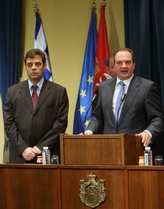
Greek Prime Minister Kostas Karamanlis stressed at the meeting that Serbia has been faced with extremely huge challenges and specified that one of the most important is the future status of Kosovo-Metohija.
He said he strongly believes in a solution acceptable to both sides, which would promote and advocate a multiethnic character of joint life in the province.
He stated that Greece, as a country of this region with ages-long experience of the Balkans, is completely aware of the need for such an order of things in this part of Europe with the aim of ensuring safety and stability in Southeast Europe.
We are strongly determined to support Serbia's EU accession because the Serbian people are more than worthy of it, and this is why we believe that Serbia promotes stability in the region, said the Greek Prime Minister.
According to Karamanlis, the Greek strategic plan is that all countries in the region join EU institutions, adding that Greece has always advocated Serbia's EU accession, it is doing so now and will continue to do so in the future.
He recalled that Serbia has made a great many strides in this direction, adding that he believes there will be no "bumps in the road" in the course of Serbia's EU entry process.
Karamanlis also said that the extremely satisfactory relations between Serbia and Greece provide possibilities for establishing permanent contacts on a regular basis, as well as discussion of consequential issues, and all of it in the spirit of mutual understanding.
Greece has noted the improvement in relations and cooperation with Serbia, as well as a particular feeling of satisfaction in Serbia, since it has been developing its economy in a speedy manner and has made considerable progress in the Euro-Atlantic integration process, he said.
Greece will do all it can to help Serbia maintain this direction and speed and will offer any kind of assistance to Serbia, said Karamanlis.
At parliamentary elections scheduled for January 21, Serbia will face the final test of its strength and I am sure the elections will be carried out in a manner which will promote Serbia's democratic maturity in the international community, concluded Karamanlis.
He said he strongly believes in a solution acceptable to both sides, which would promote and advocate a multiethnic character of joint life in the province.
He stated that Greece, as a country of this region with ages-long experience of the Balkans, is completely aware of the need for such an order of things in this part of Europe with the aim of ensuring safety and stability in Southeast Europe.
We are strongly determined to support Serbia's EU accession because the Serbian people are more than worthy of it, and this is why we believe that Serbia promotes stability in the region, said the Greek Prime Minister.
According to Karamanlis, the Greek strategic plan is that all countries in the region join EU institutions, adding that Greece has always advocated Serbia's EU accession, it is doing so now and will continue to do so in the future.
He recalled that Serbia has made a great many strides in this direction, adding that he believes there will be no "bumps in the road" in the course of Serbia's EU entry process.
Karamanlis also said that the extremely satisfactory relations between Serbia and Greece provide possibilities for establishing permanent contacts on a regular basis, as well as discussion of consequential issues, and all of it in the spirit of mutual understanding.
Greece has noted the improvement in relations and cooperation with Serbia, as well as a particular feeling of satisfaction in Serbia, since it has been developing its economy in a speedy manner and has made considerable progress in the Euro-Atlantic integration process, he said.
Greece will do all it can to help Serbia maintain this direction and speed and will offer any kind of assistance to Serbia, said Karamanlis.
At parliamentary elections scheduled for January 21, Serbia will face the final test of its strength and I am sure the elections will be carried out in a manner which will promote Serbia's democratic maturity in the international community, concluded Karamanlis.
-
 Belgrade, 29 June 2026
Air transport development of strategic importance for Serbia’s economic development
-
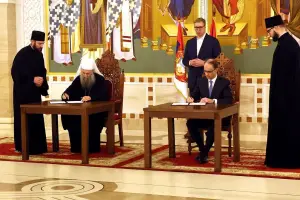 Belgrade, 28 June 2026
Agreement signed to secure funding for completion of Saint Sava church
-
 Belgrade, 26 June 2026
Great contribution of Jewish community to social, cultural life of Serbia
-
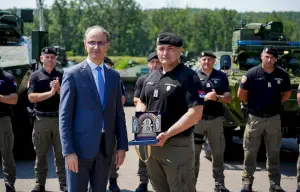 Belgrade, 25 June 2026
Gendarmerie one of pillars of Serbia’s security
-
 Belgrade, 25 June 2026
Macut sends condolences on tragedy in Venezuela
-
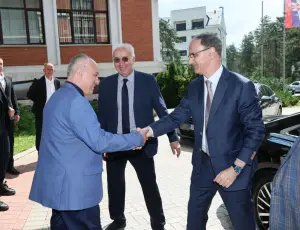 Zlatibor, 24 June 2026
Support for reconstruction, strengthening of operations at Čigota Special Hospital
-
 Belgrade, 24 June 2026
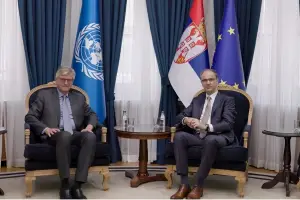
Serbia remains committed to participating in UN peacekeeping missions
-
 Belgrade/Banja Luka, 23 June 2026
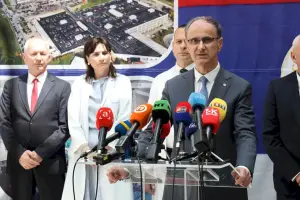
Significant potential for advancing cooperation between Serbia, Republika Srpska in field of healthcare
-
 Belgrade/Banja Luka, 23 June 2026
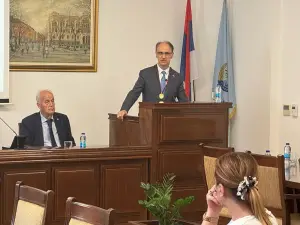
Macut inaugurated as foreign member of ANURS
-
 Belgrade/Banja Luka, 23 June 2026
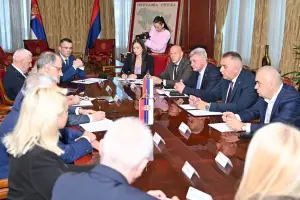
Strengthening ties, implementing joint projects between Serbia, Republika Srpska