
Q:
A:
Government works continually on poverty reduction measures
Bela Crkva,
20 September 2006
Serbian Deputy Prime Minister Ivana Dulic-Markovic said today that the Serbian government has been working continually on implementing measures from the Poverty Reduction Strategy, which is a crucial EU instrument in efforts to upgrade citizens’ standards and overall prosperity.
At the opening of the second national poverty reduction conference in Bela Crkva, in Park restaurant, Dulic-Markovic said that one of government measures includes incentives for sustainable economic growth, which is based on the strengthening of the private sector and small and medium-sized enterprises as well as creating new jobs.
She stressed that the government is implementing measures that should ease transition effects and create conditions for those people who lose out in the process of restructuring companies and privatisation, noting that these are programmes of retraining, reform of professional education etc.
According to her, the next set of measures will concern promotion of the programme of care for those who did not provide for themselves.
The Deputy Prime Minister said that so far EU integration and poverty reduction strategy were adopted, as well as the public administration development strategy and sectoral strategy. She also announced that by the end of the year, economic development and sustainable development strategies should be adopted.
Speaking on existing economic challenges, Dulic-Markovic said that the process of restructuring and privatisation has not been completed, productivity and competitiveness are low-scale, level of investment is insufficient and local authorities need to engage more to create an environment good for economic growth and the strengthening of the rule of law.
World Bank's Country Manager for Serbia Carolyn Jungr said that reform of labour market and social care network can represent significant steps forward to reduce poverty.
Jungr pointed to the high unemployment rate of 22%, with many young people without jobs, and noted that mobility on the labour market is low, which is why it is necessary to revise labour market policy that would contribute to creating new jobs. She also added that it is essential to stimulate retraining, additional education and regular specialisations.
According to her, education is the most important factor in fighting poverty, which is why it needs to be upgraded on all levels.
The network of social protection is at an extremely low level, she said and added that only 30% of poor families receive social income. While Serbia spends only 0.14% of GDP for this purpose, Croatia allocates 0.25% and Slovenia as much as three times more than Serbia, she said.
The National Investment Plan is an unique opportunity for Serbia to successfully tackle poverty and to use these funds in the best possible way, Jungr said.
British Ambassador to Serbia David Gowan said that implementation of the Poverty Reduction Strategy and Serbia’s national EU integration strategy are fully complementary and that jointly they provide possibility for upgrading living standards of people in Serbia through social and economic development and growth.
Gowan recalled that the UK donated €3.4 million for implementation of the Poverty Reduction Strategy in Serbia last year and announced that support will continue by the end of 2008.
Resident representative of the United Nations Development Programme in Serbia Lance Clark said that the most imperiled category in Serbia are the Roma population, as 58% of Romas are poor. They are followed by children, especially the disabled ones, as well as 100,000 displaced persons and 200,000 refugees living in Serbia, he said.
She stressed that the government is implementing measures that should ease transition effects and create conditions for those people who lose out in the process of restructuring companies and privatisation, noting that these are programmes of retraining, reform of professional education etc.
According to her, the next set of measures will concern promotion of the programme of care for those who did not provide for themselves.
The Deputy Prime Minister said that so far EU integration and poverty reduction strategy were adopted, as well as the public administration development strategy and sectoral strategy. She also announced that by the end of the year, economic development and sustainable development strategies should be adopted.
Speaking on existing economic challenges, Dulic-Markovic said that the process of restructuring and privatisation has not been completed, productivity and competitiveness are low-scale, level of investment is insufficient and local authorities need to engage more to create an environment good for economic growth and the strengthening of the rule of law.
World Bank's Country Manager for Serbia Carolyn Jungr said that reform of labour market and social care network can represent significant steps forward to reduce poverty.
Jungr pointed to the high unemployment rate of 22%, with many young people without jobs, and noted that mobility on the labour market is low, which is why it is necessary to revise labour market policy that would contribute to creating new jobs. She also added that it is essential to stimulate retraining, additional education and regular specialisations.
According to her, education is the most important factor in fighting poverty, which is why it needs to be upgraded on all levels.
The network of social protection is at an extremely low level, she said and added that only 30% of poor families receive social income. While Serbia spends only 0.14% of GDP for this purpose, Croatia allocates 0.25% and Slovenia as much as three times more than Serbia, she said.
The National Investment Plan is an unique opportunity for Serbia to successfully tackle poverty and to use these funds in the best possible way, Jungr said.
British Ambassador to Serbia David Gowan said that implementation of the Poverty Reduction Strategy and Serbia’s national EU integration strategy are fully complementary and that jointly they provide possibility for upgrading living standards of people in Serbia through social and economic development and growth.
Gowan recalled that the UK donated €3.4 million for implementation of the Poverty Reduction Strategy in Serbia last year and announced that support will continue by the end of 2008.
Resident representative of the United Nations Development Programme in Serbia Lance Clark said that the most imperiled category in Serbia are the Roma population, as 58% of Romas are poor. They are followed by children, especially the disabled ones, as well as 100,000 displaced persons and 200,000 refugees living in Serbia, he said.
-
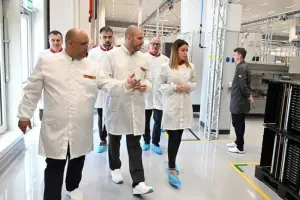 Kać, 3 July 2026
Additional foreign investment confirms confidence in Serbia
-
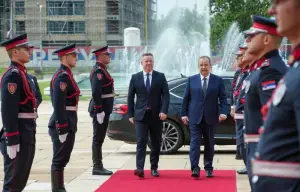 Belgrade, 3 July 2026
Serbia, Hungary reliable partners in maintaining security
-
 Belgrade/Brussels, 3 July 2026
Serbia committed to further developing partnership relations with EU
-
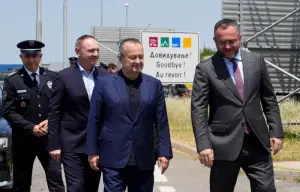 Preševo, 1 July 2026
Joint campaign by Serbia, North Macedonia for safer travel
-
 Belgrade, 30 June 2026
Serbia stable, reliable investment destination
-
 Belgrade, 25 June 2026
Dačić extends condolences to leadership, people of Venezuela
-
 Belgrade, 24 June 2026
Fiscal responsibility foundation of economic security
-
 Belgrade, 22 June 2026
Serbia reliable, credible investment partner
-
 Belgrade, 19 June 2026
Serbia committed to protecting refugees, improving asylum system
-
 Belgrade, 19 June 2026
Visit of BYD representatives confirms strengthening of economic cooperation with China