
Q:
A:
Serbia asks for EU assistance regarding gas delivery
Belgrade/Brussels,
2 February 2006
Serbian Deputy Prime Minister Miroljub Labus, who is on a visit to Brussels, asked EU Foreign Affairs Commissioner Benita Ferrero-Waldner for assistance in solving the issue of gas delivery to Serbia.
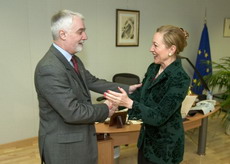
Miroljub Labus and Benita Ferrero-Waldner
Following the meeting with Ferrero-Waldner, Labus said that one of the topics discussed was the irregularity of gas supply to Serbia. Labus recalled that despite all Russian and Ukrainian promises, Serbia still isn’t receiving gas regularly. He added it is not known whether Russia or Ukraine, or even Hungary is responsible for this situation.
Labus said he had asked Ferrero-Waldner to talk with the parties in question and try to help solve the problem. "This issue does not only have bilateral effects, but also wider European ones", he said adding that Serbia is suffering enormous losses.
He stressed that Serbia was promised a regular gas supply of 12 million cubic metres last Friday, but the country has only been receiving 8.6 million cubic metres of gas. He said that he had sent a plea to Ferrero-Waldner to intervene since this matter concerns both Serbia and Europe.
Labus said that at his meeting with Ferrero Waldner, they also spoke about the continuation of talks on the Stabilisation and Association Agreement with the EU and the European Commission's Western Balkans Strategy that was published last week.
On the second day of his visit to Brussels, Labus also met with Director of the European Commission for Western Balkans Reinhard Priebe, to whom he delivered Serbia's proposal for liberalisation of trade in agricultural products.
"There are a group of products which we think should be protected even after a certain period of transition", said Labus adding that these are highly sensitive goods and that the EU respects that.
In his lecture at the Konrad Adenauer Foundation last night, Labus said that the solution to the future status of Kosovo-Metohija must be reached through compromise. That solution must be stable and sustainable, be able to protect people and open the way towards the European Union. He stressed that sustainable, and not transitional solutions are necessary.
There is no solution without compromise, the Deputy Prime Minister stressed and added that all proposals of the solution must be examined.
The most important issue for Serbia is the protection of Kosovo Serbs, and the test for the future status will be the night right after the decision on the status is declared - whether Serbs in Kosovo will go to their beds to sleep peacefully after they turn off their TV sets, or they will start packing up and running away.
Labus also said that it is very important to find out what the real wish of the people of Montenegro is concerning the status of their republic, stressing that Serbia remains faithful to the so-called Agenda 2012, which means it plans to be ready to enter the EU in 2012.
Entrance to the EU does not depend only on us, but we want to be prepared for that date for our own sake, because that is the way to implement reforms, Labus said and reiterated that the biggest progress in reforms has been made in the field of economy.
Labus said he had asked Ferrero-Waldner to talk with the parties in question and try to help solve the problem. "This issue does not only have bilateral effects, but also wider European ones", he said adding that Serbia is suffering enormous losses.
He stressed that Serbia was promised a regular gas supply of 12 million cubic metres last Friday, but the country has only been receiving 8.6 million cubic metres of gas. He said that he had sent a plea to Ferrero-Waldner to intervene since this matter concerns both Serbia and Europe.
Labus said that at his meeting with Ferrero Waldner, they also spoke about the continuation of talks on the Stabilisation and Association Agreement with the EU and the European Commission's Western Balkans Strategy that was published last week.
On the second day of his visit to Brussels, Labus also met with Director of the European Commission for Western Balkans Reinhard Priebe, to whom he delivered Serbia's proposal for liberalisation of trade in agricultural products.
"There are a group of products which we think should be protected even after a certain period of transition", said Labus adding that these are highly sensitive goods and that the EU respects that.
In his lecture at the Konrad Adenauer Foundation last night, Labus said that the solution to the future status of Kosovo-Metohija must be reached through compromise. That solution must be stable and sustainable, be able to protect people and open the way towards the European Union. He stressed that sustainable, and not transitional solutions are necessary.
There is no solution without compromise, the Deputy Prime Minister stressed and added that all proposals of the solution must be examined.
The most important issue for Serbia is the protection of Kosovo Serbs, and the test for the future status will be the night right after the decision on the status is declared - whether Serbs in Kosovo will go to their beds to sleep peacefully after they turn off their TV sets, or they will start packing up and running away.
Labus also said that it is very important to find out what the real wish of the people of Montenegro is concerning the status of their republic, stressing that Serbia remains faithful to the so-called Agenda 2012, which means it plans to be ready to enter the EU in 2012.
Entrance to the EU does not depend only on us, but we want to be prepared for that date for our own sake, because that is the way to implement reforms, Labus said and reiterated that the biggest progress in reforms has been made in the field of economy.
-
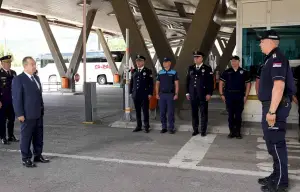 Gradina/Kalotina, 9 July 2026
Improving border cooperation between Serbia, Bulgaria
-
 Belgrade, 7 July 2026
Further strengthening economic cooperation between Serbia, Italy
-
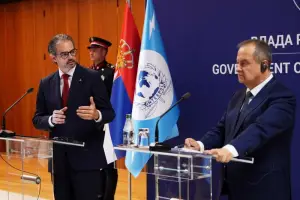 Belgrade, 6 July 2026
Serbia serious, responsible partner in fight against crime
-
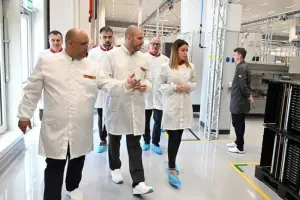 Kać, 3 July 2026
Additional foreign investment confirms confidence in Serbia
-
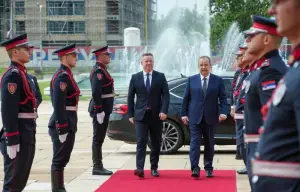 Belgrade, 3 July 2026
Serbia, Hungary reliable partners in maintaining security
-
 Belgrade/Brussels, 3 July 2026
Serbia committed to further developing partnership relations with EU
-
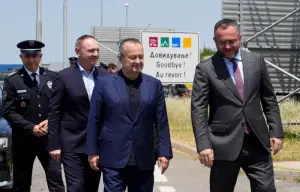 Preševo, 1 July 2026
Joint campaign by Serbia, North Macedonia for safer travel
-
 Belgrade, 30 June 2026
Serbia stable, reliable investment destination
-
 Belgrade, 25 June 2026
Dačić extends condolences to leadership, people of Venezuela
-
 Belgrade, 24 June 2026
Fiscal responsibility foundation of economic security