
Q:
A:
Bill on National Academy of Public Administration adopted
Belgrade,
22 September 2017
The Serbian government adopted today the Bill on the National Academy of Public Administration, which will provide equal opportunities for professional development of employees in public administration and thus enable further improvement of its work and the raising of quality of services for citizens and companies.
The most important new feature of this bill, which has been sent to the National Assembly of the Republic of Serbia for consideration, is that it will be obligatory for the highest officials - ministers, municipal presidents and mayors, and this type of education will be organised both at the state and at the local level.
The National Academy will function as an independent institution, under the supervision of the Ministry of Public Administration and Local Self-Government, and will have the possibility to sign cooperation agreements with the world's leading universities.
The Serbian government also adopted a Conclusion on the adoption of the Action Plan for the implementation of the National Programme for the Suppression of Gray Economy for 2017, with a projection for 2018, which envisages an increase in the number of measures and the intensification of activities of line institutions to reduce the volume of illegal trade, undeclared work and tax evasion.
The focus of the Action Plan, which now has 108 measures and activities, is on the establishment of a more efficient monitoring of flows in the gray zone, improvement of the functioning of the fiscal system and the reduction of the administrative burden for the economy and citizens.
One of the new elements is measures to increase the capacity of the Tax Administration. Among the priorities are the creation of an e-inspector software, which will harmonise the work of inspection bodies, conduct joint training of prosecutors and inspections for more efficient processing and penalising of operations in the gray zone.
The improvement of the fiscalisation system is also envisaged, and special attention is paid to the most vulnerable groups, young people and unemployed beginners in business.
One of the measures envisages the introduction of incentives in order to facilitate business start-up and legal business.
In the total period of implementation of the Law on Inspection Supervision (May 2016 - May 2017), the number of newly registered entrepreneurs increased by 5%, while the number of those who closed down their businesses dropped by 30%.
The National Academy will function as an independent institution, under the supervision of the Ministry of Public Administration and Local Self-Government, and will have the possibility to sign cooperation agreements with the world's leading universities.
The Serbian government also adopted a Conclusion on the adoption of the Action Plan for the implementation of the National Programme for the Suppression of Gray Economy for 2017, with a projection for 2018, which envisages an increase in the number of measures and the intensification of activities of line institutions to reduce the volume of illegal trade, undeclared work and tax evasion.
The focus of the Action Plan, which now has 108 measures and activities, is on the establishment of a more efficient monitoring of flows in the gray zone, improvement of the functioning of the fiscal system and the reduction of the administrative burden for the economy and citizens.
One of the new elements is measures to increase the capacity of the Tax Administration. Among the priorities are the creation of an e-inspector software, which will harmonise the work of inspection bodies, conduct joint training of prosecutors and inspections for more efficient processing and penalising of operations in the gray zone.
The improvement of the fiscalisation system is also envisaged, and special attention is paid to the most vulnerable groups, young people and unemployed beginners in business.
One of the measures envisages the introduction of incentives in order to facilitate business start-up and legal business.
In the total period of implementation of the Law on Inspection Supervision (May 2016 - May 2017), the number of newly registered entrepreneurs increased by 5%, while the number of those who closed down their businesses dropped by 30%.
-
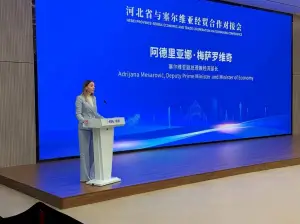 Belgrade/Shijiazhuang, 27 April 2026
New opportunities for Serbian products on Chinese market
-
 Belgrade/Shijiazhuang, 26 April 2026
Importance of strategic partnership with HBIS company confirmed
-
 Belgrade/Jinan, 26 April 2026
Serbia builds partnerships with leading Chinese companies
-
 Belgrade/Jinan, 25 April 2026
Chinese companies plan new investments in Serbia
-
 Belgrade/Jinan, 25 April 2026
Jinan Economic Forum confirms companies' interest in investing in Serbia
-
 Belgrade/Jinan, 25 April 2026
Support for sale of Serbian wines, other products on Chinese market agreed
-
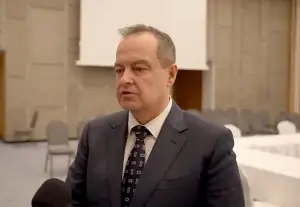 Belgrade/Athens, 24 April 2026
Serbia cooperative partner in fight against organised crime
-
 Belgrade/Athens, 24 April 2026
Joint action of Serbia, Greece in fight against irregular migration
-
 Belgrade/Athens, 24 April 2026
Potential for improving cooperation with Greece in field of security
-
 Belgrade/Shenzhen, 24 April 2026
Cooperation with Chinese retail giant opens doors to Serbian products