
Q:
A:
Serbia first outside EU to introduce gender equality index
Belgrade,
2 February 2016
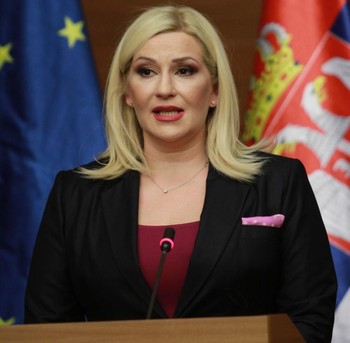
Deputy Prime Minister and President of the Coordination Body for Gender Equality Zorana Mihajlovic said today that the results of the report on the Index of Gender Equality in Serbia are the best in the field of power, and work remains to be done in the area of economic empowerment of women and their employment.
Author:
Fonet
Mihajlovic said in a statement ahead of the opening of the conference at which the index of gender equality in Serbia was presented, that the results are the best in the field of power, not just when it comes to women in parliament, but also because a woman is a head of the National Bank of Serbia (NBS).
When you have a woman as governor, and it is considered one of the most powerful institutions, Serbia has a favourable position, Mihajlovic added.
According to Mihajlovic, women make up 52% of the population, but their employment stands at 30%, which is not enough.
The Deputy Prime Minister also pointed out that she is proud that Serbia is the first country outside the EU that uses the statistics index of gender equality as an important indicator when it comes to gender equality.
When you have a woman as governor, and it is considered one of the most powerful institutions, Serbia has a favourable position, Mihajlovic added.
According to Mihajlovic, women make up 52% of the population, but their employment stands at 30%, which is not enough.
The Deputy Prime Minister also pointed out that she is proud that Serbia is the first country outside the EU that uses the statistics index of gender equality as an important indicator when it comes to gender equality.
Author:
Fonet
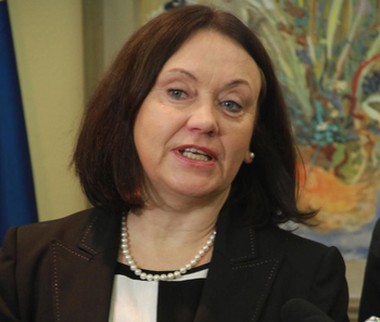
Director of the European Institute for Gender Equality Virginia Langbakk said today that Serbia has reason to be proud as it is the first non-EU country that has introduced the index of gender equality.
Langbakk stated that Serbia is the first country that has shown good results.
She pointed out that the findings are important because they provide a basis for further analysis and expressed hope that Serbia will soon introduce other new indices in statistics that will help formulate policy.
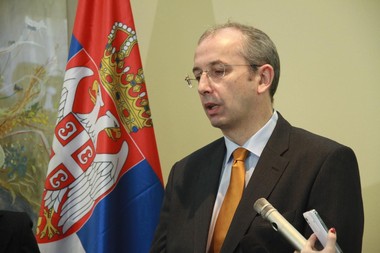
Head of EU Delegation to Serbia Michael Davenport praised Serbia for addressing the issues of gender equality in this way.
Davenport said that Serbia will now have a very good instrument for analysis in this area and expressed the hope that this will influence public policy in this area.
The Republic of Serbia is the first country outside the European Union which has introduced the EU Index of Gender Equality. Before you is the First Report on the Index of Gender Equality in the Republic of Serbia for 2016 announced today the European Institute for Gender Equality (EIGE).
The Gender Equality Index is a measuring instrument of the European Union which measures gender equality on a scale of 1 (complete inequality) to 100 (complete equality) in six domains: knowledge, work, money, health, time, power, and two satellite domains: violence and intersecting inequalities.
Langbakk stated that Serbia is the first country that has shown good results.
She pointed out that the findings are important because they provide a basis for further analysis and expressed hope that Serbia will soon introduce other new indices in statistics that will help formulate policy.
Head of EU Delegation to Serbia Michael Davenport praised Serbia for addressing the issues of gender equality in this way.
Davenport said that Serbia will now have a very good instrument for analysis in this area and expressed the hope that this will influence public policy in this area.
The Republic of Serbia is the first country outside the European Union which has introduced the EU Index of Gender Equality. Before you is the First Report on the Index of Gender Equality in the Republic of Serbia for 2016 announced today the European Institute for Gender Equality (EIGE).
The Gender Equality Index is a measuring instrument of the European Union which measures gender equality on a scale of 1 (complete inequality) to 100 (complete equality) in six domains: knowledge, work, money, health, time, power, and two satellite domains: violence and intersecting inequalities.
Author:
Fonet
The gender equality index in the Republic of Serbia is 40.6%, and the index of the EU Member States is 52.9%.
Serbia is in 22nd place and this number shows that Serbia has almost reached the halfway point towards achieving gender equality according to European standards.
The index of gender equality monitors progress in achieving gender equality and providing assessment in its six core domains - work, money, knowledge, time, power and health.
The index of gender equality was introduced by the EIGE in 2013 and Serbia is the first country of the Western Balkans to introduce the index of gender equality by the methodology of the EIGE.
Serbia is in 22nd place and this number shows that Serbia has almost reached the halfway point towards achieving gender equality according to European standards.
The index of gender equality monitors progress in achieving gender equality and providing assessment in its six core domains - work, money, knowledge, time, power and health.
The index of gender equality was introduced by the EIGE in 2013 and Serbia is the first country of the Western Balkans to introduce the index of gender equality by the methodology of the EIGE.
-
 Belgrade/Shijiazhuang, 28 April 2026
Support for increased sales of Serbian products on Chinese market
-
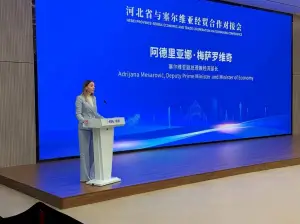 Belgrade/Shijiazhuang, 27 April 2026
New opportunities for Serbian products on Chinese market
-
 Belgrade/Shijiazhuang, 26 April 2026
Importance of strategic partnership with HBIS company confirmed
-
 Belgrade/Jinan, 26 April 2026
Serbia builds partnerships with leading Chinese companies
-
 Belgrade/Jinan, 25 April 2026
Chinese companies plan new investments in Serbia
-
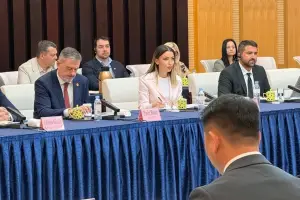 Belgrade/Jinan, 25 April 2026
Jinan Economic Forum confirms companies' interest in investing in Serbia
-
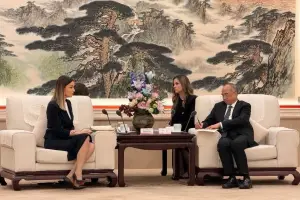 Belgrade/Jinan, 25 April 2026
Support for sale of Serbian wines, other products on Chinese market agreed
-
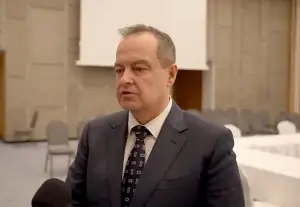 Belgrade/Athens, 24 April 2026
Serbia cooperative partner in fight against organised crime
-
 Belgrade/Athens, 24 April 2026
Joint action of Serbia, Greece in fight against irregular migration
-
 Belgrade/Athens, 24 April 2026
Potential for improving cooperation with Greece in field of security