
Q:
A:
Anticipated GDP growth 2%
Belgrade,
1 February 2011
Deputy Prime Minister and Minister of Economy and Regional Development Mladjan Dinkic voiced his expectation that the final analysis for 2010 will show that the annual GDP growth last year reached 2% and that export increased by 24%.
Speaking at a briefing organised for business newspaper editorials, Dinkic said that the annual economic growth ranged from 1.8% to 2%, which is more than what the IMF anticipated, namely 1.5%.
Speaking about the export to import ratio, Dinkic observed that it went up to 58% in 2010, against 48% in 2009. He also voiced his expectation that over the next four years the goods exchange will be fully balanced and gradually reach surplus figures.
He said Italy is the most obvious example of a country to which Serbia increased its export.
We placed €844 million in goods and services to the Italian market last year, our export to import ratio increased to around 85% and our traditionally largest foreign trade partner, Germany, is now second-ranked, Dinkic explained.
Slovenia is another excellent example, as the export to import ratio with this country increased to 80% last year, with good chances of fully covering import from Slovenia by export from Serbia in 2013, he added.
As for foreign trade with Russia, Dinkic stressed that Serbia will have a deficit here because of the traditionally large import of energy sources from Russia, especially oil and gas.
However, he underlined that Serbia’s import to Russia in 2010 exceeded €400 million, an effect which may be attributed to positive effects of the free trade agreement.
Dinkic announced talks with Russian representatives, scheduled for spring, which will concern the export of cars made in Kragujevac, even though passenger vehicles are not subjected to the free trade agreement.
The Russian car market is one of the best developing markets in Europe and the world and, disregarding the crisis period in the second half of 2008 and during 2009, we can see that this market continuously moved on the upward path in this decade, Dinkic noted.
The Deputy Prime Minister said that this year employers in Serbia will get higher subsidies from the National Employment Service for creating jobs, ranging from RSD 100,000 to RSD 400,000 per each new employee.
The main criterion for allocation of subsidies is the development of the municipality, Dinkic noted and explained that employers will get RSD 100,000 per each new employee in the first and second group where municipalities are more developed, while in the third group they will get RSD 200,000.
The incentives are RSD 300,000 in the fourth group in which municipalities are the least developed providing that the company employs up to ten workers and RSD 400,000 for more than ten workers, he specified.
Speaking about the allocation of subsidies of the Ministry of Economy and Regional Development to investors that employ new workers, Dinkic said that since 2006, 151 projects worth €691.5 million have been financed in this way, by calling 12 public invitations and granting incentives whose value totals €84.9.
The Deputy Prime Minister specified that owing to these subsidies, 22,719 workers were employed and the average value of incentives per job is €3,413.
For every €1 of subsidies the state gets back €9 through taxes and contributions, Dinkic said and explained that investors do not get subsidies for a promise that they will hire workers, but they have to submit bank guarantees that will be charged from them with interest in case they do not meet contract obligations.
Speaking about the export to import ratio, Dinkic observed that it went up to 58% in 2010, against 48% in 2009. He also voiced his expectation that over the next four years the goods exchange will be fully balanced and gradually reach surplus figures.
He said Italy is the most obvious example of a country to which Serbia increased its export.
We placed €844 million in goods and services to the Italian market last year, our export to import ratio increased to around 85% and our traditionally largest foreign trade partner, Germany, is now second-ranked, Dinkic explained.
Slovenia is another excellent example, as the export to import ratio with this country increased to 80% last year, with good chances of fully covering import from Slovenia by export from Serbia in 2013, he added.
As for foreign trade with Russia, Dinkic stressed that Serbia will have a deficit here because of the traditionally large import of energy sources from Russia, especially oil and gas.
However, he underlined that Serbia’s import to Russia in 2010 exceeded €400 million, an effect which may be attributed to positive effects of the free trade agreement.
Dinkic announced talks with Russian representatives, scheduled for spring, which will concern the export of cars made in Kragujevac, even though passenger vehicles are not subjected to the free trade agreement.
The Russian car market is one of the best developing markets in Europe and the world and, disregarding the crisis period in the second half of 2008 and during 2009, we can see that this market continuously moved on the upward path in this decade, Dinkic noted.
The Deputy Prime Minister said that this year employers in Serbia will get higher subsidies from the National Employment Service for creating jobs, ranging from RSD 100,000 to RSD 400,000 per each new employee.
The main criterion for allocation of subsidies is the development of the municipality, Dinkic noted and explained that employers will get RSD 100,000 per each new employee in the first and second group where municipalities are more developed, while in the third group they will get RSD 200,000.
The incentives are RSD 300,000 in the fourth group in which municipalities are the least developed providing that the company employs up to ten workers and RSD 400,000 for more than ten workers, he specified.
Speaking about the allocation of subsidies of the Ministry of Economy and Regional Development to investors that employ new workers, Dinkic said that since 2006, 151 projects worth €691.5 million have been financed in this way, by calling 12 public invitations and granting incentives whose value totals €84.9.
The Deputy Prime Minister specified that owing to these subsidies, 22,719 workers were employed and the average value of incentives per job is €3,413.
For every €1 of subsidies the state gets back €9 through taxes and contributions, Dinkic said and explained that investors do not get subsidies for a promise that they will hire workers, but they have to submit bank guarantees that will be charged from them with interest in case they do not meet contract obligations.
-
 Belgrade, 24 July 2026
Serbia, Hungary partners in addressing regional security challenges
-
 Belgrade, 24 July 2026
Dačić congratulates UK Home Secretary on reappointment
-
 Belgrade, 22 July 2026
Serbia follows modern technological achievements, attracts investments
-
 Belgrade, 22 July 2026
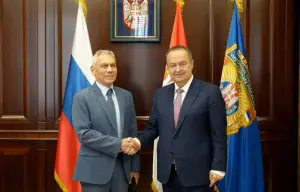
Continued cooperation with Russia in field of security, emergency situations
-
 Belgrade, 22 July 2026
New opportunities for expanding economic cooperation between Serbia, China
-
 Belgrade, 20 July 2026
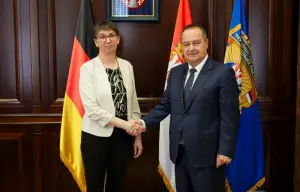
Cooperation in field of interior affairs important segment of relations with Germany
-
 Belgrade, 16 July 2026
Expo 2027 opportunity to further strengthen international partnerships
-
 Belgrade/Bratislava, 16 July 2026
Serbia, Slovakia continue to strengthen political, economic cooperation
-
 Belgrade, 14 July 2026
Serbia bilaterally resolves problems arising from EES implementation
-
 Gradina/Kalotina, 9 July 2026
Improving border cooperation between Serbia, Bulgaria