
Q:
A:
Serbia’s strategic goal for 2011 to become EU candidate country
Belgrade/Strasbourg,
17 January 2011
Serbian Deputy Prime Minister for European Integration Bozidar Djelic said this evening that the central strategic goals of Serbia are to become an EU candidate country in 2011 and that the European Commission determines the date for opening accession negotiations in the spring of 2012.
Author:
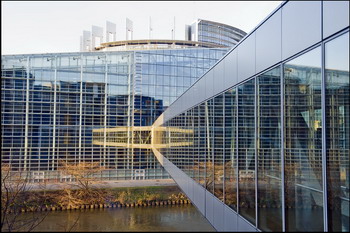
www.europarl.europa.eu
Speaking to the members of the Committee on Foreign Affairs of the European Parliament (AFET), Djelic said that Serbia will submit answers to the European Commission’s Questionnaire on 31 January.
He explained that the process of responding to the Questionnaire was completed in six weeks through a transparent procedure and specified that the answers will be handed over to European Enlargement Commissioner Stefan Fule in Brussels. We expect to answer any additional questions by end of June and host the expert missions of the European Commission, which should release its opinion (the so-called Avis) by October, the Deputy Prime Minister added.
He expressed his hope that this opinion will contain a recommendation to approve to Serbia the candidate status at a summit in December, noting that Serbia's goal is that the Commission recommends, and the member states set a date for opening accession negotiations in the spring of 2012.
Speaking about ratification of the Stabilisation and Association Agreement (SAA), on which the European Parliament will vote tomorrow, Djelic expressed hope that the confirmation of this document in the European Parliament will encourage EU member states to do the same in their national parliaments.
Also, the adoption of the European Parliament’s Resolution on Serbia’s European integration, scheduled for 19 January, will contribute to realisation of the strategic goal of our country. Djelic underlined that 2011 is not an ordinary year for Serbia since it is a pre-election year and it will largely determine the strategic and political profile of Serbia for the rest of this decade. It will also be the most important year ever for the European integration process of our country.
This is the year in which Belgrade will start the long-awaited dialogue with Pristina and achieve the first tangible results, the Deputy Prime Minister highlighted and proclaimed that Serbia is awaiting readily the beginning of this dialogue.
He reiterated that Serbia will never recognise the unilateral declaration of independence of the southern province and stressed that Belgrade is ready to work tirelessly with Pristina and European partners in order to achieve a historic compromise with ethnic Albanians in Kosovo, which would enable a European future for all citizens of the Western Balkans.
In the meantime, unilateral moves, such as destruction of the property of Telekom Serbia last September by Pristina and, consequently, preventing hundreds of citizens from having access to the mobile network and landline must be condemned, Deputy Prime Minister pointed out.
Referring to Dick Marty’s report on illegal trade in organs, he underscored that Serbia will simply seek truth and justice, and will cooperate with those who advocate these goals.
As a member of the Council of Europe, Serbia will fully comply with the resolution whose adoption by the Assembly of the Council of Europe is expected to take place on 25 January, he said and affirmed that Serbia, in anticipation of a comprehensive international investigation, is hoping that the report will be examined in an unbiased way.
Speaking about cooperation with the International Criminal Tribunal for the Former Yugoslavia (ICTY), Djelic said that Serbia is doing its level best to locate, apprehend and surrender the remaining two indictees to the tribunal.
If and when they are located, they will immediately be transferred to the ICTY, he said noting that such a decision by Serbian President Boris Tadic and the Serbian government is a key element of our cooperation with the court.
Mladic and Hadzic are not arrested yet, and Serbia is doing everything to make this change, he said.
Djelic said that our country has made significant progress in regional cooperation in 2010.
We have improved relations with Croatia, Djelic said adding that the meetings of the presidents symbolise reconciliation in the region.
The Serbian parliament adopted the Resolution on Srebrenica, the first document of its kind in the region, which clearly condemns the massacre in Srebrenica in 1995, he stressed.
The Serbian President attended the commemoration in Srebrenica, which clearly shows the position of our country on war crimes, and our deep commitment to the reconciliation process, he said.
The Deputy Prime Minister reiterated that Serbia fully supports the territorial integrity of Bosnia-Herzegovina under the Dayton agreement.
He recalled that our country will assume the presidency role in several regional initiatives this year.
When it comes to reforms, he said that the Serbian government late last year adopted the Action Plan on implementation of recommendations arising from the European Commission’s progress report in November 2010.
Djelic said that Serbia is working closely with the European Commission in 2010 to address the perceived shortcomings in the process of judicial reform, which began in December 2009.
Serbia has shown a clear political will to eliminate all deficiencies in cooperation with the EU in accordance with the recommendations of the Venice Commission, which resulted in the Serbian parliament several laws related to this issue in December 2010, said the Deputy Prime Minister.
He pointed out that one of our goals is the adoption of a law on restitution and confirmed that the government is conducting consultations on the modalities of this document.
Speaking about the economic and social situation, Djelic said that Serbia in 2010 progressively emerged from the crisis.
Unemployment will remain the biggest problem our country will be faced with in the years to come, he said.
Djelic said that it is no surprise that the support for EU accession in Serbia has fallen due to the crisis which is clearly taking a toll our European aspirations.
Serbia showed its reliability by quickly and decisively reacting to the emergence of false asylum seekers in the first year of its visa-free regime with the Schengen countries and also by being active in the preparation of the EU Strategy for the Danube region.
He explained that the process of responding to the Questionnaire was completed in six weeks through a transparent procedure and specified that the answers will be handed over to European Enlargement Commissioner Stefan Fule in Brussels. We expect to answer any additional questions by end of June and host the expert missions of the European Commission, which should release its opinion (the so-called Avis) by October, the Deputy Prime Minister added.
He expressed his hope that this opinion will contain a recommendation to approve to Serbia the candidate status at a summit in December, noting that Serbia's goal is that the Commission recommends, and the member states set a date for opening accession negotiations in the spring of 2012.
Speaking about ratification of the Stabilisation and Association Agreement (SAA), on which the European Parliament will vote tomorrow, Djelic expressed hope that the confirmation of this document in the European Parliament will encourage EU member states to do the same in their national parliaments.
Also, the adoption of the European Parliament’s Resolution on Serbia’s European integration, scheduled for 19 January, will contribute to realisation of the strategic goal of our country. Djelic underlined that 2011 is not an ordinary year for Serbia since it is a pre-election year and it will largely determine the strategic and political profile of Serbia for the rest of this decade. It will also be the most important year ever for the European integration process of our country.
This is the year in which Belgrade will start the long-awaited dialogue with Pristina and achieve the first tangible results, the Deputy Prime Minister highlighted and proclaimed that Serbia is awaiting readily the beginning of this dialogue.
He reiterated that Serbia will never recognise the unilateral declaration of independence of the southern province and stressed that Belgrade is ready to work tirelessly with Pristina and European partners in order to achieve a historic compromise with ethnic Albanians in Kosovo, which would enable a European future for all citizens of the Western Balkans.
In the meantime, unilateral moves, such as destruction of the property of Telekom Serbia last September by Pristina and, consequently, preventing hundreds of citizens from having access to the mobile network and landline must be condemned, Deputy Prime Minister pointed out.
Referring to Dick Marty’s report on illegal trade in organs, he underscored that Serbia will simply seek truth and justice, and will cooperate with those who advocate these goals.
As a member of the Council of Europe, Serbia will fully comply with the resolution whose adoption by the Assembly of the Council of Europe is expected to take place on 25 January, he said and affirmed that Serbia, in anticipation of a comprehensive international investigation, is hoping that the report will be examined in an unbiased way.
Speaking about cooperation with the International Criminal Tribunal for the Former Yugoslavia (ICTY), Djelic said that Serbia is doing its level best to locate, apprehend and surrender the remaining two indictees to the tribunal.
If and when they are located, they will immediately be transferred to the ICTY, he said noting that such a decision by Serbian President Boris Tadic and the Serbian government is a key element of our cooperation with the court.
Mladic and Hadzic are not arrested yet, and Serbia is doing everything to make this change, he said.
Djelic said that our country has made significant progress in regional cooperation in 2010.
We have improved relations with Croatia, Djelic said adding that the meetings of the presidents symbolise reconciliation in the region.
The Serbian parliament adopted the Resolution on Srebrenica, the first document of its kind in the region, which clearly condemns the massacre in Srebrenica in 1995, he stressed.
The Serbian President attended the commemoration in Srebrenica, which clearly shows the position of our country on war crimes, and our deep commitment to the reconciliation process, he said.
The Deputy Prime Minister reiterated that Serbia fully supports the territorial integrity of Bosnia-Herzegovina under the Dayton agreement.
He recalled that our country will assume the presidency role in several regional initiatives this year.
When it comes to reforms, he said that the Serbian government late last year adopted the Action Plan on implementation of recommendations arising from the European Commission’s progress report in November 2010.
Djelic said that Serbia is working closely with the European Commission in 2010 to address the perceived shortcomings in the process of judicial reform, which began in December 2009.
Serbia has shown a clear political will to eliminate all deficiencies in cooperation with the EU in accordance with the recommendations of the Venice Commission, which resulted in the Serbian parliament several laws related to this issue in December 2010, said the Deputy Prime Minister.
He pointed out that one of our goals is the adoption of a law on restitution and confirmed that the government is conducting consultations on the modalities of this document.
Speaking about the economic and social situation, Djelic said that Serbia in 2010 progressively emerged from the crisis.
Unemployment will remain the biggest problem our country will be faced with in the years to come, he said.
Djelic said that it is no surprise that the support for EU accession in Serbia has fallen due to the crisis which is clearly taking a toll our European aspirations.
Serbia showed its reliability by quickly and decisively reacting to the emergence of false asylum seekers in the first year of its visa-free regime with the Schengen countries and also by being active in the preparation of the EU Strategy for the Danube region.
-
 Belgrade, 24 July 2026
Serbia, Hungary partners in addressing regional security challenges
-
 Belgrade, 24 July 2026
Dačić congratulates UK Home Secretary on reappointment
-
 Belgrade, 22 July 2026
Serbia follows modern technological achievements, attracts investments
-
 Belgrade, 22 July 2026
Continued cooperation with Russia in field of security, emergency situations
-
 Belgrade, 22 July 2026
New opportunities for expanding economic cooperation between Serbia, China
-
 Belgrade, 20 July 2026
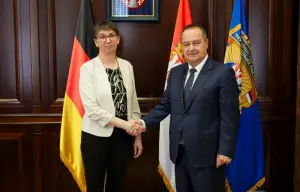
Cooperation in field of interior affairs important segment of relations with Germany
-
 Belgrade, 16 July 2026
Expo 2027 opportunity to further strengthen international partnerships
-
 Belgrade/Bratislava, 16 July 2026
Serbia, Slovakia continue to strengthen political, economic cooperation
-
 Belgrade, 14 July 2026
Serbia bilaterally resolves problems arising from EES implementation
-
 Gradina/Kalotina, 9 July 2026
Improving border cooperation between Serbia, Bulgaria