
Q:
A:
Securing support from IMF, World Bank necessary
Belgrade/Washington,
10 October 2010
Deputy Prime Minister for European Integration and Minister of Science and Technological Development Bozidar Djelic stated yesterday that the Serbian delegation at the annual meeting of the International Monetary Fund (IMF) and the World Bank is trying to secure maximum support of these financial institutions for the upcoming period.
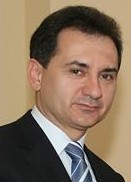
File photo of Bozidar Djelic
Author:
Tanjug
Djelic, who is heading the Serbian delegation at the meeting in Washington, underlined that Serbia’s request to the World Bank is well known – in the period from 2011 to 2014, it wants to receive funds that will not be smaller than the total amount of repayments Serbia has to make for the period in question.
The Deputy Prime Minister maintained that Serbia should not be a net-financier of the World Bank, but rather must be on a positive zero basis between what it is paying back as old debts from the times of socialism and the fact that some new loans have been taken.
That means that we are asking for nothing less than the package Serbia has received for the previous four years, which is $900 million, Djelic said and added that the Serbian government has still not taken a position regarding cooperation with the IMF for the period after April 2011.
However, in any case it was important for the IMF that Serbia fulfil three conditions for successful implementation of the current programme.
Djelic explained that the first condition was the adoption of the Law on fiscal responsibility, and the second was the adoption of a responsible state budget for 2011, where the deficit should be less than 4% of GDP.
The third condition was the adoption of the projected reform of the pension system, Djelic outlined.
He emphasised that the funds Serbia might receive from the World Bank for the next four years must be in line with general national priorities outlined by Belgrade in its relations with its strategic partners in the EU.
As for IMF, the priorities remain one-off aid to pensioners and assistance to the poorest municipalities.
In the talks with representatives of commercial banks, the Serbian delegation was told that there is interest for the first time in buying Serbia’s securities that would be issued in dinars. Djelic noted that this is proof that investors believe Serbia has become stable enough and that its currency might be of interest.
This would enable Serbia to work on the “de-euroisation” of its economy and boost the use of the dinar because the use of a foreign currency carries certain risks.
Serbia is conducting a responsible macroeconomic and fiscal policy and this is why it is in a much more stable situation when compared to some of its neighbours that fell into certain macroeconomic difficulties, such as Greece, Hungary and Romania, Djelic concluded.
The Deputy Prime Minister maintained that Serbia should not be a net-financier of the World Bank, but rather must be on a positive zero basis between what it is paying back as old debts from the times of socialism and the fact that some new loans have been taken.
That means that we are asking for nothing less than the package Serbia has received for the previous four years, which is $900 million, Djelic said and added that the Serbian government has still not taken a position regarding cooperation with the IMF for the period after April 2011.
However, in any case it was important for the IMF that Serbia fulfil three conditions for successful implementation of the current programme.
Djelic explained that the first condition was the adoption of the Law on fiscal responsibility, and the second was the adoption of a responsible state budget for 2011, where the deficit should be less than 4% of GDP.
The third condition was the adoption of the projected reform of the pension system, Djelic outlined.
He emphasised that the funds Serbia might receive from the World Bank for the next four years must be in line with general national priorities outlined by Belgrade in its relations with its strategic partners in the EU.
As for IMF, the priorities remain one-off aid to pensioners and assistance to the poorest municipalities.
In the talks with representatives of commercial banks, the Serbian delegation was told that there is interest for the first time in buying Serbia’s securities that would be issued in dinars. Djelic noted that this is proof that investors believe Serbia has become stable enough and that its currency might be of interest.
This would enable Serbia to work on the “de-euroisation” of its economy and boost the use of the dinar because the use of a foreign currency carries certain risks.
Serbia is conducting a responsible macroeconomic and fiscal policy and this is why it is in a much more stable situation when compared to some of its neighbours that fell into certain macroeconomic difficulties, such as Greece, Hungary and Romania, Djelic concluded.
-
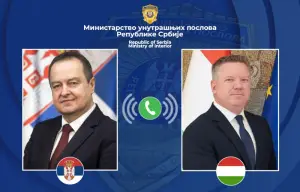 Belgrade, 24 July 2026
Serbia, Hungary partners in addressing regional security challenges
-
 Belgrade, 24 July 2026
Dačić congratulates UK Home Secretary on reappointment
-
 Belgrade, 22 July 2026
Serbia follows modern technological achievements, attracts investments
-
 Belgrade, 22 July 2026
Continued cooperation with Russia in field of security, emergency situations
-
 Belgrade, 22 July 2026
New opportunities for expanding economic cooperation between Serbia, China
-
 Belgrade, 20 July 2026
Cooperation in field of interior affairs important segment of relations with Germany
-
 Belgrade, 16 July 2026
Expo 2027 opportunity to further strengthen international partnerships
-
 Belgrade/Bratislava, 16 July 2026
Serbia, Slovakia continue to strengthen political, economic cooperation
-
 Belgrade, 14 July 2026
Serbia bilaterally resolves problems arising from EES implementation
-
 Gradina/Kalotina, 9 July 2026
Improving border cooperation between Serbia, Bulgaria