
Q:
A:
Centre for rehabilitation, employment opened
Belgrade,
26 August 2010
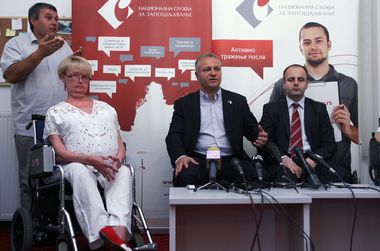
Deputy Prime Minister and Minister of Economy and Regional Development Mladjan Dinkic and Director of the National Employment Service (NSZ) Dejan Jovanovic opened the first centre for the rehabilitation and employment of persons with disabilities today. The NSZ centre will help improve the position of individuals with disabilities in the labour market.
Author:
Tanjug
Dinkic stated at the occasion that similar centres will be opened in other cities in Serbia, adding that the first results of the implementation of the new Law on employment for individuals with disabilities are encouraging, considering the fact that from May this year up until now 1,100 persons with disabilities have found employment.
It is expected that the implementation of this Law will lead to jobs for 7,000 individuals with special needs, he highlighted.
He appealed to employers to see the Law not just as an obligation but as a social and moral responsibility to help people with disabilities.
Those who cannot employ people with disabilities can contribute funds to a special budget, into which nearly RSD 150 million has been paid so far. These funds will be used to finance training programmes and finding jobs for disabled people, Dinkic explained.
At the moment some 20,000 people with disabilities are registered in employment agencies in Serbia, Dinkic specified, adding that the aim is to find employment for them as soon as possible in order to encourage others with disabilities to report for employment as well.
Jovanovic emphasised that the new centre will basically provide information. Employers, disabled people and associations of persons with disabilities will be able to acquire all necessary information regarding employment in one place.
The centre is equipped to play a vital role in the implementation of the Law on employment for individuals with disabilities.
Speaking to the media after the opening ceremony, Dinkic announced that the implementation of measures for supporting the Serbian economy will continue into next year in order to accelerate growth.
He noted that he is encouraged by IMF statistics which show that measures taken by his Ministry to support the economy through subsidised loans have contributed to total GDP growth by 40% this year.
Of this year’s 1.5% GDP growth, 0.6% has come as a result of these measures, therefore we intend to continue with them until Serbia significantly increases its economic growth, asserted Dinkic.
Dinkic mentioned Germany as an example. Germany set aside seven times more funds for stimulating the economy than Serbia, up to 4.5% of the GDP. This is why Germany managed to maintain its employment levels during the crisis, he explained.
Speaking about measures Serbia is taking to attract and encourage investors, Dinkic specified that nearly 20% of Serbia’s GDP comes from exports and that the goal is to increase this figure to over 50% in the next few years.
Some European countries even pay investors to stay, while Serbia is co-financing expenditure for the arrival of investors who create new jobs and produce goods for export, he underlined.
It is expected that the implementation of this Law will lead to jobs for 7,000 individuals with special needs, he highlighted.
He appealed to employers to see the Law not just as an obligation but as a social and moral responsibility to help people with disabilities.
Those who cannot employ people with disabilities can contribute funds to a special budget, into which nearly RSD 150 million has been paid so far. These funds will be used to finance training programmes and finding jobs for disabled people, Dinkic explained.
At the moment some 20,000 people with disabilities are registered in employment agencies in Serbia, Dinkic specified, adding that the aim is to find employment for them as soon as possible in order to encourage others with disabilities to report for employment as well.
Jovanovic emphasised that the new centre will basically provide information. Employers, disabled people and associations of persons with disabilities will be able to acquire all necessary information regarding employment in one place.
The centre is equipped to play a vital role in the implementation of the Law on employment for individuals with disabilities.
Speaking to the media after the opening ceremony, Dinkic announced that the implementation of measures for supporting the Serbian economy will continue into next year in order to accelerate growth.
He noted that he is encouraged by IMF statistics which show that measures taken by his Ministry to support the economy through subsidised loans have contributed to total GDP growth by 40% this year.
Of this year’s 1.5% GDP growth, 0.6% has come as a result of these measures, therefore we intend to continue with them until Serbia significantly increases its economic growth, asserted Dinkic.
Dinkic mentioned Germany as an example. Germany set aside seven times more funds for stimulating the economy than Serbia, up to 4.5% of the GDP. This is why Germany managed to maintain its employment levels during the crisis, he explained.
Speaking about measures Serbia is taking to attract and encourage investors, Dinkic specified that nearly 20% of Serbia’s GDP comes from exports and that the goal is to increase this figure to over 50% in the next few years.
Some European countries even pay investors to stay, while Serbia is co-financing expenditure for the arrival of investors who create new jobs and produce goods for export, he underlined.
-
 Belgrade, 24 July 2026
Serbia, Hungary partners in addressing regional security challenges
-
 Belgrade, 24 July 2026
Dačić congratulates UK Home Secretary on reappointment
-
 Belgrade, 22 July 2026
Serbia follows modern technological achievements, attracts investments
-
 Belgrade, 22 July 2026
Continued cooperation with Russia in field of security, emergency situations
-
 Belgrade, 22 July 2026
New opportunities for expanding economic cooperation between Serbia, China
-
 Belgrade, 20 July 2026
Cooperation in field of interior affairs important segment of relations with Germany
-
 Belgrade, 16 July 2026
Expo 2027 opportunity to further strengthen international partnerships
-
 Belgrade/Bratislava, 16 July 2026
Serbia, Slovakia continue to strengthen political, economic cooperation
-
 Belgrade, 14 July 2026
Serbia bilaterally resolves problems arising from EES implementation
-
 Gradina/Kalotina, 9 July 2026
Improving border cooperation between Serbia, Bulgaria