
Q:
A:
Serbia’s goal to achieve compromise on Kosovo-Metohija’s status
Bujanovac,
20 July 2010
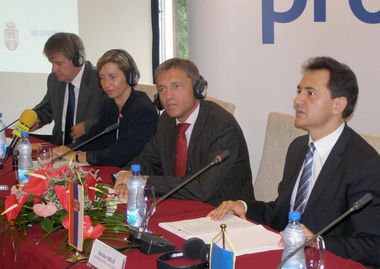
Deputy Prime Minister for European Integration Bozidar Djelic said in Bujanovac last night that Serbia’s goal is not to defeat the Albanian community in Kosovo-Metohija, but to reach a compromise and an agreement.
Author:
Fonet
Speaking at an “After Conflict – Real Life” discussion, organised by the Centre for Democracy and Development of Southern Serbia and the Regional Information Agency JUGpress, Djelic explained that this agreement will have to respect the rights of Kosovo Albanians, the Serbs living in the province and Serbia as a state.
Agreements are reached through talks, negotiations and compromise. We cannot simply claim that we want to be part of Europe and at the same time not be able to reach a compromise which is characteristic of the entire European collective mindset he emphasised.
The Deputy Prime Minister confirmed that Serbia’s new diplomatic activities would come into effect after the International Court of Justice (ICJ) declares its advisory opinion on 22 July and noted that never and under no circumstances will Serbia recognise Kosovo-Metohija or agree to any imposed solutions.
As soon as the ICJ’s opinion is made known, Serbia will be ready for the adoption of a balanced resolution at the UN General Assembly, a resolution that would show the desire of Serbia and the whole world to reach a compromise on every issue, including the one on Kosovo-Metohija’s status, Djelic declared.
It is impossible to talk about practical issues and think that a real issue, such as the one regarding the province, can be circumvented, Djelic underlined.
On this path Serbia will demonstrate flexibility towards the legitimate needs of the Albanian community in the province, he stated, adding that at the same time the legitimate rights of other communities must be respected, as well as the rights of Serbia as a state.
We will proceed with our campaign based on rights and diplomacy, Djelic announced, advocating a policy of peace and tolerance in Southern Serbia, from which all national communities there will benefit.
He also announced that at this week’s Summit of the African Union in Kampala, starting on 22 July, he will hold over 50 meetings with ministers from these countries.
We will ask the countries that stood on the side of international law and did not recognise Kosovo’s independence to work with us in order to adopt a balanced resolution which will open a door to compromise.
As for those who, regretfully, did recognise the province’s independence, we will ask them to reconsider their position and endorse a balanced European path implemented by Serbia, which implies reaching a historic compromise between Belgrade and Pristina.
The Deputy Prime Minister voiced his belief that a majority of Serbian citizens is clearly committed to EU membership.
The economic crisis, which has affected our country as well, especially in smaller and poorer areas, combined with hesitation when it comes to certain EU issues, may have contributed to the fact that some people have grown tired of the entire story, Djelic observed.
However, polls conducted after visa abolishment show that people in Serbia do care about the EU and the pro-European mood has increased by 10%, he concluded.
Agreements are reached through talks, negotiations and compromise. We cannot simply claim that we want to be part of Europe and at the same time not be able to reach a compromise which is characteristic of the entire European collective mindset he emphasised.
The Deputy Prime Minister confirmed that Serbia’s new diplomatic activities would come into effect after the International Court of Justice (ICJ) declares its advisory opinion on 22 July and noted that never and under no circumstances will Serbia recognise Kosovo-Metohija or agree to any imposed solutions.
As soon as the ICJ’s opinion is made known, Serbia will be ready for the adoption of a balanced resolution at the UN General Assembly, a resolution that would show the desire of Serbia and the whole world to reach a compromise on every issue, including the one on Kosovo-Metohija’s status, Djelic declared.
It is impossible to talk about practical issues and think that a real issue, such as the one regarding the province, can be circumvented, Djelic underlined.
On this path Serbia will demonstrate flexibility towards the legitimate needs of the Albanian community in the province, he stated, adding that at the same time the legitimate rights of other communities must be respected, as well as the rights of Serbia as a state.
We will proceed with our campaign based on rights and diplomacy, Djelic announced, advocating a policy of peace and tolerance in Southern Serbia, from which all national communities there will benefit.
He also announced that at this week’s Summit of the African Union in Kampala, starting on 22 July, he will hold over 50 meetings with ministers from these countries.
We will ask the countries that stood on the side of international law and did not recognise Kosovo’s independence to work with us in order to adopt a balanced resolution which will open a door to compromise.
As for those who, regretfully, did recognise the province’s independence, we will ask them to reconsider their position and endorse a balanced European path implemented by Serbia, which implies reaching a historic compromise between Belgrade and Pristina.
The Deputy Prime Minister voiced his belief that a majority of Serbian citizens is clearly committed to EU membership.
The economic crisis, which has affected our country as well, especially in smaller and poorer areas, combined with hesitation when it comes to certain EU issues, may have contributed to the fact that some people have grown tired of the entire story, Djelic observed.
However, polls conducted after visa abolishment show that people in Serbia do care about the EU and the pro-European mood has increased by 10%, he concluded.
-
 Belgrade, 24 July 2026
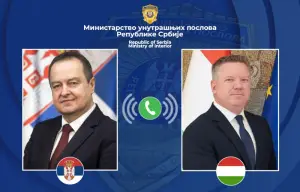
Serbia, Hungary partners in addressing regional security challenges
-
 Belgrade, 24 July 2026
Dačić congratulates UK Home Secretary on reappointment
-
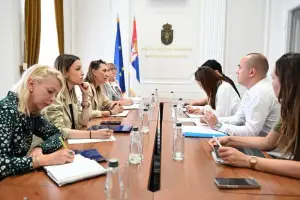 Belgrade, 22 July 2026
Serbia follows modern technological achievements, attracts investments
-
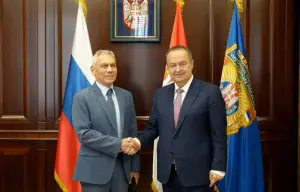 Belgrade, 22 July 2026
Continued cooperation with Russia in field of security, emergency situations
-
 Belgrade, 22 July 2026
New opportunities for expanding economic cooperation between Serbia, China
-
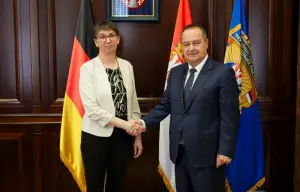 Belgrade, 20 July 2026
Cooperation in field of interior affairs important segment of relations with Germany
-
 Belgrade, 16 July 2026
Expo 2027 opportunity to further strengthen international partnerships
-
 Belgrade/Bratislava, 16 July 2026
Serbia, Slovakia continue to strengthen political, economic cooperation
-
 Belgrade, 14 July 2026
Serbia bilaterally resolves problems arising from EES implementation
-
 Gradina/Kalotina, 9 July 2026
Improving border cooperation between Serbia, Bulgaria