
Q:
A:
Government does everything to help refugees and IDPs
Belgrade,
19 June 2010
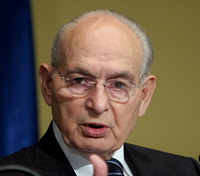
Deputy Prime Minister Jovan Krkobabic said today that Serbia, with 86,000 refugees and 210,000 internally displaced persons (IDPs), ranks as the first European country in terms of forceful migration and the only one faced with a long-lasting refugee issue.
Author:
Beta
Krkobabic told Beta news agency on the occasion of 20 June – World Refugee Day, that since the refugee crisis broke out, Serbia has tried to provide decent living conditions for refugees and IDPs, with the help of the international community and local self-governments.
He highlighted that World Refugee Day is the right moment to remind the world of those who have had to leave their homes in order to save their lives.
They have the full right to expect greater help from the state in making it possible for them to return to their homes or to get integrated into a new environment.
The Deputy Prime Minister underlined that Serbia has no right to knock on the door of the EU if it does not fulfil its obligations towards its own citizens, refugees and the displaced. This is the government’s principled position and we have support from the international community on this matter.
He outlined that although 14 collective centres were shut down in 2009, there are still 60 collective centres which are home to more than 4,700 refugees and IDPs.
Last year alone, the Commissariat for Refugees, with the help of the government and some international humanitarian organisations, helped the construction of houses for 1,359 families and purchased a number of village households and new flats for families, Krkobabic explained.
In addition, the government set aside €10 million from the budget for the financing of this Commissariat, despite the economic crisis.
With these funds, 940 houses were built and 475 families received financial assistance. The realisation of three projects financed with a €14.5 million grant from the EU Delegation to Serbia is underway. These projects will provide housing and financial assistance to more than 2,000 families.
The additional €14.7 million was set aside from IPA EU funds.
When it comes to return of refugees, the situation is most difficult in Croatia. Krkobabic explained that for more than 10 years refugees have not been able to return to their homes, receive overdue pensions or get their property back.
He reinforced that it is unacceptable in the 21st century for nationality to be a condition for exercising one’s basic personal and property rights.
According to the latest data from the UN High Commissioner for Human Rights (UNHCR), there are currently 43.3 million victims of conflict and persecution, some have been refugees for years and some are internally displaced. Around six million live in refugee camps.
He highlighted that World Refugee Day is the right moment to remind the world of those who have had to leave their homes in order to save their lives.
They have the full right to expect greater help from the state in making it possible for them to return to their homes or to get integrated into a new environment.
The Deputy Prime Minister underlined that Serbia has no right to knock on the door of the EU if it does not fulfil its obligations towards its own citizens, refugees and the displaced. This is the government’s principled position and we have support from the international community on this matter.
He outlined that although 14 collective centres were shut down in 2009, there are still 60 collective centres which are home to more than 4,700 refugees and IDPs.
Last year alone, the Commissariat for Refugees, with the help of the government and some international humanitarian organisations, helped the construction of houses for 1,359 families and purchased a number of village households and new flats for families, Krkobabic explained.
In addition, the government set aside €10 million from the budget for the financing of this Commissariat, despite the economic crisis.
With these funds, 940 houses were built and 475 families received financial assistance. The realisation of three projects financed with a €14.5 million grant from the EU Delegation to Serbia is underway. These projects will provide housing and financial assistance to more than 2,000 families.
The additional €14.7 million was set aside from IPA EU funds.
When it comes to return of refugees, the situation is most difficult in Croatia. Krkobabic explained that for more than 10 years refugees have not been able to return to their homes, receive overdue pensions or get their property back.
He reinforced that it is unacceptable in the 21st century for nationality to be a condition for exercising one’s basic personal and property rights.
According to the latest data from the UN High Commissioner for Human Rights (UNHCR), there are currently 43.3 million victims of conflict and persecution, some have been refugees for years and some are internally displaced. Around six million live in refugee camps.
-
 Belgrade, 24 July 2026
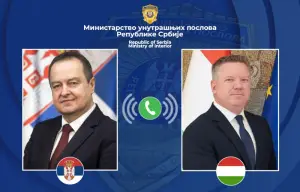
Serbia, Hungary partners in addressing regional security challenges
-
 Belgrade, 24 July 2026
Dačić congratulates UK Home Secretary on reappointment
-
 Belgrade, 22 July 2026
Serbia follows modern technological achievements, attracts investments
-
 Belgrade, 22 July 2026
Continued cooperation with Russia in field of security, emergency situations
-
 Belgrade, 22 July 2026
New opportunities for expanding economic cooperation between Serbia, China
-
 Belgrade, 20 July 2026
Cooperation in field of interior affairs important segment of relations with Germany
-
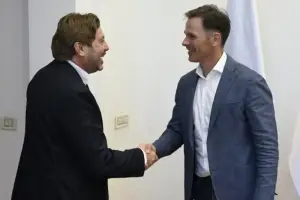 Belgrade, 16 July 2026
Expo 2027 opportunity to further strengthen international partnerships
-
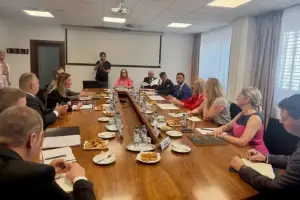 Belgrade/Bratislava, 16 July 2026
Serbia, Slovakia continue to strengthen political, economic cooperation
-
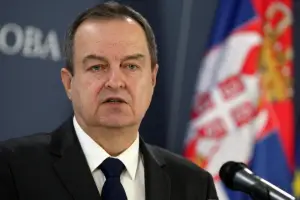 Belgrade, 14 July 2026
Serbia bilaterally resolves problems arising from EES implementation
-
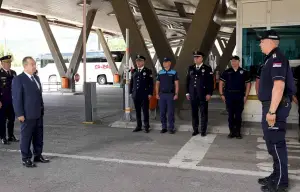 Gradina/Kalotina, 9 July 2026
Improving border cooperation between Serbia, Bulgaria