
Q:
A:
Serbia needs public-private partnership for development of infrastructure
Belgrade,
20 February 2010
Deputy Prime Minister Bozidar Djelic said today that Serbia needs public-private partnership for building local infrastructure which will bring not only foreign investment, but quality communal services, higher employment rate and growth in living standards as well.
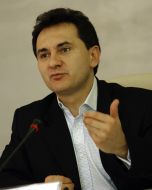
Bozidar Djelic
Author:
Fonet
Speaking at a seminar on public-private partnership in infrastructure, organised by the World Bank (WB) office in Serbia, Djelic said that it is necessary to pass appropriate legal regulations for development of this partnership. He added that amendments to the Law on concessions should be adopted in the middle of this year.
The existing Law on concessions is suitable for big, national projects, but it cannot satisfy the needs of local projects.
Djelic said that representatives of the Serbian government, local self-government and the World Bank agreed at a meeting held this morning at the Serbian government to first start with smaller projects, for recycling and processing of waste waters, which would be at the same time linked to electricity production plants.
The existing Law on concessions is suitable for big, national projects, but it cannot satisfy the needs of local projects.
Djelic said that representatives of the Serbian government, local self-government and the World Bank agreed at a meeting held this morning at the Serbian government to first start with smaller projects, for recycling and processing of waste waters, which would be at the same time linked to electricity production plants.

Jose Luis Guasch
Author:
Fonet
WB expert Jose Luis Guasch said that public-private partnership can and should be a powerful instrument for investments in infrastructure. He explained that it can generate jobs and increase household income, especially in highly indebted countries, such as Serbia.
He said that Chile and Korea are the countries that have gone the furthest in the application of public-private partnership and added that 70% and 90% respectively of all projects there are being realised through that form of cooperation.
Guasch said that this form of partnership is mainly used in the field of traffic, water supply and sewage systems, waste collection and disposal, city traffic and building of schools and hospitals.
The seminar was opened by head of World Bank office in Serbia Simon Grey.
He said that Chile and Korea are the countries that have gone the furthest in the application of public-private partnership and added that 70% and 90% respectively of all projects there are being realised through that form of cooperation.
Guasch said that this form of partnership is mainly used in the field of traffic, water supply and sewage systems, waste collection and disposal, city traffic and building of schools and hospitals.
The seminar was opened by head of World Bank office in Serbia Simon Grey.
-
 Belgrade, 24 July 2026
Serbia, Hungary partners in addressing regional security challenges
-
 Belgrade, 24 July 2026
Dačić congratulates UK Home Secretary on reappointment
-
 Belgrade, 22 July 2026
Serbia follows modern technological achievements, attracts investments
-
 Belgrade, 22 July 2026
Continued cooperation with Russia in field of security, emergency situations
-
 Belgrade, 22 July 2026
New opportunities for expanding economic cooperation between Serbia, China
-
 Belgrade, 20 July 2026
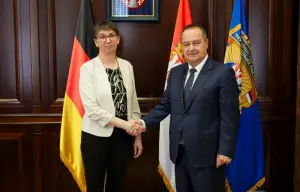
Cooperation in field of interior affairs important segment of relations with Germany
-
 Belgrade, 16 July 2026
Expo 2027 opportunity to further strengthen international partnerships
-
 Belgrade/Bratislava, 16 July 2026
Serbia, Slovakia continue to strengthen political, economic cooperation
-
 Belgrade, 14 July 2026
Serbia bilaterally resolves problems arising from EES implementation
-
 Gradina/Kalotina, 9 July 2026
Improving border cooperation between Serbia, Bulgaria