
Q:
A:
Serbia must continue with good fiscal policy
Belgrade/Paris,
8 January 2010
Deputy Prime Minister for EU integration Bozidar Djelic said today in Paris that it is necessary for Serbia to continue with its good budget and monetary policies.

Bozidar Djelic
Djelic, who is attending a two day symposium “New World, New Capitalism” in Paris, said that Serbia expects to have an economic growth rate of 1.5% during this year, 3% during next year and 5% in 2012.
The expected growth rate is higher than in some other European countries, said Djelic, adding that Serbia needs two to three decades to come close to European living standards.
He said that last evening he met with French European Affairs Minister Pierre Lellouche and informed him about the European reforms taking place in Serbia.
Djelic said that he expects France to support putting the question of Serbia’s EU candidacy on the agenda of one of the upcoming sessions of the EU Council of Ministers in the spring.
He said that he also talked with French government representatives about Serbia’s plans concerning infrastructure, energy and transport, adding that countries going through the EU association process are not provided with adequate funds for preparing to join the EU.
He said that he appealed for an increase in the funds to be allocated to Serbia from the European budget.
Djelic said that the symposium, which was opened by French President Nicolas Sarkozy, is being attended by major economic and political decision makers and it was important for Serbia to be present at this occasion.
He said that he presented Serbia’s economic programme at the symposium, adding that it was observed that Serbia is the only country which improved its rating this year.
He said that it is important for Serbia to continue with reforms and to go on attracting investments under difficult circumstances, as it did in 2009.
If Serbia managed to attract investments worth $2 billion from Fiat and Gazprom last year, this year we should be able to attract $3 million worth of Foreign Direct Investments, said Djelic.
Speaking about the financial crisis, the Deputy Prime Minister stressed that the worst is behind us and there are no new threats, which means that we are entering a more stable period.
He said, however, that it is obvious that the crisis is continuing and global economic growth will be low this year as well as next year and for Serbia this means that it must go on with a very cautious budget and monetary policies which will secure the stability of the national currency and ensure social cohesion.
It has been shown that countries that had a strong social welfare programme were hit less by the crisis, said Djelic, adding that the Serbian government will pay special attention to the social aspect of its economic programme.
The expected growth rate is higher than in some other European countries, said Djelic, adding that Serbia needs two to three decades to come close to European living standards.
He said that last evening he met with French European Affairs Minister Pierre Lellouche and informed him about the European reforms taking place in Serbia.
Djelic said that he expects France to support putting the question of Serbia’s EU candidacy on the agenda of one of the upcoming sessions of the EU Council of Ministers in the spring.
He said that he also talked with French government representatives about Serbia’s plans concerning infrastructure, energy and transport, adding that countries going through the EU association process are not provided with adequate funds for preparing to join the EU.
He said that he appealed for an increase in the funds to be allocated to Serbia from the European budget.
Djelic said that the symposium, which was opened by French President Nicolas Sarkozy, is being attended by major economic and political decision makers and it was important for Serbia to be present at this occasion.
He said that he presented Serbia’s economic programme at the symposium, adding that it was observed that Serbia is the only country which improved its rating this year.
He said that it is important for Serbia to continue with reforms and to go on attracting investments under difficult circumstances, as it did in 2009.
If Serbia managed to attract investments worth $2 billion from Fiat and Gazprom last year, this year we should be able to attract $3 million worth of Foreign Direct Investments, said Djelic.
Speaking about the financial crisis, the Deputy Prime Minister stressed that the worst is behind us and there are no new threats, which means that we are entering a more stable period.
He said, however, that it is obvious that the crisis is continuing and global economic growth will be low this year as well as next year and for Serbia this means that it must go on with a very cautious budget and monetary policies which will secure the stability of the national currency and ensure social cohesion.
It has been shown that countries that had a strong social welfare programme were hit less by the crisis, said Djelic, adding that the Serbian government will pay special attention to the social aspect of its economic programme.
-
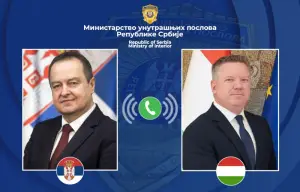 Belgrade, 24 July 2026
Serbia, Hungary partners in addressing regional security challenges
-
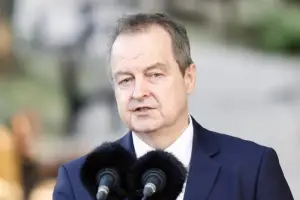 Belgrade, 24 July 2026
Dačić congratulates UK Home Secretary on reappointment
-
 Belgrade, 22 July 2026
Serbia follows modern technological achievements, attracts investments
-
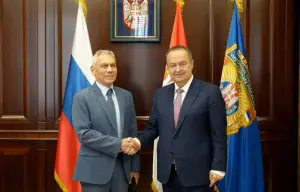 Belgrade, 22 July 2026
Continued cooperation with Russia in field of security, emergency situations
-
 Belgrade, 22 July 2026
New opportunities for expanding economic cooperation between Serbia, China
-
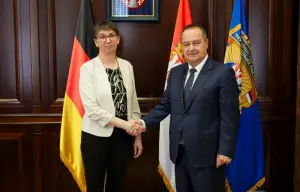 Belgrade, 20 July 2026
Cooperation in field of interior affairs important segment of relations with Germany
-
 Belgrade, 16 July 2026
Expo 2027 opportunity to further strengthen international partnerships
-
 Belgrade/Bratislava, 16 July 2026
Serbia, Slovakia continue to strengthen political, economic cooperation
-
 Belgrade, 14 July 2026
Serbia bilaterally resolves problems arising from EES implementation
-
 Gradina/Kalotina, 9 July 2026
Improving border cooperation between Serbia, Bulgaria