
Q:
A:
Serbia’s good relations with neighbours key to EU integration
Vrsac,
17 November 2009
Deputy Prime Minister for EU integration Bozidar Djelic said today in Vrsac that Serbia’s harmonious relations with its neighbouring countries, including Romania and its commitment to protecting the rights of national minorities are its real visa to Europe.
Djelic, who attended the first cross-border conference of micro and small enterprises, entrepreneurship workshops and Serbian and Romanian farmers, said that this gathering and the conclusion of the cross-border project, which was implemented by the Vrsac municipality and the Romanian city of Reshitse, show how European integration can have visible positive effects on the everyday lives of our people.
He said that the significance of the joint Vrsac and Reshitse project is in that mutually beneficial contacts were made between entrepreneurs from both sides of the border.
He said that the two cities implemented the project with the help of a €100,000 from the EU.
Djelic said that the cross-border cooperation, which is being financed by the EU and local authorities in Romania and Serbia, is very important, adding that 53 projects costing €4.7 million have been implemented up until now and that Vrsac received nearly €800,000 and used these funds in all areas.
He said that funds of €23 million are available for the projects in the final cycle, of which €18 million has been provided by the EU, and the Finance Ministry will also provide funding in order to ensure that as many useful projects as possible get implemented.
Adrian Martins, Deputy Head of the European Commission Delegation to Serbia, stressed that the purpose of these cross-border EU financed cooperation projects being is to develop good neighbourly relations in order to overcome barriers and to improve social dialogue.
Assistant Finance Minister Gordana Lazarevic said that a number of projects were implemented in cooperation with neighbouring and EU countries which were of great benefit to the Serbian people.
Djelic also presented the Europe for All project to the people of Vrsac and called on them to suggest their friends or neighbours who have never been abroad as candidates for being selected to travel through Europe, financed by the Serbian government, from the day Serbia gets included on to the Schengen “white list”.
He said that the significance of the joint Vrsac and Reshitse project is in that mutually beneficial contacts were made between entrepreneurs from both sides of the border.
He said that the two cities implemented the project with the help of a €100,000 from the EU.
Djelic said that the cross-border cooperation, which is being financed by the EU and local authorities in Romania and Serbia, is very important, adding that 53 projects costing €4.7 million have been implemented up until now and that Vrsac received nearly €800,000 and used these funds in all areas.
He said that funds of €23 million are available for the projects in the final cycle, of which €18 million has been provided by the EU, and the Finance Ministry will also provide funding in order to ensure that as many useful projects as possible get implemented.
Adrian Martins, Deputy Head of the European Commission Delegation to Serbia, stressed that the purpose of these cross-border EU financed cooperation projects being is to develop good neighbourly relations in order to overcome barriers and to improve social dialogue.
Assistant Finance Minister Gordana Lazarevic said that a number of projects were implemented in cooperation with neighbouring and EU countries which were of great benefit to the Serbian people.
Djelic also presented the Europe for All project to the people of Vrsac and called on them to suggest their friends or neighbours who have never been abroad as candidates for being selected to travel through Europe, financed by the Serbian government, from the day Serbia gets included on to the Schengen “white list”.
-
 Belgrade, 24 July 2026
Serbia, Hungary partners in addressing regional security challenges
-
 Belgrade, 24 July 2026
Dačić congratulates UK Home Secretary on reappointment
-
 Belgrade, 22 July 2026
Serbia follows modern technological achievements, attracts investments
-
 Belgrade, 22 July 2026
Continued cooperation with Russia in field of security, emergency situations
-
 Belgrade, 22 July 2026
New opportunities for expanding economic cooperation between Serbia, China
-
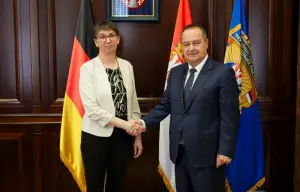 Belgrade, 20 July 2026
Cooperation in field of interior affairs important segment of relations with Germany
-
 Belgrade, 16 July 2026
Expo 2027 opportunity to further strengthen international partnerships
-
 Belgrade/Bratislava, 16 July 2026
Serbia, Slovakia continue to strengthen political, economic cooperation
-
 Belgrade, 14 July 2026
Serbia bilaterally resolves problems arising from EES implementation
-
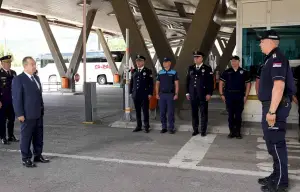 Gradina/Kalotina, 9 July 2026
Improving border cooperation between Serbia, Bulgaria