
Q:
A:
Increasing energy efficiency of vital importance
Belgrade,
29 October 2009
Serbian Deputy Prime Minister and Minister of Science and Technological Development Bozidar Djelic said today that increasing energy efficiency and recycling and investment in renewable energy sources and clean technologies are not just obligations but also opportunities.
Speaking at an open lecture on climate change, which was held at the Belgrade Faculty of Media and Communications as part of the United Nations Week, Djelic said that all of us can contribute to environmental protection, adding that climate change is becoming increasingly evident.
He said that a large number of global decisions will be made very soon which will affect Serbia. He stressed that Serbia must play an active role in the process for reaching a consensus about carbon emission reduction.
He said that at the moment it is not possible to reach a global consensus about binding criteria, adding that it is expected that progress will be made at the Copenhagen conference on climate change at the end of the year.
Djelic said that the Kyoto Protocol envisages that by 2020 developed European countries should reduce their carbon emissions by 20%, that 20% of their energy should come from renewable sources and that their energy efficiency should increase by 20%.
He said that Japan has taken on the obligation to reduce carbon emissions by 25% and developed countries are ready to finance environmental projects for reducing emissions in developing countries.
He stressed that Serbia is also being affected by climate change and that this could have a negative impact on agriculture in the coming years. He warned that climate changes cannot be ignored.
Djelic stressed that investment in seed institutes must be made in order to adapt agriculture to changing conditions. He said that the national strategy for science and technological development specifies food and agriculture as a priority.
UN Resident Coordinator in Serbia William Infante said that climate change knows no borders, adding that increasing energy efficiency is very important.
Infante said that electricity prices should be adjusted so that people do not spend too much and start thinking of better home insulation.
He said that a large number of global decisions will be made very soon which will affect Serbia. He stressed that Serbia must play an active role in the process for reaching a consensus about carbon emission reduction.
He said that at the moment it is not possible to reach a global consensus about binding criteria, adding that it is expected that progress will be made at the Copenhagen conference on climate change at the end of the year.
Djelic said that the Kyoto Protocol envisages that by 2020 developed European countries should reduce their carbon emissions by 20%, that 20% of their energy should come from renewable sources and that their energy efficiency should increase by 20%.
He said that Japan has taken on the obligation to reduce carbon emissions by 25% and developed countries are ready to finance environmental projects for reducing emissions in developing countries.
He stressed that Serbia is also being affected by climate change and that this could have a negative impact on agriculture in the coming years. He warned that climate changes cannot be ignored.
Djelic stressed that investment in seed institutes must be made in order to adapt agriculture to changing conditions. He said that the national strategy for science and technological development specifies food and agriculture as a priority.
UN Resident Coordinator in Serbia William Infante said that climate change knows no borders, adding that increasing energy efficiency is very important.
Infante said that electricity prices should be adjusted so that people do not spend too much and start thinking of better home insulation.
-
 Belgrade, 24 July 2026
Serbia, Hungary partners in addressing regional security challenges
-
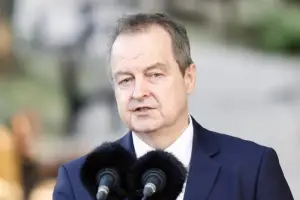 Belgrade, 24 July 2026
Dačić congratulates UK Home Secretary on reappointment
-
 Belgrade, 22 July 2026
Serbia follows modern technological achievements, attracts investments
-
 Belgrade, 22 July 2026
Continued cooperation with Russia in field of security, emergency situations
-
 Belgrade, 22 July 2026
New opportunities for expanding economic cooperation between Serbia, China
-
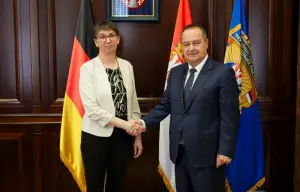 Belgrade, 20 July 2026
Cooperation in field of interior affairs important segment of relations with Germany
-
 Belgrade, 16 July 2026
Expo 2027 opportunity to further strengthen international partnerships
-
 Belgrade/Bratislava, 16 July 2026
Serbia, Slovakia continue to strengthen political, economic cooperation
-
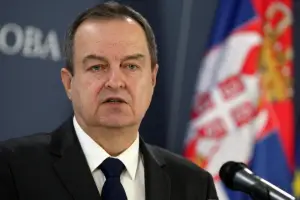 Belgrade, 14 July 2026
Serbia bilaterally resolves problems arising from EES implementation
-
 Gradina/Kalotina, 9 July 2026
Improving border cooperation between Serbia, Bulgaria