
Q:
A:
Serbia’s EU entry to increase annual economic growth by 1.3%
Belgrade,
2 October 2009
Deputy Prime Minister for EU integration Bozidar Djelic today stated that Serbia’s EU accession will help to increase its annual economic growth by 1.3%.
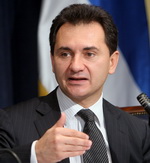
Bozidar Djelic
At a press conference dedicated to the results of the research ‘Effects of Serbia’s EU Integration’ Djelic stressed that exports would be doubled and imports increased by 40%.
He said that currently Serbia is receiving over €200 million a year from the European budget, adding that once it joins the EU it may count on around €2 billion.
Serbia’s EU entry would be a kind of an insurance policy because during the economic crisis it was evident that countries more deeply integrated in the EU than others fared much better, while those who have not yet shifted to the euro received considerable assistance from the EU budget.
He recalled that the EU has so far allocated €100 million in non-repayable assistance for support to Serbia’s budget, adding that support of another €200 million, approved under favourable conditions, has been announced.
Djelic said that by joining the EU, Serbia would receive several hundred million Euros a year for agriculture, as well as €500–600 million for balanced regional development.
He said that Polish businesspeople doubled their net income since Poland joined the EU as new markets were opened.
He said that currently Serbia is receiving over €200 million a year from the European budget, adding that once it joins the EU it may count on around €2 billion.
Serbia’s EU entry would be a kind of an insurance policy because during the economic crisis it was evident that countries more deeply integrated in the EU than others fared much better, while those who have not yet shifted to the euro received considerable assistance from the EU budget.
He recalled that the EU has so far allocated €100 million in non-repayable assistance for support to Serbia’s budget, adding that support of another €200 million, approved under favourable conditions, has been announced.
Djelic said that by joining the EU, Serbia would receive several hundred million Euros a year for agriculture, as well as €500–600 million for balanced regional development.
He said that Polish businesspeople doubled their net income since Poland joined the EU as new markets were opened.
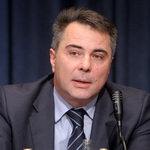
Milos Bugarin
PKS President Milos Bugarin noted that the EU is the top foreign trade partner for Serbia.
Bugarin noted that the good side of Serbia’s slow integration in to the EU could be that it will not make the same mistakes as some countries that have already joined the Union.
The project ‘Effects of Serbia’s EU Integration’ is 1,370 pages long and covers 17 areas. It was written by experts from the Faculty of Economics, Finance and Administration, PKS and public administration.
According to the study, Serbia’s GDP in 2015 would increase from projected €5,530 per capita to €6,075 per capita if the country joined the Union.
Public consumption in 2015 on average would be €3,820 per capita or €4,250 if Serbia was part of the EU by then, according to the study.
Bugarin noted that the good side of Serbia’s slow integration in to the EU could be that it will not make the same mistakes as some countries that have already joined the Union.
The project ‘Effects of Serbia’s EU Integration’ is 1,370 pages long and covers 17 areas. It was written by experts from the Faculty of Economics, Finance and Administration, PKS and public administration.
According to the study, Serbia’s GDP in 2015 would increase from projected €5,530 per capita to €6,075 per capita if the country joined the Union.
Public consumption in 2015 on average would be €3,820 per capita or €4,250 if Serbia was part of the EU by then, according to the study.
-
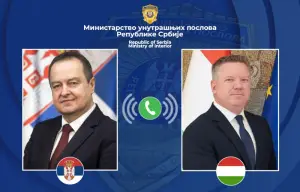 Belgrade, 24 July 2026
Serbia, Hungary partners in addressing regional security challenges
-
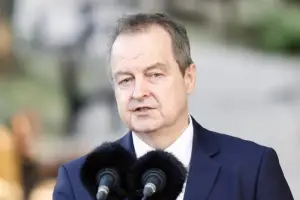 Belgrade, 24 July 2026
Dačić congratulates UK Home Secretary on reappointment
-
 Belgrade, 22 July 2026
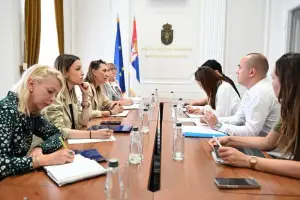
Serbia follows modern technological achievements, attracts investments
-
 Belgrade, 22 July 2026
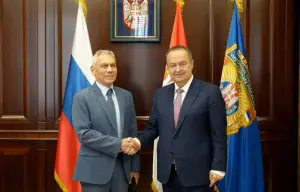
Continued cooperation with Russia in field of security, emergency situations
-
 Belgrade, 22 July 2026
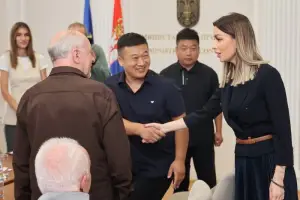
New opportunities for expanding economic cooperation between Serbia, China
-
 Belgrade, 20 July 2026
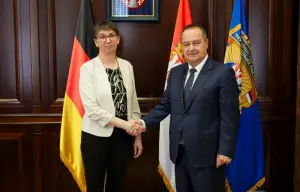
Cooperation in field of interior affairs important segment of relations with Germany
-
 Belgrade, 16 July 2026
Expo 2027 opportunity to further strengthen international partnerships
-
 Belgrade/Bratislava, 16 July 2026
Serbia, Slovakia continue to strengthen political, economic cooperation
-
 Belgrade, 14 July 2026
Serbia bilaterally resolves problems arising from EES implementation
-
 Gradina/Kalotina, 9 July 2026
Improving border cooperation between Serbia, Bulgaria