
Q:
A:
Decisions must be made regarding issuance of passport to citizens in Kosovo
Belgrade,
10 August 2009
Serbian First Deputy Prime Minister and Minister of the Interior Ivica Dacic said yesterday that the government must make suitable decisions regarding the issuance of passports to citizens living in Kosovo in accordance with the European Commission’s stance that conditions for visa liberalisation have not been fulfilled in the southern Serbian province.
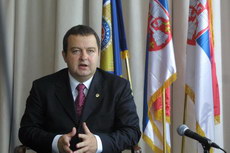
File photo of Ivica Dacic
Author:
Fonet
In a statement to Tanjug news agency, Dacic said that the government regrets that visa liberalisation will not apply to citizens living in Kosovo because it is the opinion of the European Commission that not a single of the criteria set forth in the road-map for visa liberalisation has been met in the province.
Dacic said that this is a European Commission decision which Serbia cannot influence.
He remarked that the territory of Kosovo has not been under Serbian state jurisdiction, or for that matter under the jurisdiction of the Serbian Interior Ministry, for over ten years.
Serbian citizens living in Kosovo will be issued passports by the coordinative administration, said Dacic, explaining that they do have a right to travel documents but unfortunately not the right to visa free travel to EU countries.
Speaking about Internally Displaced Persons from Kosovo, Dacic said that that was never an issue subject to any controversy, adding that a cooperation protocol must be signed with EULEX regarding the matter, for which preparations are being made.
He said that the earlier police cooperation agreement signed between the Serbian Interior Ministry and UNMIK concerned only operational cooperation.
Dacic said that that protocol is based on Resolution 1244 and EU decisions and is in harmony with the UN Secretary General’s six items plan which was presented to the public.
He said that preparations are ongoing for signing a cooperation protocol with EULEX and work is also being done on adopting laws regarding the fight against crime and corruption, including the protection of data important for the exchange of information within international police bodies.
He said that it is essential to improve control of the administrative line with Kosovo, adding that this is the purpose of the agreement with EULEX.
He said that four groups of criteria are important for Serbia’s inclusion on to the Schengen “white list”, explaining that the first is the security of travel documents and that the Interior Ministry has up until now issued more than 900,000 new passports and new equipment has been installed to increase the capacity for issuing passports.
He said that the second group concerns border control, immigration and asylum issues.
He said that it is important for the European Commission to have assurances that the borders are open for people, goods and capital while closed to crime, illegal immigration and trafficking.
The third group concerns the fight against crime and corruption while the fourth is the protection of human rights and freedoms.
He noted that the interior and justice ministries are mainly responsible for fulfilling these criteria and if the European Commission had not given a positive assessment these two ministries would have been held accountable.
There is political will in Europe to remove visa restrictions for Serbia from January 1, 2010, but in order to make that a reality we must meet the remaining conditions, Dacic said.
He said that Serbian citizens do not need a visa to travel to Russia and negotiations for removing visa restrictions have begun with Turkey, Egypt, Japan and other countries as well.
The US administration is considering Serbia’s request for the removal of visa restrictions but unfortunately it is impossible to do so at the present moment because Serbia does not fulfill two main conditions, he said, explaining that the first condition is that the percentage of visa applications turned down must be below five or three percent and is currently higher than 10%, while the other problem is that Serbian citizens sometimes overstay when visiting the US.
Dacic said that the US administration is considering the possibility of issuing visas for longer periods, for instance up to five years, which will be a major step forward.
Dacic said that this is a European Commission decision which Serbia cannot influence.
He remarked that the territory of Kosovo has not been under Serbian state jurisdiction, or for that matter under the jurisdiction of the Serbian Interior Ministry, for over ten years.
Serbian citizens living in Kosovo will be issued passports by the coordinative administration, said Dacic, explaining that they do have a right to travel documents but unfortunately not the right to visa free travel to EU countries.
Speaking about Internally Displaced Persons from Kosovo, Dacic said that that was never an issue subject to any controversy, adding that a cooperation protocol must be signed with EULEX regarding the matter, for which preparations are being made.
He said that the earlier police cooperation agreement signed between the Serbian Interior Ministry and UNMIK concerned only operational cooperation.
Dacic said that that protocol is based on Resolution 1244 and EU decisions and is in harmony with the UN Secretary General’s six items plan which was presented to the public.
He said that preparations are ongoing for signing a cooperation protocol with EULEX and work is also being done on adopting laws regarding the fight against crime and corruption, including the protection of data important for the exchange of information within international police bodies.
He said that it is essential to improve control of the administrative line with Kosovo, adding that this is the purpose of the agreement with EULEX.
He said that four groups of criteria are important for Serbia’s inclusion on to the Schengen “white list”, explaining that the first is the security of travel documents and that the Interior Ministry has up until now issued more than 900,000 new passports and new equipment has been installed to increase the capacity for issuing passports.
He said that the second group concerns border control, immigration and asylum issues.
He said that it is important for the European Commission to have assurances that the borders are open for people, goods and capital while closed to crime, illegal immigration and trafficking.
The third group concerns the fight against crime and corruption while the fourth is the protection of human rights and freedoms.
He noted that the interior and justice ministries are mainly responsible for fulfilling these criteria and if the European Commission had not given a positive assessment these two ministries would have been held accountable.
There is political will in Europe to remove visa restrictions for Serbia from January 1, 2010, but in order to make that a reality we must meet the remaining conditions, Dacic said.
He said that Serbian citizens do not need a visa to travel to Russia and negotiations for removing visa restrictions have begun with Turkey, Egypt, Japan and other countries as well.
The US administration is considering Serbia’s request for the removal of visa restrictions but unfortunately it is impossible to do so at the present moment because Serbia does not fulfill two main conditions, he said, explaining that the first condition is that the percentage of visa applications turned down must be below five or three percent and is currently higher than 10%, while the other problem is that Serbian citizens sometimes overstay when visiting the US.
Dacic said that the US administration is considering the possibility of issuing visas for longer periods, for instance up to five years, which will be a major step forward.
-
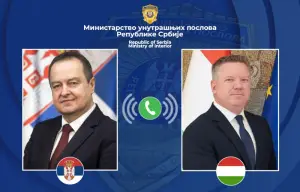 Belgrade, 24 July 2026
Serbia, Hungary partners in addressing regional security challenges
-
 Belgrade, 24 July 2026
Dačić congratulates UK Home Secretary on reappointment
-
 Belgrade, 22 July 2026
Serbia follows modern technological achievements, attracts investments
-
 Belgrade, 22 July 2026
Continued cooperation with Russia in field of security, emergency situations
-
 Belgrade, 22 July 2026
New opportunities for expanding economic cooperation between Serbia, China
-
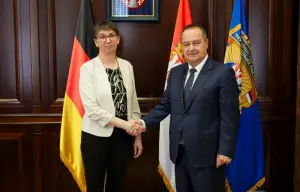 Belgrade, 20 July 2026
Cooperation in field of interior affairs important segment of relations with Germany
-
 Belgrade, 16 July 2026
Expo 2027 opportunity to further strengthen international partnerships
-
 Belgrade/Bratislava, 16 July 2026
Serbia, Slovakia continue to strengthen political, economic cooperation
-
 Belgrade, 14 July 2026
Serbia bilaterally resolves problems arising from EES implementation
-
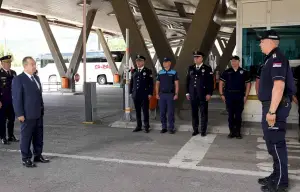 Gradina/Kalotina, 9 July 2026
Improving border cooperation between Serbia, Bulgaria