
Q:
A:
Djelic asks for €120m from European Commission for Serbian budget
Belgrade/Brussels,
23 March 2009
Deputy Prime Minister for EU Integration Bozidar Djelic today delivered a letter to the European Commission proposing that €120 million be set aside from the IPA programme to help Serbia stabilise its budget and ensure continuation of reforms.
He said this is part of the macro financial plan for 2010 which Serbia is discussing with the IMF, the World Bank, the European Investment Bank and the European Bank for Reconstruction and Development.
Djelic added that he asked for the European Commission’s support in Serbia’s talks with private European banks, which it will ask to put off collecting due debts of private Serbian companies that amount to €5 billion.
These European banks should also take part in the support for overcoming the budget deficit, said Djelic, adding that this would be an ‘element of solidarity’, bearing in mind that the very same banks garnered huge profits in Serbia.
Our joint interest is to maintain Serbia’s economic stability, he stressed.
Following the meeting with Djelic, EU Enlargement Commissioner Olli Rehn said that the European Commission is looking into Serbia’s proposal for €120 million from the IPA fund for Serbia’s budget stability.
He stressed visas may be abolished for some Western Balkan countries in 2009, bearing in mind that the European Commission expert missions noted considerable progress in their reports.
He said the support for stabilising Serbia’s budget would be another proof of the tangible solidarity between the EU and Serbia, which is trying to remove the impact of the financial crisis and maintain macro economic stability.
Rehn welcomed the fact that a series of European reform laws have been adopted in Serbia, which will facilitate the visa abolition process.
In their reports EU experts noted ‘progress’ which Serbia and other Western Balkan countries achieved when it comes to implementing conditions for the gradual abolition of visas, said Rehn, adding that citizens from the countries that have fulfilled the required conditions will most likely be able to travel to the EU this year without visas.
Rehn said that in consultation with European Commission Vice President Jacques Barrot he will soon publish a detailed report on this matter.
Rehn also affirmed that Serbia has huge a potential for gaining EU access, stressing that all countries in the region have a clear EU perspective, adding that they only have to fulfill the necessary conditions.
Following a meeting with EU Research Commissioner Janez Potocnik, Djelic said that the European Commission will support cooperation between the EU and Serbia in scientific matters.
He pointed out that the Serbian government has asked from the European Investment Bank a €200 million loan for science and technological development, announcing that Potocnik will visit Belgrade in June to suggest that the Serbian scientific community receive EU funds for scientific and research programmes.
Having entered the Seventh Framework Programme for Research, Technological Development and Demonstration activities (FP7), Serbian scientists have achieved significant results, said Djelic.
According to the Minister, Serbia will participate in a regional conference, to be held in late April in Sarajevo, where it will present its projects.
Minister Djelic added he introduced Potocnik with a strategy drafted by the National Council for Science and Technological Development and a list of infrastructure project of major importance.
He stressed that Serbia will not be able to realise huge projects by itself and it expects EU assistance.
Since Serbia harmonised its scientific work with EU standards, around 2,500 papers by Serbian scientists have been published in international scientific magazines, said Djelic, noting that Serbian scientist have received €14 million from the EU budget.
Djelic added that he asked for the European Commission’s support in Serbia’s talks with private European banks, which it will ask to put off collecting due debts of private Serbian companies that amount to €5 billion.
These European banks should also take part in the support for overcoming the budget deficit, said Djelic, adding that this would be an ‘element of solidarity’, bearing in mind that the very same banks garnered huge profits in Serbia.
Our joint interest is to maintain Serbia’s economic stability, he stressed.
Following the meeting with Djelic, EU Enlargement Commissioner Olli Rehn said that the European Commission is looking into Serbia’s proposal for €120 million from the IPA fund for Serbia’s budget stability.
He stressed visas may be abolished for some Western Balkan countries in 2009, bearing in mind that the European Commission expert missions noted considerable progress in their reports.
He said the support for stabilising Serbia’s budget would be another proof of the tangible solidarity between the EU and Serbia, which is trying to remove the impact of the financial crisis and maintain macro economic stability.
Rehn welcomed the fact that a series of European reform laws have been adopted in Serbia, which will facilitate the visa abolition process.
In their reports EU experts noted ‘progress’ which Serbia and other Western Balkan countries achieved when it comes to implementing conditions for the gradual abolition of visas, said Rehn, adding that citizens from the countries that have fulfilled the required conditions will most likely be able to travel to the EU this year without visas.
Rehn said that in consultation with European Commission Vice President Jacques Barrot he will soon publish a detailed report on this matter.
Rehn also affirmed that Serbia has huge a potential for gaining EU access, stressing that all countries in the region have a clear EU perspective, adding that they only have to fulfill the necessary conditions.
Following a meeting with EU Research Commissioner Janez Potocnik, Djelic said that the European Commission will support cooperation between the EU and Serbia in scientific matters.
He pointed out that the Serbian government has asked from the European Investment Bank a €200 million loan for science and technological development, announcing that Potocnik will visit Belgrade in June to suggest that the Serbian scientific community receive EU funds for scientific and research programmes.
Having entered the Seventh Framework Programme for Research, Technological Development and Demonstration activities (FP7), Serbian scientists have achieved significant results, said Djelic.
According to the Minister, Serbia will participate in a regional conference, to be held in late April in Sarajevo, where it will present its projects.
Minister Djelic added he introduced Potocnik with a strategy drafted by the National Council for Science and Technological Development and a list of infrastructure project of major importance.
He stressed that Serbia will not be able to realise huge projects by itself and it expects EU assistance.
Since Serbia harmonised its scientific work with EU standards, around 2,500 papers by Serbian scientists have been published in international scientific magazines, said Djelic, noting that Serbian scientist have received €14 million from the EU budget.
-
 Belgrade, 24 July 2026
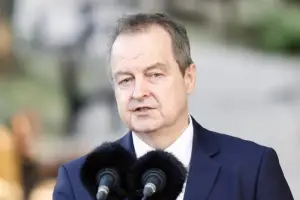
Dačić congratulates UK Home Secretary on reappointment
-
 Belgrade, 22 July 2026
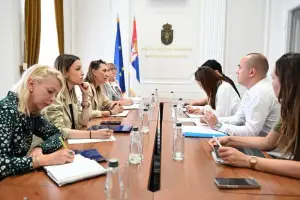
Serbia follows modern technological achievements, attracts investments
-
 Belgrade, 22 July 2026
Continued cooperation with Russia in field of security, emergency situations
-
 Belgrade, 22 July 2026
New opportunities for expanding economic cooperation between Serbia, China
-
 Belgrade, 20 July 2026
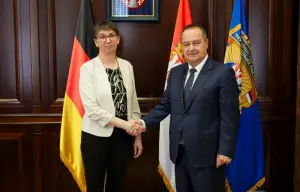
Cooperation in field of interior affairs important segment of relations with Germany
-
 Belgrade, 16 July 2026
Expo 2027 opportunity to further strengthen international partnerships
-
 Belgrade/Bratislava, 16 July 2026
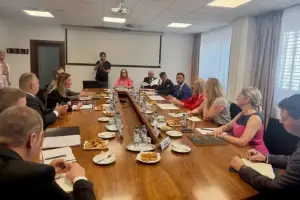
Serbia, Slovakia continue to strengthen political, economic cooperation
-
 Belgrade, 14 July 2026
Serbia bilaterally resolves problems arising from EES implementation
-
 Gradina/Kalotina, 9 July 2026
Improving border cooperation between Serbia, Bulgaria
-
 Belgrade, 7 July 2026
Further strengthening economic cooperation between Serbia, Italy