Minister of Labour, Employment, Veteran and Social Affairs in the caretaker Government of the Republic of Serbia Milica Đurđević Stamenkovski stated tonight that fascism did not begin with concentration camps, stressing that it began with words, prejudice, divisions and the humiliation of those who were labelled as different.

Q:
A:
Anti-fascist struggle indivisible part of Serbia’s historical, state identity
Belgrade,
9 November 2026
At the formal ceremony held at the National Theatre in Belgrade to mark the International Day Against Fascism and Anti-Semitism, Đurđević Stamenkovski pointed out that our duty is therefore not merely to remember how evil ended, but to recognise how it begins.
The Minister assessed that remembering Kristallnacht, the Holocaust and millions of innocent victims is not only a historical and moral duty, but also a warning to contemporary humanity, which is once again facing anti-Semitism, political racism, intolerance and attempts to relativise crimes.
She recalled that the Serbian people, together with Jews, Roma and other victims of fascist terror, endured immense suffering during the Second World War, while also emphasising that the anti-fascist struggle is an indivisible part of Serbia’s historical and state identity.
Đurđević Stamenkovski particularly highlighted the importance of restoring the culture of remembrance over the past decade, noting that Serbia has restored the rightful place of Jasenovac, Jadovno, Donja Gradina and other sites of mass atrocities against the Serbian, Jewish and Roma peoples in public memory.
Speaking about Staro Sajmište, the Minister recalled that the Republic of Serbia established the Staro Sajmište Memorial Centre in 2020, following which the Central Tower was renovated and work continued on the development of the memorial complex.
She said that the culture of remembrance is not merely a phrase uttered at a commemorative ceremony, but a lasting institutional, material and moral obligation of the state.
Đurđević Stamenkovski noted that the memory of the victims must not depend on political circumstances, individual terms of office or changes within state institutions, but must represent an uninterrupted obligation of all those who assume responsibility for Serbia’s future.
The Minister warned that forgetting historical crimes creates room for their relativisation, while preserving the truth is one of the most important guarantees that the tragedies of the past will not be repeated.
A people that remembers its own victims must not forget the victims of others. And a state that respects its own history must also respect the historical truth in its entirety, the Minister stressed.
She stated that anti-fascism must remain a living commitment of society, based on the protection of human dignity, freedom and the rights of every person, regardless of national or religious affiliation.
Đurđević Stamenkovski stressed that the memory of the victims belongs neither to any one generation, nor to any government or political ideology, adding that it is a lasting obligation of the state, a moral debt of society and a pledge passed down from generation to generation.
Remembrance is eternal. Serbia is eternal, Đurđević Stamenkovski concluded.
-
 Author: Ministry of Labour, Employment, Veteran and Social Affairs
-
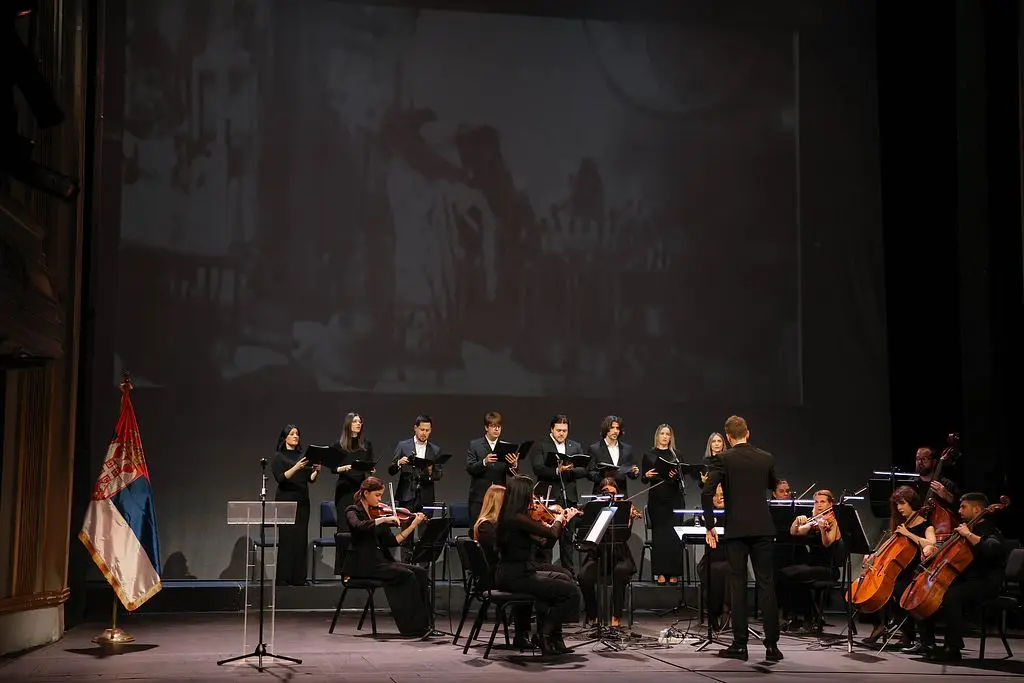 Author: Ministry of Labour, Employment, Veteran and Social Affairs
-
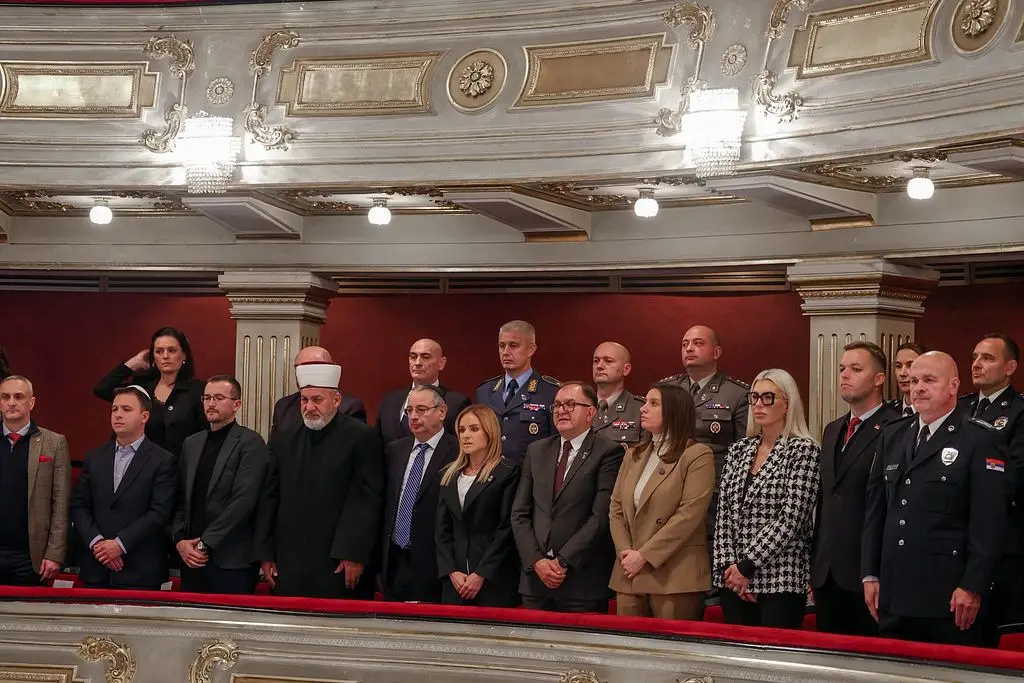 Author: Ministry of Labour, Employment, Veteran and Social Affairs
-
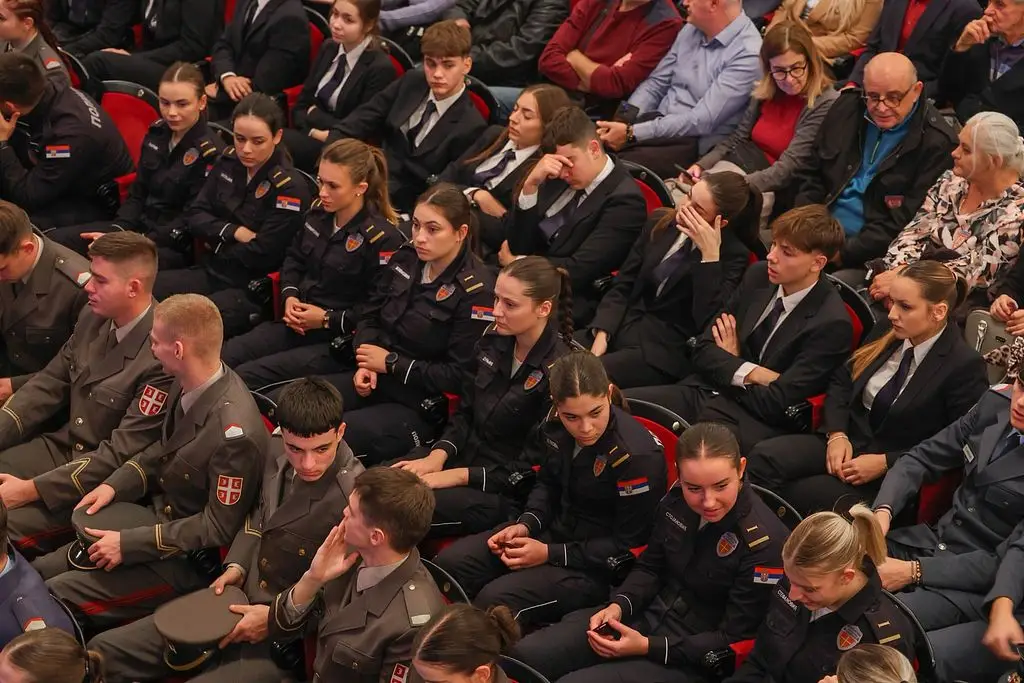 Author: Ministry of Labour, Employment, Veteran and Social Affairs
-
 Belgrade, 7 November 2026
Great potential for enhancing economic cooperation with Kazakhstan
-
 Belgrade/Budva, 6 November 2026
Serbia remains committed to strengthening rule of law, judicial cooperation
-
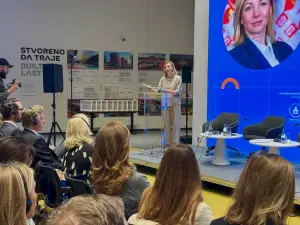 Belgrade, 4 November 2026
Family-friendly company policies represent investment in employees
-
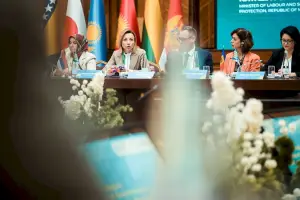 Belgrade/Chișinău, 3 November 2026
Importance of support services for people in need of care, their families
-
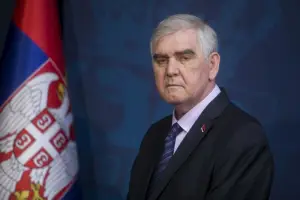 Belgrade, 24 October 2026
Special electoral roll of national minorities closed
-
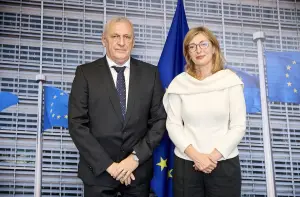 Belgrade/Brussels, 23 October 2026
Serbia regional leader in participation in Horizon Europe programme
-
 Belgrade, 22 October 2026
Cooperation with JICA to expedite procedures to build Bistrica pumped-storage HPP
-
 Belgrade/Samarkand, 22 October 2026
Enhancing international cooperation on women’s empowerment, well-being of children
-
 Belgrade/New York, 21 October 2026
Continued UNMIK engagement crucial for stability in Kosovo and Metohija
-
 Belgrade/Samarkand, 21 October 2026
Serbia committed to advancing child well-being, protection