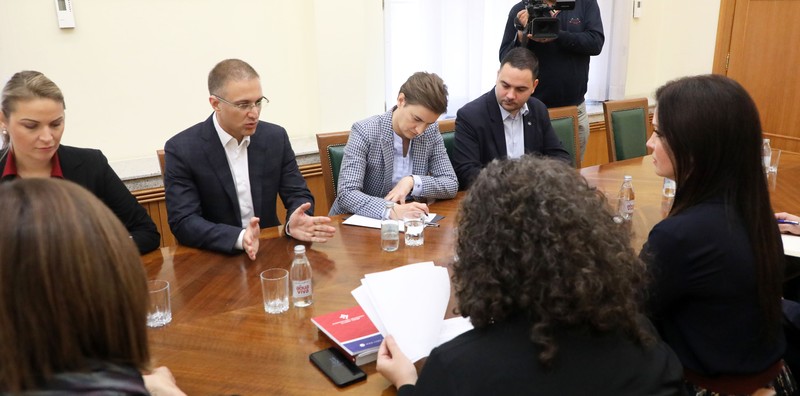
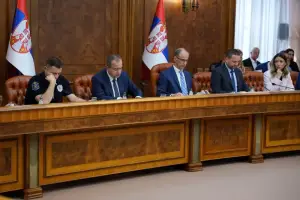
Prime Minister Ana Brnabic and Deputy Prime Minister and Minister of the Interior Nebojsa Stefanovic announced today that amendments to the Law on Financing Political Activities, the Law on Public Enterprises and the Law on the Anti-Corruption Agency will be on the agenda of the next government session, noting that it is the result of discussions with the OSCE and the ODIHR with a view to improving the electoral process.

Q:
A:
Three laws that will improve electoral process to be amended soon
Belgrade,
29 September 2019
Brnabic and Stefanovic, who is also chairman of the OSCE and ODIHR Cooperation Working Group, emphasised that the ODIHR mission will be in our country in November, to participate in the election process.
Brnabic said that much has been done so far to change the electoral process and recalled that the government has made 11 conclusions in the last two sessions addressing the recommendations of the ODIHR and non-governmental organisations, including CESID and Crta.
What we, as the government, have promised to do, we have done to improve the electoral conditions. We want this to be the best and most transparent process so far. We have done a lot in the first place on the electoral roll, and the Ministry of Public Administration and Local Self-Government is still working on it, Brnabic said.
According to Brnabic, it is important for citizens to know that it is in the state's interest to improve the overall electoral environment and to make it much better than it was before.
Stefanovic also said that much has been done to increase transparency primarily related to the electoral roll, adding that citizens will be able to view the excerpt from the electoral roll in the future after the election process is over.
I hope that the amendments to the three laws resulting from discussions with the OSCE and the ODIHR will not only be enacted but also implemented within 60 to 90 days, said Stefanovic.
All three laws are changing in terms of tightening sanctions, defining what is misuse of public resources and standardising everything we discussed with the OSCE on the transparency of the election process, explained the Deputy Prime Minister.
-
 Belgrade, 2 August 2026
Energy sector facing serious, challenging situation
-
 Belgrade, 2 August 2026
Preserving ties with Serbian people worldwide among government’s priorities
-
 Belgrade, 1 August 2026
More affordable, accessible medicines demonstrate state’s systemic care for citizens’ health
-
 Belgrade/Ohrid, 31 July 2026
Strengthening good-neighbourly relations, cooperation with North Macedonia
-
 Belgrade, 31 July 2026
Appeal to citizens to use electricity rationally
-
 Vladičin Han, 31 July 2026
State continues to invest in water management infrastructure throughout Serbia
-
 Vranjska Banja, 31 July 2026
Capacities of Vranjska Banja for further development of spa tourism to be improved
-
 Belgrade, 30 July 2026
Coordinated state response to adverse weather conditions
-
 Vranje, 30 July 2026
Continuing investment in protection of cultural heritage
-
 Vranje, 30 July 2026
State responds quickly to citizens’ needs