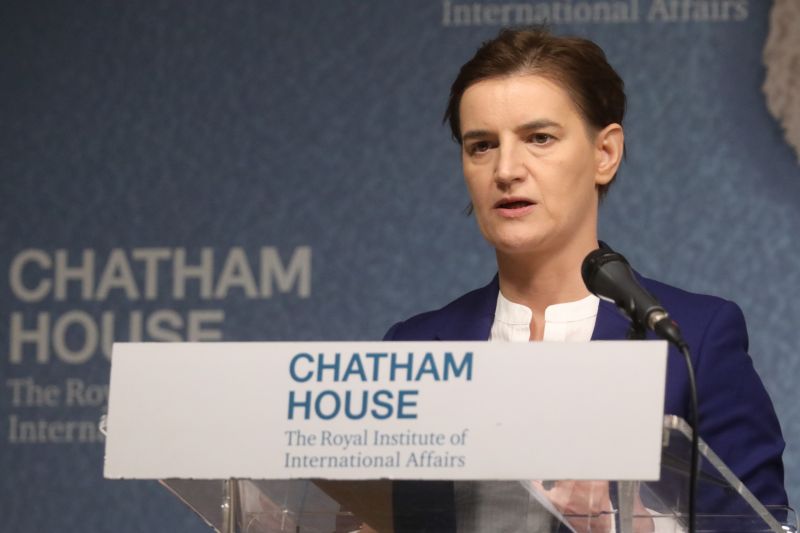
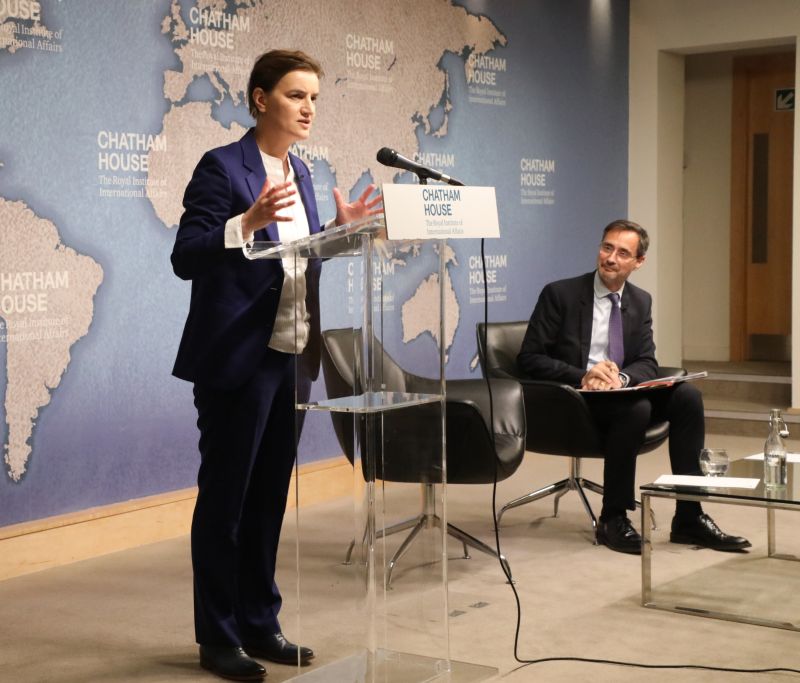
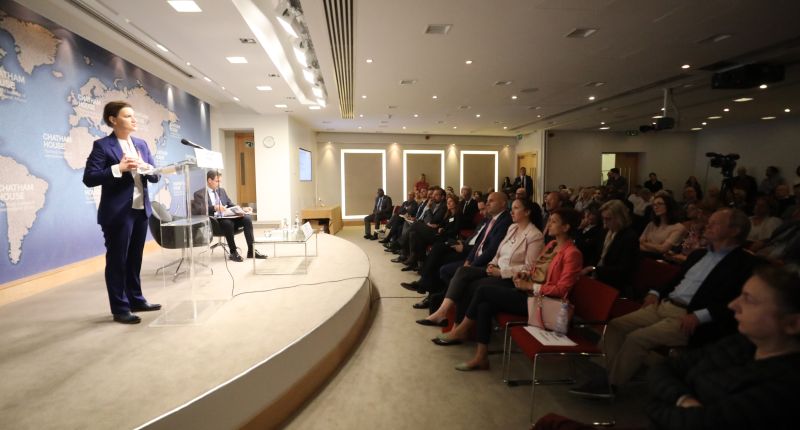
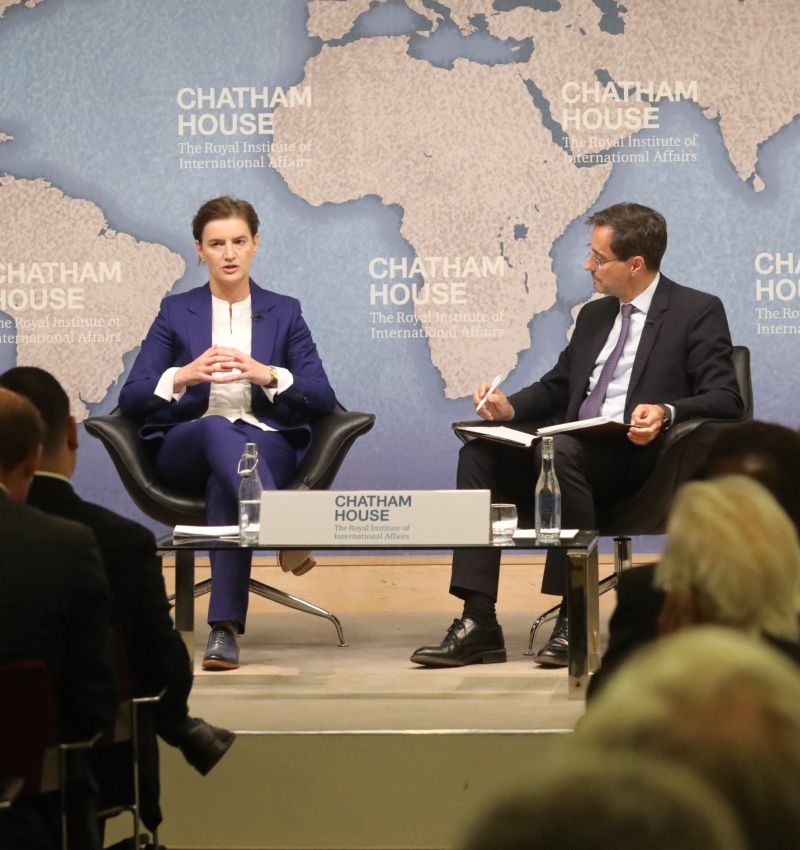
Prime Minister Ana Brnabic said today during a lecture themed "Serbia, the Balkans and the European Union" held at the Royal Institute of International Affairs, Chatham House, in London that the two key priorities of Serbia's foreign policy are EU membership and a stable region.

Q:
A:
EU brings peace, stability to Western Balkans
Belgrade/London,
18 June 2019
Brnabic said that Serbia is on the European path, and that it does not care about the time when our country will be admitted to the EU, because there are still many tasks that we have to do locally.
The Prime Minister, however, warned that she was concerned about regional stability, on which the prime ministers of this part of Europe must focus.
She pointed out that many Europeans feel that peace is something that can not be changed and focus on other issues, but that the EU will always be a successful project for the peace it has brought to the continent.
According to her, the Western Balkans need such a peace project because membership in the EU will bring peace and stability to the region.
The Prime Minister stressed that Serbia belongs in the EU because it shares the same values as the European countries, and has specified that more than 70% of investments come from EU member states.
She stressed that Serbia’s foreign policy in this respect will not change and that EU accession will remain a strategic goal, noting that accession to the Union is an administrative process.
Speaking about the opening of the chapters in the accession process, the Prime Minister said that all chapters are part of Chapter 35 which is easy for the others because its name is "Other Issues", and for Serbia it is the most difficult political issue, as it concerns Kosovo-Metohija.
The Prime Minister pointed out that regional stability is today much more important than European integration, because without a stable and predictable region we will not be able to think about joining the Union, a better life and the economy.
She said that all countries in the region continue to have a problem with high unemployment, especially among the young, adding that the Berlin Process is a good initiative that has strengthened the cooperation of the Western Balkan countries and brought important projects.
However, after that, Pristina introduced tariffs, which brought everything into question, Brnabic said, reminding that the entire region is bound by the CEFTA agreement.
By introducing the tariffs, they interrupted all communication. This led to a continuous worsening of the situation, the Prime Minister underlined, and announced that she would try to see what can be done to restore communication and send a clear signal that economic cooperation should not be interrupted.
-
 Belgrade, 2 August 2026
Energy sector facing serious, challenging situation
-
 Belgrade, 2 August 2026
Preserving ties with Serbian people worldwide among government’s priorities
-
 Belgrade, 1 August 2026
More affordable, accessible medicines demonstrate state’s systemic care for citizens’ health
-
 Belgrade/Ohrid, 31 July 2026
Strengthening good-neighbourly relations, cooperation with North Macedonia
-
 Belgrade, 31 July 2026
Appeal to citizens to use electricity rationally
-
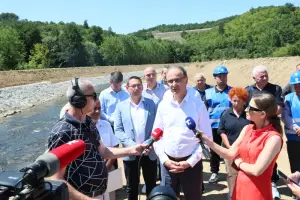 Vladičin Han, 31 July 2026
State continues to invest in water management infrastructure throughout Serbia
-
 Vranjska Banja, 31 July 2026
Capacities of Vranjska Banja for further development of spa tourism to be improved
-
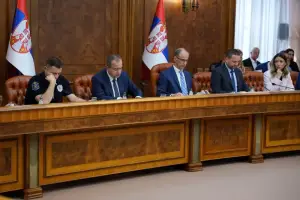 Belgrade, 30 July 2026
Coordinated state response to adverse weather conditions
-
 Vranje, 30 July 2026
Continuing investment in protection of cultural heritage
-
 Vranje, 30 July 2026
State responds quickly to citizens’ needs