Prime Minister Ana Brnabic met with President of the International Commission on Missing Persons Kathryne Bomberger and said that the key to resolving the issue of missing persons in the former Yugoslavia is cooperation between states and domestic institutions.

Q:
A:
Cooperation of countries in region crucial for resolving issue of missing persons
Belgrade,
7 March 2019
On that occasion, Brnabic said that it was also the duty of all of us to the victims and their families, regardless of their nationality.
She said that the unsettled fate of more than 10,000 missing persons in the region is one of the most serious consequences of the conflict in the former Yugoslavia, stressing that the state is ready to provide greater support to the Commission for Missing Persons and other institutions in order to increase capacities and improve their work conditions.
At the same time, Serbia will insist on opening its archives, archives of other parties in the process, as well as all archives in possession of international organisations that were present at the time of the conflict in the territory of the former Yugoslavia.
The Prime Minister assessed that the biggest challenge in solving the problem of missing persons was 4,000 unidentified mortal remains, of which about 3,000 in Bosnia -Herzegovina, 930 in Croatia and 300 in Pristina, for which the identification process is still not completed.
In this regard, she underlined that this issue is one of the most complex open issues in bilateral relations with Croatia on which Serbia will insist.
Brnabic said that the problem of resolving the fate of missing persons from the territory of Kosovo-Metohija is very important for Pristina to provide information and documentation from its archives, especially the one that points to the existence of individual or mass graves with the remains of persons of Serbian and non-Albanian nationality.
President of the Commission for Missing Persons Veljko Odalovic, who attended the meeting, pointed out that the competent authorities of the Republic of Serbia are fully responsible for accessing any information about possible graves and that there is not a single request from the other parties for which the verification was not carried out in the Commission.
Bomberger estimated that there was some progress in the search for missing persons during the 1990s wars in the former Yugoslavia, but that greater readiness of the countries of the region to face the consequences of the conflict and the crimes committed on their territories is necessary.
She commended the work of the government's Commission for Missing Persons, whose work she characterised as responsible and transparent, and offered assistance in analysing and improving the forensic process.
The officials concluded that the closure of this chapter is of utmost importance for the future and prosperity of the whole region.

-
 Belgrade/Subotica, 3 August 2026
Investment in modern railway infrastructure among government’s priorities
-
 Belgrade, 3 August 2026
Energy situation in Serbia fully stable
-
 Belgrade, 2 August 2026
Energy sector facing serious, challenging situation
-
 Belgrade, 2 August 2026
Preserving ties with Serbian people worldwide among government’s priorities
-
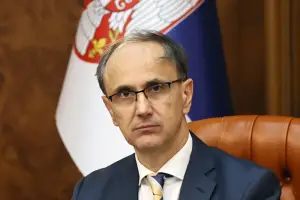 Belgrade, 1 August 2026
More affordable, accessible medicines demonstrate state’s systemic care for citizens’ health
-
 Belgrade/Ohrid, 31 July 2026
Strengthening good-neighbourly relations, cooperation with North Macedonia
-
 Belgrade, 31 July 2026
Appeal to citizens to use electricity rationally
-
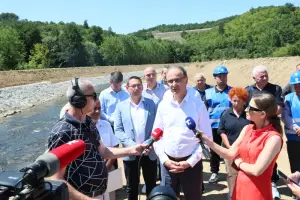 Vladičin Han, 31 July 2026
State continues to invest in water management infrastructure throughout Serbia
-
 Vranjska Banja, 31 July 2026
Capacities of Vranjska Banja for further development of spa tourism to be improved
-
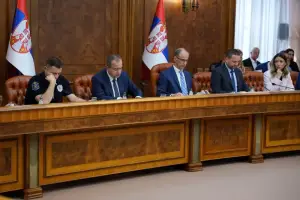 Belgrade, 30 July 2026
Coordinated state response to adverse weather conditions