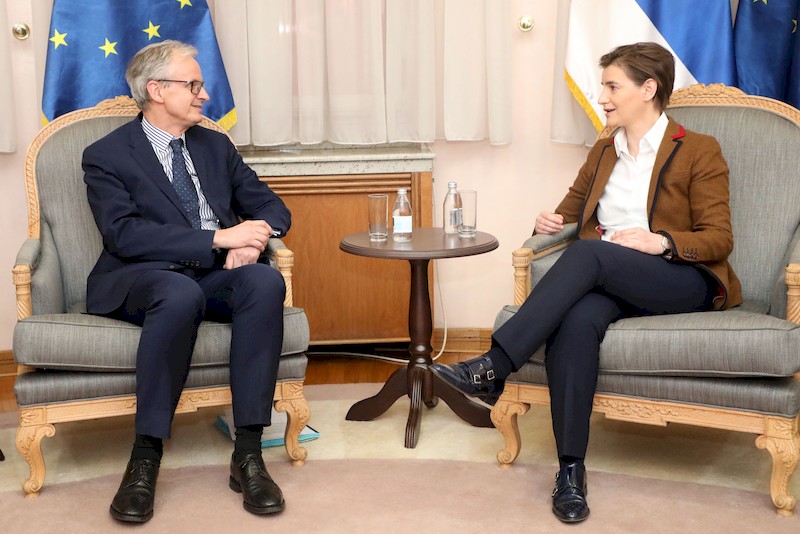
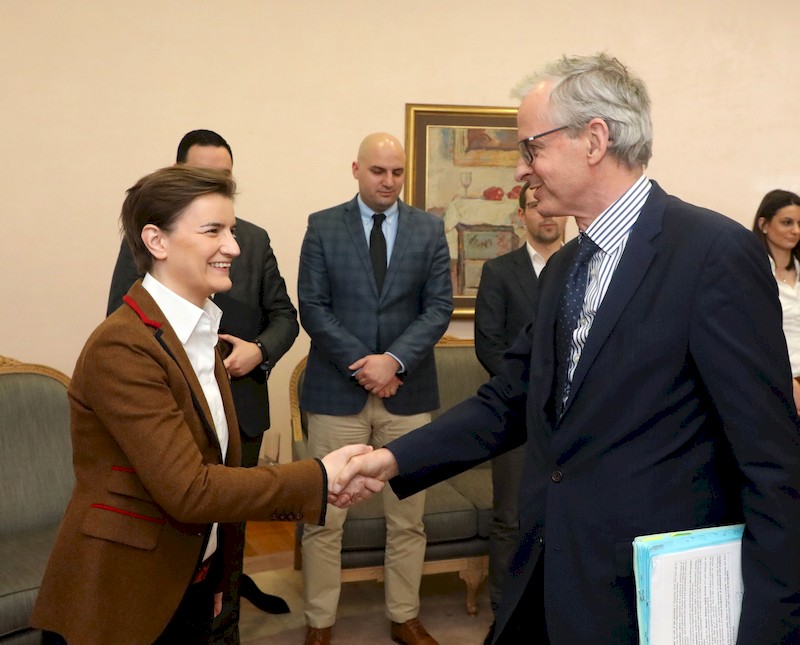
Prime Minister Ana Brnabic said today during the talks with Director-General for European Neighbourhood Policy and Enlargement Negotiations of the European Commission Christian Danielsson that Serbia is strongly committed to the European path and values on which the European Union is founded.

Q:
A:
Serbia makes great progress on road to EU
Belgrade,
4 March 2019
Brnabic said that there is enough strength and readiness to complete the reforms launched so that the state could have an independent judiciary, strong institutions, a defined media scene and so that it could effectively fight corruption and organised crime, which are all important challenges, but also the backbone of the values of the European Union.
Brnabic stated that public administration reform is one of the priorities of the Serbian government, without which there can be neither economic nor social development.
She explained that the focus of the reforms is on e-Government and electronic services, which are a means to increase transparency in the work of civil servants, reduce corruption and increase efficiency, but also simplify communication between citizens and the public administration.
Speaking about the European integration, Danielsson said that Serbia has made great progress on the road to the European Union and that the role of the European Commission is to give support to Serbia in order to make reforms more efficient, first of all in harmonising and implementing regulations and standards in Chapters 23 and 24, concerning the rule of law and the judiciary.
The European Commission official praised the economic reforms made, but also the contribution that Serbia gives to regional stability through its regional cooperation initiatives, especially through various infrastructure projects.
The Prime Minister of Serbia stated that it is necessary for Pristina to implement the agreements that have been already reached and to withdraw illegal decisions, such as the introduction of tariffs on goods from central Serbia and Bosnia-Herzegovina.
That is a prerequisite for the continuation of talks and for reaching a lasting solution based on compromise, Brnabic underlined.
Brnabic reiterated that by introducing tariffs, Pristina violates the CEFTA agreement and thus jeopardises the economic stability not only of Serbia, but the whole region.
-
 Belgrade/Subotica, 3 August 2026
Investment in modern railway infrastructure among government’s priorities
-
 Belgrade, 3 August 2026
Energy situation in Serbia fully stable
-
 Belgrade, 2 August 2026
Energy sector facing serious, challenging situation
-
 Belgrade, 2 August 2026
Preserving ties with Serbian people worldwide among government’s priorities
-
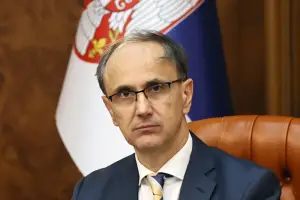 Belgrade, 1 August 2026
More affordable, accessible medicines demonstrate state’s systemic care for citizens’ health
-
 Belgrade/Ohrid, 31 July 2026
Strengthening good-neighbourly relations, cooperation with North Macedonia
-
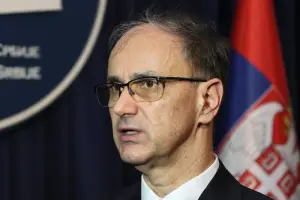 Belgrade, 31 July 2026
Appeal to citizens to use electricity rationally
-
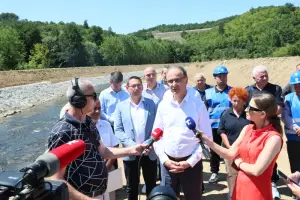 Vladičin Han, 31 July 2026
State continues to invest in water management infrastructure throughout Serbia
-
 Vranjska Banja, 31 July 2026
Capacities of Vranjska Banja for further development of spa tourism to be improved
-
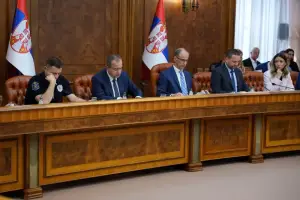 Belgrade, 30 July 2026
Coordinated state response to adverse weather conditions