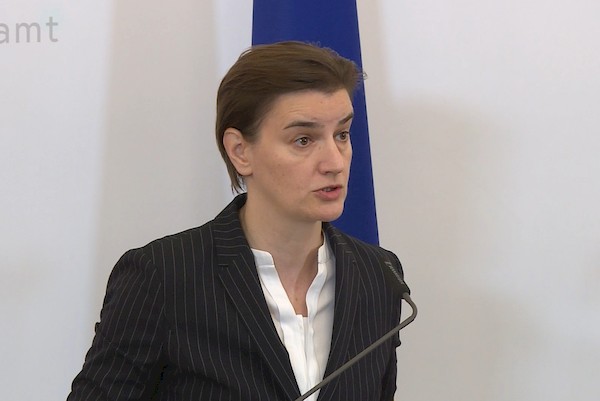
Prime Minister Ana Brnabic pointed out today in Vienna that the provisional institutions of self-government in Pristina have discriminated against Serbian products against contests to the CEFTA agreement.

Q:
A:
Serbia dedicated to European integration, regional cooperation
Belgrade/Vienna,
19 November 2018
Brnabic told a press conference after the working breakfast organised by Austrian Chancellor Sebastian Kurz with the prime ministers of the Western Balkans that Serbia is facing the future, but unfortunately there are tendencies for the region to go backwards.
According to Brnabic, this is especially noticeable in the last two weeks and pointed out that Pristina violated the CEFTA agreement by increasing taxes on goods from central Serbia.
This is not in accordance with the CEFTA agreement and represents a clear discrimination against everything Serbian. We hope in the future that we will be able to implement this agreement, which will enable us to continue the talks on what we can achieve together, Brnabic said.
She thanked the Austrian Chancellor on the fact that Austria, as the EU presidency chair, maintained the EU enlargement high on the list of priorities and expressed hope for further opening of the chapters, which is an important signal for the citizens of Serbia.
The Prime Minister said that Serbia is committed to European integration, reforms, as well as to regional cooperation, which are key priorities of our country, not just because of the road to the EU.
The host of the meeting, Austrian Chancellor Kurz said that he discussed with the prime ministers of the Western Balkans today the European integration of the region, as well as the cooperation within the region.
He stressed that Austria is a strong partner to the region on its path to the EU, and that Vienna's position is that the EU would not be complete without the Western Balkans.
We know that Europe's stability is linked to security and stability in your region. That is why it is very important that all the countries of the Western Balkans go towards the EU, Kurz said.
European Commissioner for Enlargement and Neighbourhood Policy Johannes Hahn pointed out that EU enlargement is one of the three key priorities of the EU Presidency, which was very important.
At the same time, Hahn pointed out that it is important that the Western Balkans integrate into the common market, for which it is important to eliminate all barriers, both formal and informal.
Connecting the region, according to Hahn, is of great importance to the region, especially in the energy sector.
It is important to increase the volume of trade cooperation within the region. From 2016 to 2017 we had a slight growth which is a promising trend. In the last ten years, the region's trade with the EU has doubled, Hahn said, pointing out that this shows the potential of the region.
He stressed that it is important that the countries of the region have a European perspective, adding that this is a merit-based process.
This means that not all will be able to join together, but it is important that everyone has a perspective, Hahn said.
-
 Belgrade, 4 August 2026
Hosting European Under-21 Championship major recognition for Serbia
-
 Belgrade, 4 August 2026
Preserving memory of Operation Storm victims our moral obligation
-
 Belgrade/Subotica, 3 August 2026
Investment in modern railway infrastructure among government’s priorities
-
 Belgrade, 3 August 2026
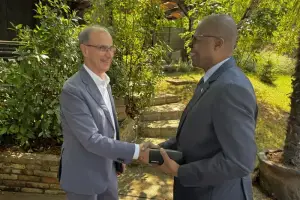
Advancing bilateral relations between Serbia, São Tomé and Príncipe
-
 Belgrade, 3 August 2026
Energy situation in Serbia fully stable
-
 Belgrade, 2 August 2026
Energy sector facing serious, challenging situation
-
 Belgrade, 2 August 2026
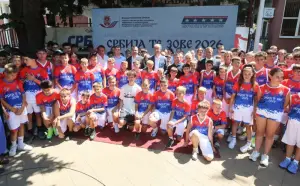
Preserving ties with Serbian people worldwide among government’s priorities
-
 Belgrade, 1 August 2026
More affordable, accessible medicines demonstrate state’s systemic care for citizens’ health
-
 Belgrade/Ohrid, 31 July 2026
Strengthening good-neighbourly relations, cooperation with North Macedonia
-
 Belgrade, 31 July 2026
Appeal to citizens to use electricity rationally