Deputy Prime Minister and Minister of Finance Sinisa Mali said yesterday that the Board of Executive Directors of the International Monetary Fund (IMF) in Washington made a decision on the successful completion of the first review of the results of the stand-by arrangement with Serbia.

Q:
A:
IMF confirms first review of arrangement with Serbia
Belgrade,
29 June 2023
Mali pointed out that this is another confirmation of the correctness of the economic policy and the structural and institutional reforms that are being implemented.
The IMF noted that the Republic of Serbia is successfully implementing the agreed economic programme. All the criteria based on which the programme results are monitored have been met. The achieved balance of payments and fiscal results outperformed the expectations, and the implementation of the structural reform agenda is advancing well.
The IMF assessed that during the last decade, despite external shocks, Serbia has achieved impressive economic results, reflecting its robust economic policy that supported strong growth, low inflation and declining public debt. As a result, incomes rose, employment increased, and living standards improved. Foreign exchange reserves are significantly higher and FDI inflow is at record levels.
In addition, the high and diversified FDI inflows have more than covered the current account deficit. Though Covid-19 pandemic negatively affected the growth of all economies, the Serbian economy quickly recovered, supported by a strong package of numerous fiscal and monetary policy measures, according to a statement released after the meeting in Washington.
In the published report, it is added that the conflict in Ukraine, as well as the problems in the energy sector, had an impact on the Serbian economy, and that inflation exceeded the targeted goals, but, as stated, it is expected that, with the continued implementation of a cautious monetary policy, y-o-y inflation will decline to around 8% by the end of the year and return within the National Bank of Serbia’s target tolerance band in 2024.
Within the framework of the stand-by arrangement, macroeconomic imbalances have already begun to decline, and foreign exchange reserves are at their peak, the IMF underlines and notes that the projected fiscal deficit, which is expected not to exceed three percent of GDP this year, supports the downward trajectory of inflation. and further reduction of public debt.
The report also adds that the reform of the energy sector remains a key task. The new law on state-owned enterprises (SOEs) is aligned with OECD best practices and provides a strong basis for governance reform in the energy sector and beyond. Also, it is stated that, in parallel, significant progress has been achieved in improving the structure and management of state energy enterprises.
-
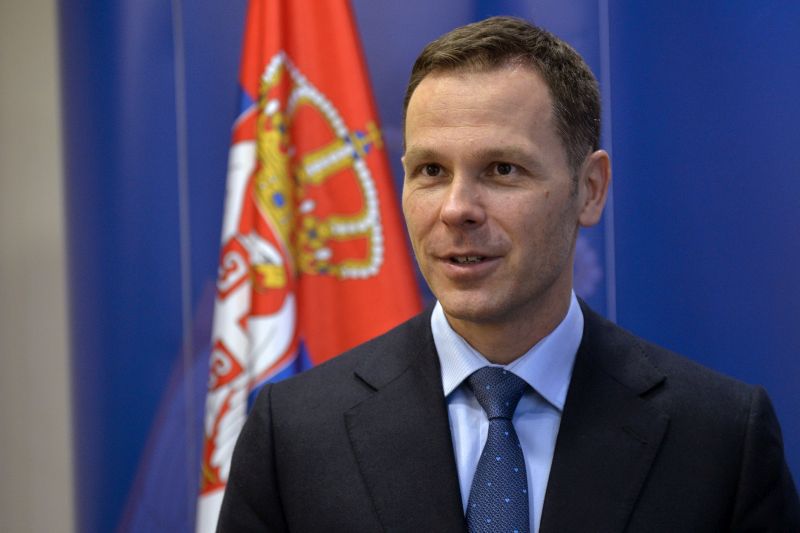 Author: Tanjug
-
 Belgrade, 14 July 2026
Serbia bilaterally resolves problems arising from EES implementation
-
 Gradina/Kalotina, 9 July 2026
Improving border cooperation between Serbia, Bulgaria
-
 Belgrade, 7 July 2026
Further strengthening economic cooperation between Serbia, Italy
-
 Belgrade, 6 July 2026
Serbia serious, responsible partner in fight against crime
-
 Kać, 3 July 2026
Additional foreign investment confirms confidence in Serbia
-
 Belgrade, 3 July 2026
Serbia, Hungary reliable partners in maintaining security
-
 Belgrade/Brussels, 3 July 2026
Serbia committed to further developing partnership relations with EU
-
 Preševo, 1 July 2026
Joint campaign by Serbia, North Macedonia for safer travel
-
 Belgrade, 30 June 2026
Serbia stable, reliable investment destination
-
 Belgrade, 25 June 2026
Dačić extends condolences to leadership, people of Venezuela