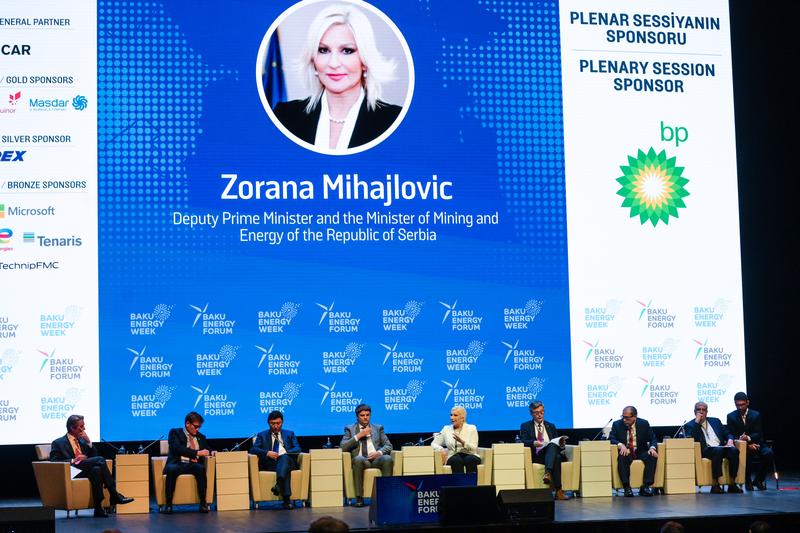
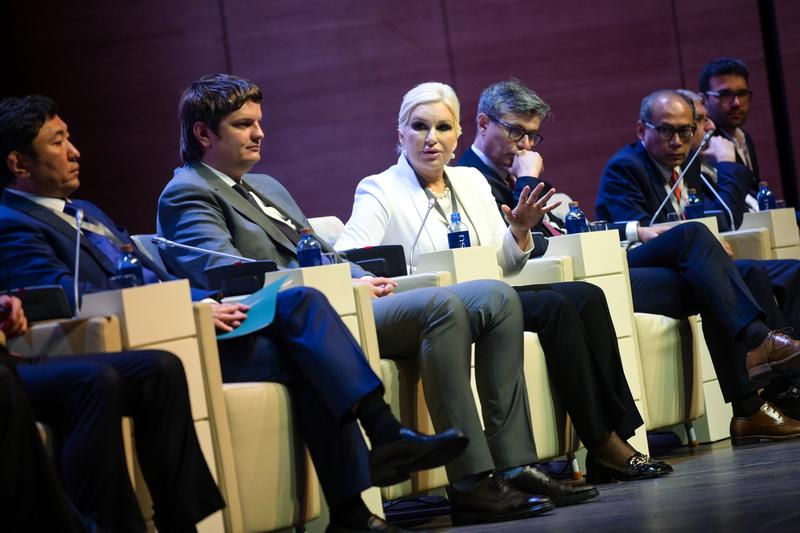
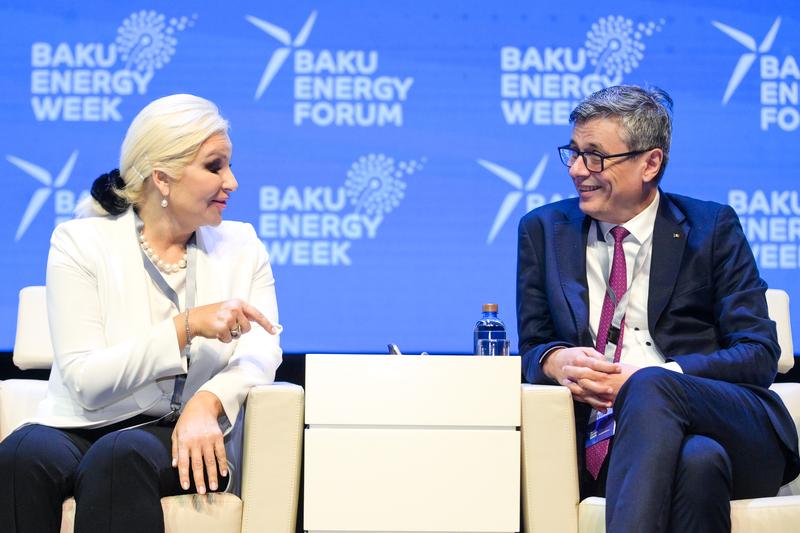
Deputy Prime Minister and Minister of Mining and Energy Zorana Mihajlovic said today in Baku that investments in new energy production capacities, various gas suppliers and improving energy efficiency and regional energy connectivity are priorities for Serbian energy, and that ensuring regular and quality supply is the most important task of the whole of Europe.

Q:
A:
Regional connectivity, investment in new capacities lead to long-term energy security
Belgrade/Baku,
2 June 2022
At the ministerial session of the "Energy Forum" dedicated to energy transition and challenges and changes in the world, Mihajlovic said that Serbia is a central part of Southeast Europe, a country on the path to full EU membership, whose priorities are connecting and strengthening regional energy security.
It is essential that we all work together in Southeast Europe and beyond to work to be energy secure and independent. Political will is the basis and if we have it, we will have results, said the Deputy Prime Minister, emphasising that Serbian energy policy is based on several pillars.
The first is to invest in new capacities, primarily those that use renewable sources, because we want to increase their share in our energy mix. At the moment, we get about 70 percent of our energy from thermal power plants, which are old and use low-calorie lignite, she said.
Slightly less than 30 percent are large hydropower plants, and only 3.5 percent are other renewable energy sources. In order to increase that percentage, we made the first step by passing a new legislative framework and the Law on the Use of Renewable Energy Sources, the Deputy Prime Minister reminded.
She mentioned that it will not be easy for Serbia, as well as for other countries, to achieve carbon neutrality, having in mind the challenges that the world is facing, but that the green agenda is the only way to ensure long-term energy security.
Mihajlovic stated that Serbia's goal is to have at least 40% of energy obtained from renewable energy sources by 2040, and to be a carbon-neutral country by 2050, adding that in order to achieve that, it must invest in energy infrastructure.
Diversification of the gas sector is the second pillar of Serbian energy. We have two routes, but only one supplier, on which we depend almost one hundred percent. With the end of the interconnection with Bulgaria, we will get the possibility of supply from other sources, Mihajlovic explained.
Among other things, I talked about that with President Ilham Aliyev and Minister Parviz Shahbazov, so that we can get gas from Azerbaijan through that gas pipeline, the Deputy Prime Minister said.
She pointed out that the third pillar of our energy policy is a drastic increase in energy efficiency, and the plan is to reduce energy consumption by 15 to 25 percent for projects launched in the next five years.
The ministerial session of the "Energy Forum" was attended by the ministers of Azerbaijan, Italy, Hungary, Bulgaria, Romania, Moldova, representatives of the European Commission and the State Department, as well as the ministers of Turkey, Kazakhstan, Iran and Indonesia.
-
 Belgrade, 23 April 2026
Intensifying cooperation with Russia in field of internal affairs
-
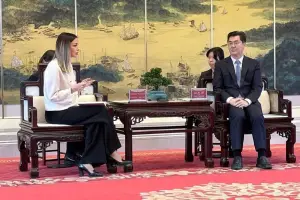 Belgrade/Guangzhou, 23 April 2026
Opening up new investment opportunities between Serbia, Guangzhou
-
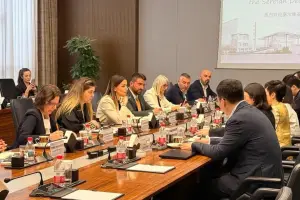 Belgrade/Shenzhen, 23 April 2026
Serbia strengthens its position in automotive industry through cooperation with BYD Company
-
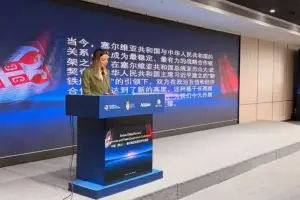 Belgrade/Foshan, 21 April 2026
New opportunities for Serbian economy at Foshan Business Forum
-
.webp) Belgrade/Foshan, 21 April 2026
Belgrade/Foshan, 21 April 2026Advancing economic, business cooperation with China
-
 Belgrade/Guangzhou, 21 April 2026
Continued talks with Chinese companies on investment, exports of Serbian products
-
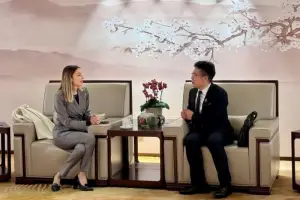 Belgrade/Guangzhou, 21 April 2026
Mesarović begins several-day working visit to China
-
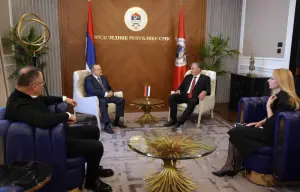 Belgrade/Banja Luka, 18 April 2026
Serbia, Republika Srpska dedicated to strengthening cooperation, mutual trust
-
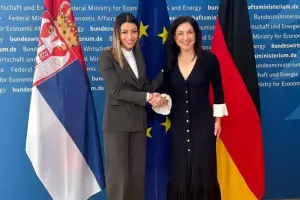 Belgrade/Berlin, 17 April 2026
Joint activities agreed with Germany to address issues faced by Serbia’s drivers in EU
-
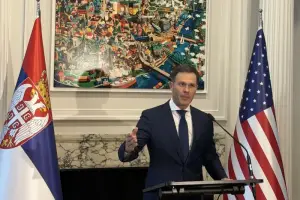 Belgrade/Washington, 17 April 2026
Invitation to major international companies to join Expo 2027